
Cartridge Heater Tubes
Seamless Stainless Steel, Fully Annealed Welded and Selected Nickel Alloy Tubes for Cartridge Heater Manufacturing
GAOFA TECH supplies cartridge heater tubes for compact cartridge heaters, swaged cartridge heaters, industrial heating cartridges and custom electric heating elements. Tube selection should be reviewed according to tube form, annealing condition, dimensional tolerance, ductility, swaging process, working temperature and customer specification.
Most cartridge heater manufacturers review seamless tubes for stable forming and compaction. Welded tubes may also be reviewed when the customer specification allows, but welded cartridge heater tubes should normally be supplied in fully annealed condition for further forming, swaging or crimping.
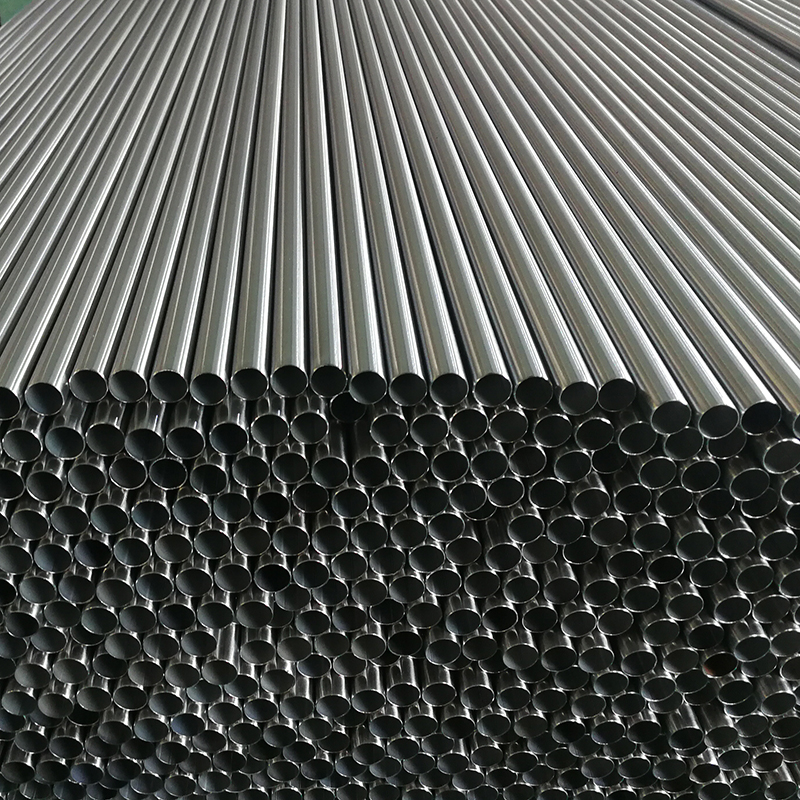
Tubes for Cartridge Heater Manufacturing
This page focuses on cartridge heater tube selection, especially tube form, annealing condition, dimensional tolerance, ductility and heater manufacturing process requirements. For broader tubular heating element tube applications, please see Heating Element Tubes.
For compact cartridge heaters, swaged cartridge heaters, industrial heating cartridges and custom heater assemblies.
Seamless tubes are commonly reviewed; welded tubes require careful review of weld quality and annealing condition.
Tube ductility, roundness, straightness and surface condition can affect heater assembly and downstream forming.
304, 316L, 321, 310S, Incoloy and Inconel directions can be reviewed by working temperature and environment.
Why Seamless Tubes Are Commonly Used for Cartridge Heaters
Many cartridge heater manufacturers prefer seamless stainless steel tubes because cartridge heater production often involves magnesium oxide filling, resistance wire insertion, swaging, diameter reduction, crimping, end sealing and sometimes bending after assembly.
A seamless tube has no longitudinal weld seam. This can be helpful where the heater design requires small diameter, uniform deformation, higher compaction density, stable surface condition or more demanding downstream forming.
However, seamless tube does not automatically mean it is suitable for every cartridge heater. Material grade, annealing condition, OD / WT tolerance, roundness, straightness, surface finish and internal cleanliness should still be confirmed before production.
What Buyers Should Check
- Tube material grade and applicable standard
- OD, wall thickness, roundness and cut length tolerance
- Annealed condition and ductility requirement
- Surface condition and internal cleanliness
- Whether the tube will be swaged, reduced, crimped or bent
- Working temperature, heating atmosphere and corrosion condition
- Packing protection for small-diameter or short-length tubes
Defrost Single-Ended Heater Tubes and Thermal Cycling Review
Defrost single-ended heaters and defrost cartridge heaters may experience repeated heating and cooling cycles during operation. In refrigeration equipment, HVAC systems or defrost assemblies, the heater sheath can be exposed to thermal shock, thermal fatigue, moisture, frost, condensation and local temperature fluctuation.
For these applications, many heater manufacturers commonly review seamless tubes because there is no longitudinal weld seam and the tube can provide more uniform sheath behavior during repeated thermal cycling and mechanical processing.
Seamless tubes are not automatically required for every defrost heater, but they are often preferred when the heater design involves compact size, high compaction, repeated thermal shock, thermal fatigue risk, bending after assembly or stricter reliability requirements.
Welded Tube Use Requires Additional Review
Welded tubes may be reviewed for selected defrost heater or cartridge heater designs when the customer specification allows welded tube use. However, the tube should normally be supplied in fully annealed condition, and weld quality, ductility, forming behavior and thermal cycling performance should be checked.
- Fully annealed condition should be confirmed.
- The weld seam and heat-affected area should be controlled.
- Swaging, crimping, bending or reducing behavior should be reviewed.
- Thermal cycling or heater production trials may be required by the customer.
- Welded tube should not be treated as a direct replacement for seamless tube without approval.
When Welded Tubes Can Be Used for Cartridge Heaters
Although many cartridge heater manufacturers prefer seamless tubes, welded tubes may also be used in selected cartridge heater designs when customer specification allows.
The important condition is that welded tubes for cartridge heater production should normally be supplied in fully annealed condition, especially when the tube will be swaged, reduced, crimped, bent or assembled under high mechanical deformation.
Annealing, Ductility and Weld Seam Behavior
Fully annealed welded tubes can help improve ductility, reduce residual stress, soften the weld and heat-affected area, and make the tube more suitable for further forming or compaction.
If welded tubes are supplied in hard or insufficiently annealed condition, the weld seam or heat-affected area may behave differently during swaging, reducing, bending or crimping. For demanding cartridge heater production, forming trials and customer approval may be required before changing from seamless tube to welded tube.
Seamless vs Fully Annealed Welded Tubes for Cartridge Heaters
Welded and seamless tubes should not be treated as automatically interchangeable. The correct choice depends on heater design, customer specification, swaging process, forming method, tolerance, annealing condition and production validation.
| Review Factor | Seamless Tubes | Fully Annealed Welded Tubes |
|---|---|---|
| Typical use | Commonly reviewed for cartridge heaters, especially small-diameter or swaged heater designs. | May be reviewed for selected designs when customer specification allows welded tube use. |
| Weld seam | No longitudinal weld seam. | Longitudinal weld seam exists and must be controlled through welding, annealing and inspection. |
| Formability | Often stable for swaging, diameter reduction and crimping when supplied in suitable material condition. | Depends strongly on full annealing, weld quality and consistency of the weld / heat-affected area. |
| Small diameter use | Commonly reviewed for small cartridge heater sheath sizes. | Possible in selected sizes, but manufacturing process and forming trial should be checked. |
| Cost and availability | May have different MOQ, lead time or cost depending on grade and size. | May be practical for selected sizes and quantities when the process allows welded tubes. |
| Main risk point | Tolerance, straightness, surface condition, annealed condition and internal cleanliness. | Weld seam, insufficient annealing, ductility, deformation behavior and customer approval. |
| Buyer check | OD / WT tolerance, annealed condition, surface finish, cleanliness and inspection requirement. | Fully annealed condition, weld quality, NDT, forming trial and whether the heater design accepts welded tube. |
Stainless Steel and Nickel Alloy Tubes for Cartridge Heater Applications
Cartridge heater tube material should be selected according to working temperature, heater atmosphere, corrosion condition, mechanical processing, customer specification and cost target. The table below is for early material discussion only.
| Material Direction | When to Review | Notes |
|---|---|---|
| 304 / 304L Stainless Steel Tubes | General cartridge heaters and moderate temperature heating applications. | Common sheath material direction; check working environment, temperature and customer specification. |
| 316L Stainless Steel Tubes | Moisture, mild corrosion or selected industrial heating applications. | Better corrosion resistance than 304, but not suitable for all corrosive or high-temperature environments. |
| 321 Stainless Steel Tubes | Higher temperature applications where stabilized stainless steel may be required by specification. | Review temperature, atmosphere, oxidation and fabrication requirement. |
| 310S Stainless Steel Tubes | Higher temperature oxidation-resistant review conditions. | Fabrication, cost, availability and working atmosphere should be reviewed. |
| Incoloy 800 Tubes / Incoloy 840 Tubes | High-temperature heating element and heater sheath applications by specification. | Common nickel alloy direction for heater applications; final selection depends on temperature, atmosphere and customer standard. |
| Inconel 600 Tubes / Inconel 601 Tubes | Higher temperature, oxidation or demanding heater environments. | Full working temperature, atmosphere, corrosion condition and specification are required. |
| Other Nickel Alloy Tubes | Corrosive or demanding heating environments. | Project-specific review required; do not select by grade name alone. |
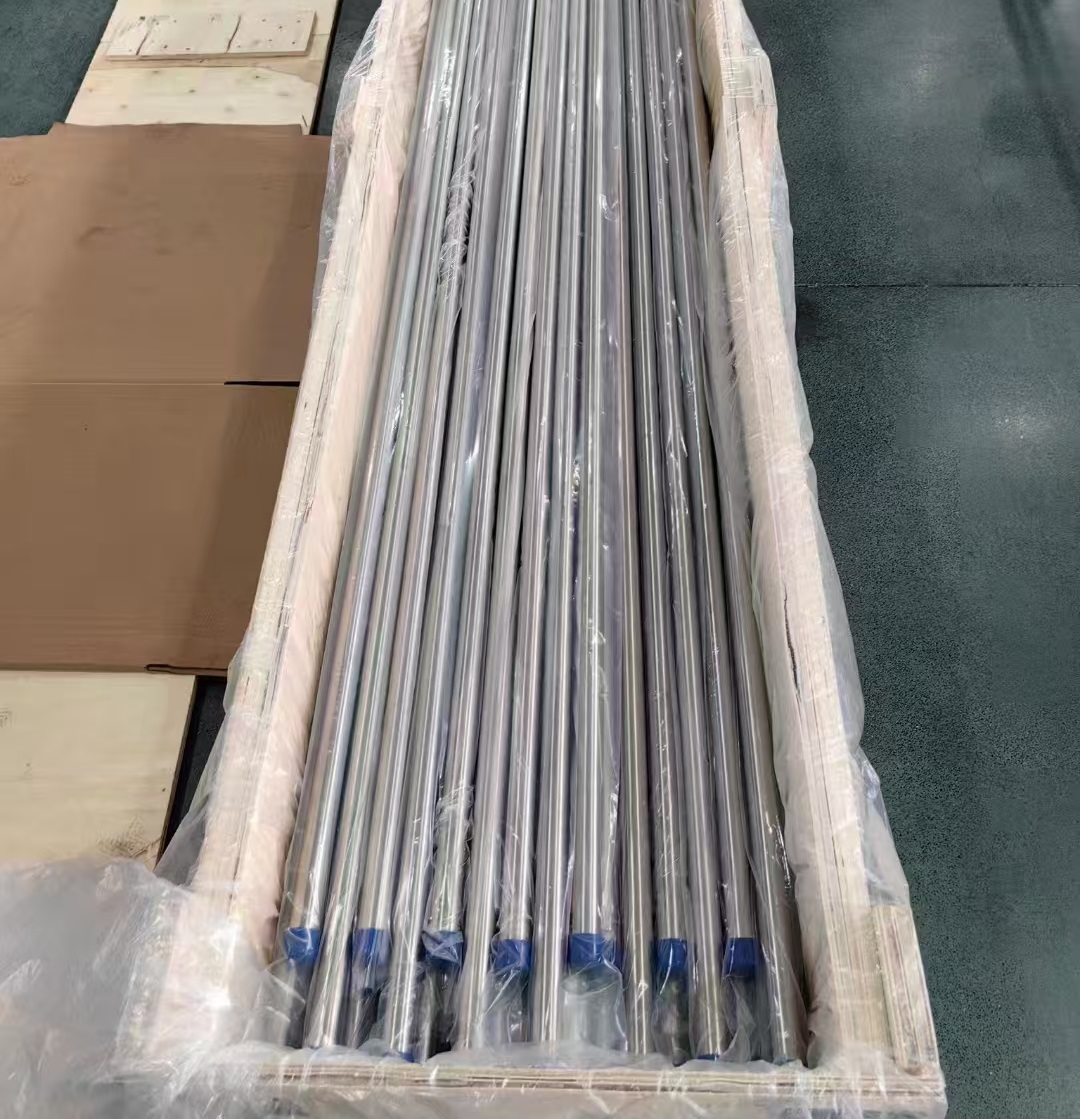
Stainless Steel Seamless Tubes
Seamless BA tube packing for cartridge heater sheath tube supply.
Commonly reviewed for cartridge heater sheath tubes, small-diameter heater tubes and swaged heater production.
View Stainless Steel Seamless Tube →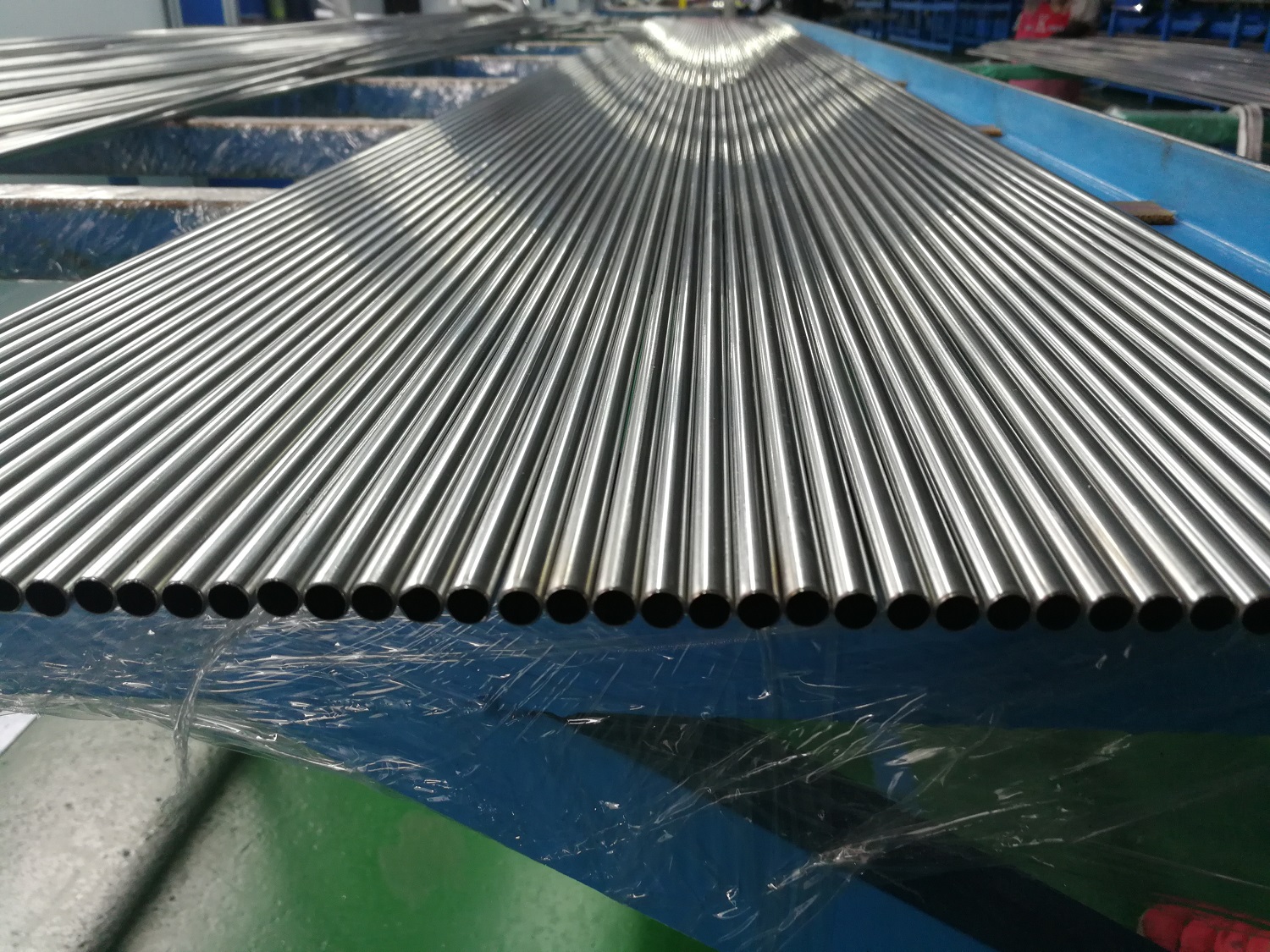
Fully Annealed Welded Tubes
Welded tubes should be reviewed with annealing condition, weld quality and forming requirements.
May be reviewed where welded tubes are allowed and fully annealed condition is confirmed for forming or swaging.
View Stainless Steel Welded Tube →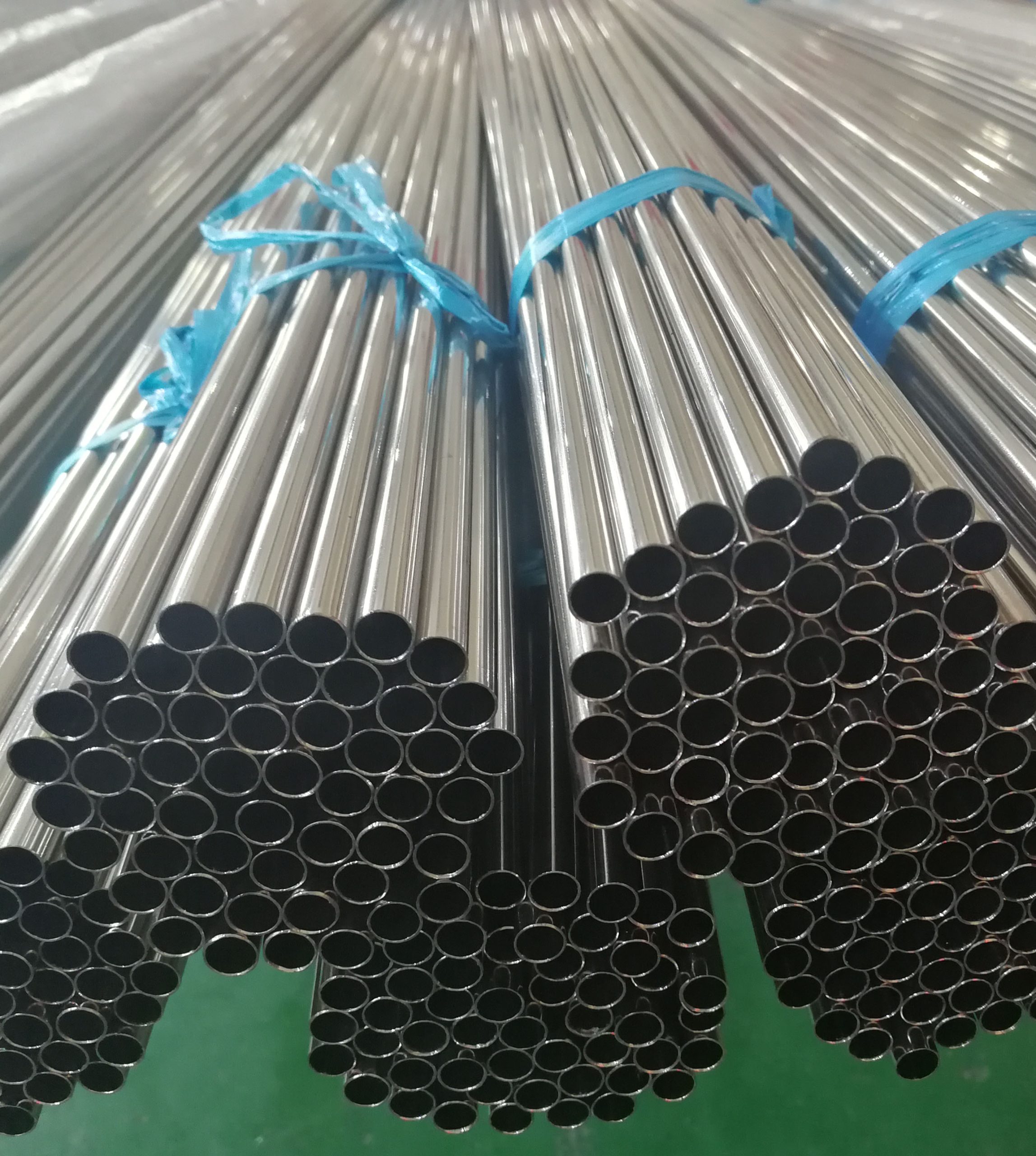
Nickel Alloy Tubes
Nickel alloy tubes may be reviewed by temperature, atmosphere and customer specification.
Incoloy and Inconel tube directions may be reviewed for high-temperature or demanding cartridge heater applications.
View Nickel Alloy Tubes →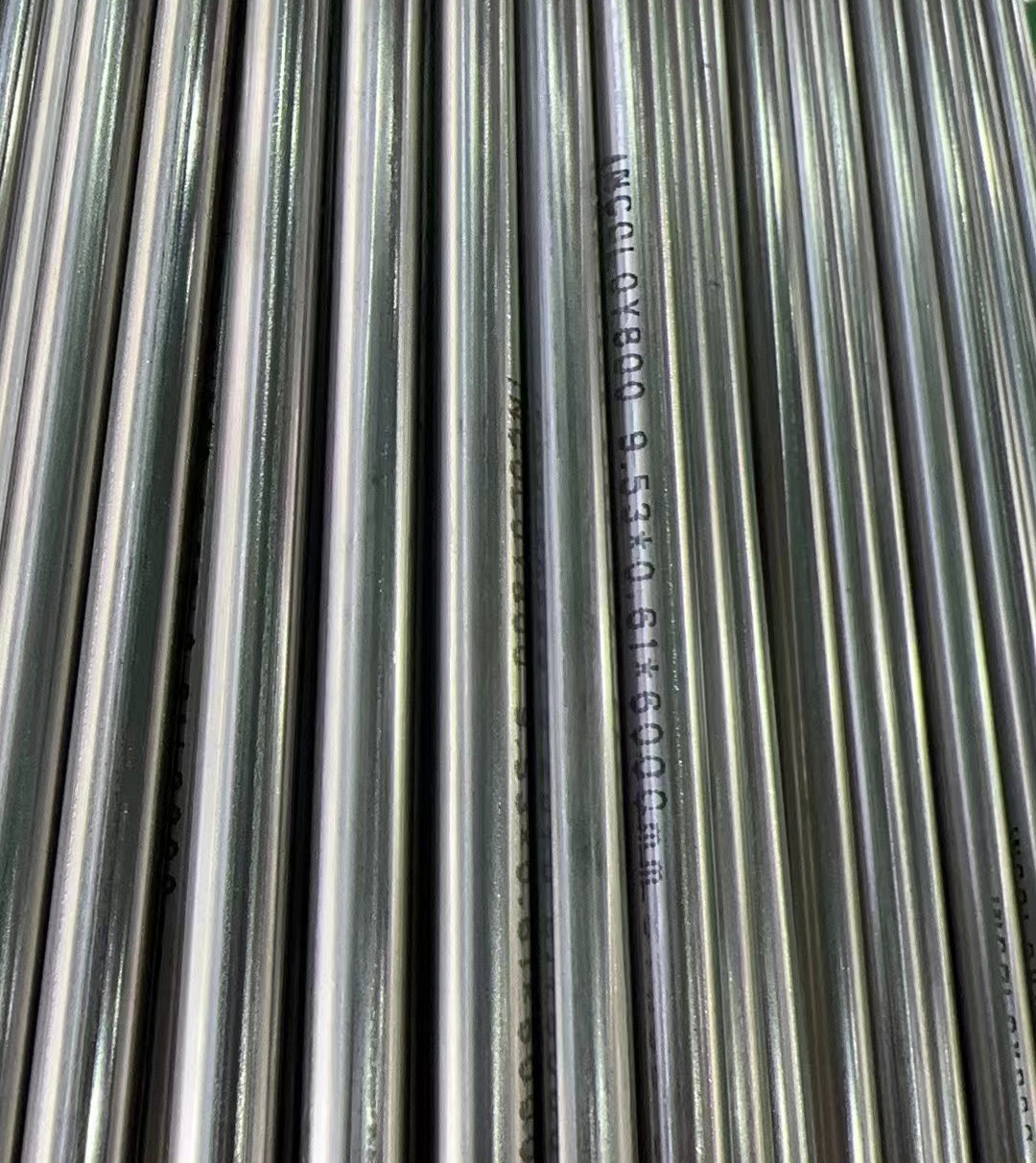
Heating Element Tubes
Incoloy 800 heater sheath tube direction for broader heating element applications.
For broader tubular heating element, immersion heater and industrial heating element tube applications.
View Heating Element Tubes →Manufacturing Requirements for Cartridge Heater Tubes
Cartridge heater tube supply is not only a material issue. Tube condition can affect filling, compaction, swaging, crimping, bending and final heater performance. Buyers should confirm the downstream process before selecting seamless or welded tube.
MgO Powder Filling
Internal cleanliness, bore consistency and tube straightness can affect filling stability and downstream compaction.
Resistance Wire Insertion
Tube ID, internal surface condition and dimensional stability should support assembly without unnecessary obstruction.
Swaging or Diameter Reduction
Ductility, annealing condition, weld behavior and wall thickness consistency are important during mechanical compaction.
Crimping and End Sealing
Tube ends may need stable formability, controlled burrs and suitable surface condition for sealing operations.
Bending After Assembly
When a cartridge heater is bent after assembly, annealed condition and forming trials should be reviewed carefully.
Short Length Cutting
Cut length tolerance, burr control, end condition and packing protection may be important for small heater tube supply.
Cartridge Heater Tube Selection Matrix
This matrix is intended for early tube review only. Final selection should follow customer specification, heater manufacturing process, forming trial and working condition.
| Heater Requirement | Tube Direction to Review | Key Review Points |
|---|---|---|
| Standard cartridge heater production | Stainless steel seamless tube | OD / WT tolerance, straightness, annealed condition, surface and internal cleanliness. |
| Small diameter heater cartridge | Seamless tube with controlled OD / WT tolerance | Roundness, length tolerance, internal bore and packing protection should be reviewed. |
| Swaged cartridge heater | Annealed seamless tube or fully annealed welded tube | Ductility, compaction behavior and forming trial are important. |
| Defrost single-ended heater | Seamless stainless steel tube commonly reviewed | Thermal shock, thermal fatigue, moisture, frost, condensation and repeated heating / cooling cycles should be considered. Welded tube may be reviewed only when fully annealed condition and customer validation are confirmed. |
| Welded tube accepted by design | Fully annealed welded tube | Weld quality, annealing condition, NDT and customer approval should be confirmed. |
| Higher temperature cartridge heater | 321, 310S, Incoloy or Inconel by specification | Working temperature, atmosphere and oxidation condition should be reviewed. |
| Moist or mildly corrosive condition | 316L or selected alloy by review | Corrosion condition, temperature and cleaning environment should be checked. |
| Short cut lengths | Tube supply with cut length and burr control | End condition, packing, bundle protection and handling damage should be reviewed. |
| Bending after assembly | Annealed tube condition and forming trial required | Seamless or welded tube should both be validated by actual forming process. |
Tube Condition and Inspection Points for Cartridge Heater Tubes
For cartridge heater manufacturers, tube condition can be as important as material grade. Inspection scope should be confirmed before production according to tube material, tube form, downstream process and customer specification. Related inspection examples are summarized on the Quality Control page.
| Inspection / Control Item | Purpose | Buyer Notes |
|---|---|---|
| Annealed Condition | Supports ductility, stress relief and further forming. | Especially important for welded tubes used in swaging, reducing, crimping or bending. |
| OD / WT / Roundness | Supports consistent heater assembly and compaction. | Small-diameter heater tubes may require tighter dimensional review. |
| Straightness | Supports resistance wire insertion, MgO filling and assembly. | Confirm straightness requirement if the heater design is sensitive. |
| Surface and Internal Cleanliness | Reduces contamination and supports downstream filling and sealing. | Internal cleanliness, burr control and surface finish should be reviewed. |
| Eddy Current / Pneumatic / Hydrostatic Test | Reviews tube integrity according to standard or order requirement. | Testing method and acceptance criteria should be agreed before production. |
| Packing Protection | Reduces deformation, scratches and end damage during transport. | Important for small diameter, thin wall, polished or short cut-length tubes. |
Review Tube Inspection and Quality Control Details
GAOFA TECH can review dimensional inspection, visual inspection, PMI checking, eddy current testing, pneumatic testing, ultrasonic testing, internal cleanliness checking, tube end protection and packing review according to order requirements.
Information Needed for Cartridge Heater Tube Quotation
A complete RFQ helps confirm material grade, tube form, annealing condition, tolerance, inspection scope, packing method and quotation accuracy. Buyers can also use the Tube Inquiry Checklist before sending drawings or heater manufacturing requirements.
For cartridge heater tubes, please clearly state whether the tube will be used for swaging, diameter reduction, crimping, bending or short-length cutting. If welded tube is considered, please confirm whether fully annealed condition is required by your manufacturing process.
Best RFQ practice: If you are changing from seamless tube to welded tube, please provide the current tube size, heater process, forming operation and any previous cracking or deformation issue.
- Tube material grade: 304, 316L, 321, 310S, Incoloy, Inconel or customer-specified grade
- Tube form: seamless or welded
- If welded tube: fully annealed condition requirement and whether welded tube is approved by design
- Outside diameter, wall thickness, cut length, tolerance and quantity
- Tube condition: annealed, bright annealed, pickled, polished or other surface requirement
- Roundness, straightness, internal cleanliness and burr control requirements
- Whether the tube will be filled with MgO, swaged, reduced, crimped, bent or end sealed
- Heater working temperature, heating atmosphere and working environment
- Applicable standard, drawing, inspection requirement and MTC requirement
- Packing requirement, especially for small-diameter, thin-wall or short-length tubes
- Destination, Incoterms and expected delivery schedule
Send Your Cartridge Heater Tube Requirement
Please send tube material, OD, wall thickness, length, quantity, seamless or welded tube requirement, annealing condition, tolerance, surface condition, swaging or bending process, working temperature and inspection requirement. GAOFA TECH will review the suitable tube supply according to your heater manufacturing specification.
Cartridge Heater Tubes FAQ
What tubes are used for cartridge heaters?
Cartridge heater manufacturers commonly review stainless steel seamless tubes as heater sheath tubes, especially for small-diameter and swaged cartridge heater designs. Fully annealed welded tubes and selected nickel alloy tubes may also be reviewed when the heater design, manufacturing process and customer specification allow.
Final tube selection depends on OD, wall thickness, cut length, annealed condition, surface condition, internal cleanliness, MgO filling, swaging ratio, working temperature, heater atmosphere and inspection requirements.
Why are seamless tubes commonly used for cartridge heaters?
Seamless tubes have no longitudinal weld seam, which can be helpful during MgO powder filling, resistance wire insertion, swaging, diameter reduction, crimping, end sealing and selected bending operations. For compact or high-density cartridge heaters, the tube sheath may need uniform deformation behavior and stable dimensional consistency.
Seamless tube selection should still be reviewed by material grade, annealed condition, OD / WT tolerance, roundness, straightness, surface finish, internal cleanliness and packing protection. Seamless tube is commonly preferred, but it is not automatically suitable for every heater design.
Why are seamless tubes commonly reviewed for defrost single-ended heaters?
Defrost single-ended heaters and defrost cartridge heaters may experience repeated heating and cooling cycles, thermal shock, thermal fatigue, moisture, frost and condensation during operation. In these conditions, many heater manufacturers commonly review seamless tubes because there is no longitudinal weld seam and the sheath behavior can be more uniform under thermal cycling and mechanical processing.
Welded tubes may be reviewed only when the heater design allows, fully annealed condition is confirmed, and weld quality, ductility, forming behavior, thermal cycling validation and customer approval requirements are satisfied.
Can welded tubes be used for cartridge heaters?
Welded tubes may be used for selected cartridge heater designs when the customer specification allows welded tube use. For heater manufacturing, welded tubes should normally be supplied in fully annealed condition, especially if the tube will be swaged, reduced, crimped, bent or otherwise mechanically deformed during production.
- Weld quality and heat-affected zone behavior should be controlled.
- Fully annealed condition should be confirmed before production.
- Forming, swaging, crimping or thermal cycling trials may be required by the customer.
- Welded tube should not be treated as a direct replacement for seamless tube without approval.
Why should welded cartridge heater tubes be fully annealed?
Fully annealed welded tubes can help improve ductility, reduce residual stress, soften the weld and heat-affected area, and make the tube more suitable for downstream forming or compaction. If welded tubes are hard or insufficiently annealed, the weld seam or heat-affected zone may behave differently during swaging, bending or crimping.
For this reason, buyers should confirm annealing condition, weld seam consistency, tube hardness or ductility requirement, NDT requirement and forming trial expectations before approving welded tubes for cartridge heater manufacturing.
Which stainless steel grades are used for cartridge heater tubes?
304 / 304L stainless steel tubes are commonly reviewed for general cartridge heater applications. 316L may be reviewed for moisture or mild corrosion conditions. 321 and 310S may be reviewed for higher temperature applications according to customer specification.
Final selection depends on working temperature, heater atmosphere, oxidation condition, corrosion condition, surface requirement, forming process and whether the project requires seamless or fully annealed welded tube supply.
When should Incoloy or Inconel tubes be reviewed for cartridge heaters?
Incoloy 800, Incoloy 840, Inconel 600 and Inconel 601 tubes may be reviewed for higher temperature, oxidation-resistant or demanding heating element applications.
Full working temperature, heater atmosphere, corrosion condition, tube size, forming requirement and customer specification should be provided before material review. Nickel alloy selection should not be based on grade name alone.
What tube tolerances are important for cartridge heater manufacturing?
Important control items include outside diameter, wall thickness, roundness, straightness, cut length, surface finish, end burr, internal cleanliness and packing protection. For small-diameter or swaged cartridge heaters, dimensional consistency and annealed condition can be especially important for filling, compaction and assembly.
Buyers should confirm tolerance and inspection requirements before production. Related inspection items can be reviewed on the Quality Control page.
What should be checked before using welded tube instead of seamless tube?
Before using welded tube instead of seamless tube, buyers should check whether welded tube is allowed by the heater design, whether fully annealed condition is required, whether the weld seam is controlled, whether eddy current or other NDT is required, and whether the tube passes the customer’s swaging, bending, crimping or forming trial.
For defrost single-ended heaters or heaters exposed to thermal shock and thermal fatigue, additional thermal cycling validation or customer approval may be needed before changing from seamless tube to welded tube.
Are cartridge heater tubes the same as general heating element tubes?
Cartridge heater tubes are part of the broader heating element tube category, but they are more focused on small diameter, MgO filling, resistance wire insertion, compaction, swaging, crimping, short cut lengths, tight tolerance and annealed condition.
For broader applications such as tubular heating elements, immersion heaters, air heaters or industrial heating elements, please review the Heating Element Tubes page.
What information is needed for cartridge heater tube quotation?
Please provide tube material, seamless or welded requirement, annealing condition, OD, wall thickness, length, quantity, tolerance, surface condition, whether the tube will be filled, swaged, reduced, bent or crimped, working temperature, inspection requirement, packing requirement and destination.
If the project involves welded tube review, please also confirm whether fully annealed condition, NDT, forming trial or thermal cycling validation is required. You can start from the Tube Inquiry Checklist.