
Tube Material Selection Guide by Working Medium
How to Review Stainless Steel, Titanium, Nickel Alloy and Enhanced Tubes for Heat Exchangers, Heating Elements, Cooling Systems and Corrosive Equipment
This guide helps buyers make an initial review of stainless steel tubes, titanium tubes, nickel alloy tubes and enhanced heat transfer tubes according to working medium, temperature, pressure, corrosion risk, heat transfer requirement, fabrication process and customer specification.
Material selection should not be based only on a material name. Fresh water, seawater, steam, refrigerant, oil, acid, alkali, high-temperature air and exhaust gas all require different review logic before quotation or production.
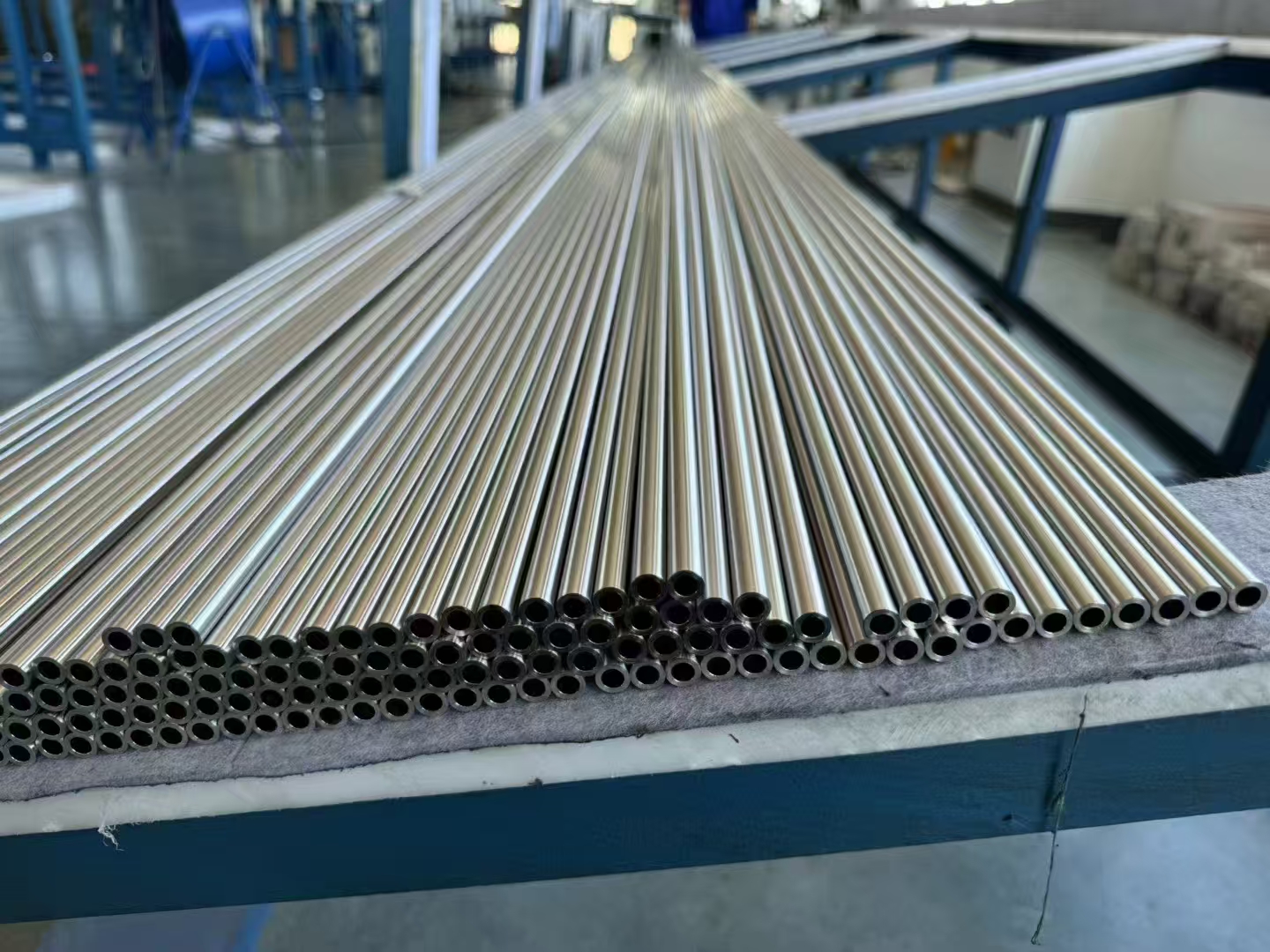
What This Guide Helps Buyers Review
This page is designed for buyers searching for tube material selection, heat exchanger tube material selection, heating element tube material selection, seawater tube material, chloride cooling water tube, acid resistant tube material, high temperature tube material and corrosion resistant tube selection.
Water, seawater, steam, refrigerant, oil, acid, alkali, exhaust gas and process chemicals require different material review logic.
Temperature, pressure, chloride level, pH, flow velocity, fouling, cleaning and thermal cycling should be reviewed together.
Stainless steel, titanium, nickel alloy or enhanced tube directions can be compared according to application and specification.
Material grade, OD, wall thickness, length, quantity, standard, inspection, packing and application details are needed.
What This Tube Material Selection Guide Covers
Tube material selection is the process of reviewing tube materials according to the actual working medium, operating temperature, pressure, corrosion condition, heat transfer requirement, forming process and customer specification.
GAOFA TECH supplies stainless steel tubes, titanium tubes, nickel alloy tubes, enhanced heat transfer tubes, heating element tubes and heat exchanger tubes. This guide does not replace engineering approval, but it helps buyers organize an RFQ before material selection is finalized.
The recommendations below use cautious wording such as “may be reviewed” and “should be compared” because the same material can behave differently when chloride, temperature, pH, impurities, flow velocity, fouling or cleaning chemicals change.
Why Working Medium Comes Before Tube Material Name
Many tube selection mistakes happen when buyers start with a material name before confirming the service condition. A useful RFQ should first describe what the tube will contact and how the equipment will operate.
- Fresh water, treated water and hot water may look simple, but chloride, scaling and cleaning chemicals can change the material review.
- Seawater and marine cooling require careful review of chloride, crevice corrosion, fouling and flow velocity.
- Acids and mixed chemical media should be reviewed by concentration, temperature, impurities, oxidizing or reducing condition and allowable corrosion rate.
- High-temperature air, furnace atmosphere and exhaust gas require oxidation, thermal cycling, vibration and fabrication review.
- Heat transfer performance may require smooth tubes, coiled tubes, low fin tubes, inner grooved tubes or other enhanced tube forms.
Tube Material Selection Table by Working Medium
This table is an initial review guide only. Final material selection should be confirmed according to actual medium chemistry, temperature, pressure, corrosion data, heat transfer requirement, fabrication process, applicable standard and customer specification.
| Working Medium / Condition | Possible Tube Materials to Review | Key Selection Factors | Related GAOFA TECH Pages |
|---|---|---|---|
| Fresh water / treated water | 304, 316L, 321 and selected stainless steel tubes | Chloride level, water quality, temperature, pressure, scaling, cleaning method and tube fabrication. | Stainless Steel Tubes; Heat Exchanger Tubes |
| Hot water / steam | 304, 316L, 321, 310S, Incoloy 800 / 840 or other suitable grades; ESHR-03 only for separately qualified water-contact heater sheaths, not general steam tubing | Temperature, pressure, oxidation, thermal cycling, heater design, corrosion and applicable standard. | Heating Element Tubes; Incoloy 800 Tube; Incoloy 840 Tube |
| Seawater / marine cooling | Titanium Gr1 / Gr2, selected nickel alloys or other corrosion-resistant materials by project review | Chloride, crevice corrosion, fouling, flow velocity, stagnant zones, cleaning method and tube connection design. | Seawater / Marine Cooling Tubes; Titanium Tubes |
| Chloride-rich cooling water | 316L, duplex stainless steel, titanium, Alloy 625 or other materials depending on severity | Chloride level, temperature, pH, oxygen, flow condition, crevice risk, pressure and maintenance method. | Inconel 625 Tube; Titanium Welded Tube |
| Refrigerant / oil / industrial cooling | Stainless steel tubes, selected enhanced tubes, copper alternatives or titanium by application review | Pressure, refrigerant compatibility, oil compatibility, vibration, heat transfer, cleanliness and tube form. | Industrial Refrigeration Tubes; Condenser & Evaporator Tubes |
| Sulfuric acid / phosphoric acid review | Alloy 825, Hastelloy C276 / C22 or selected nickel alloys by concentration and temperature | Acid concentration, temperature, oxidizing / reducing condition, chloride contamination, impurities and allowable corrosion rate. | Incoloy 825 Tube; Hastelloy C276 Tube |
| Mixed acid / aggressive chemical media | Hastelloy C276 / C22, nickel alloys or other corrosion-resistant alloys by project review | Acid mixture, chloride contamination, wet chlorine, oxidizing condition, localized corrosion and corrosion data. | Chemical & Corrosive Equipment Tubes; Hastelloy C22 Tube |
| Alkali / caustic service | Stainless steel, nickel alloys or other materials depending on concentration and temperature | Concentration, temperature, tensile stress, stress corrosion cracking risk, impurities, pressure and cleaning method. | Nickel Alloy Tubes; Stainless Steel Tubes |
| High-temperature air / furnace atmosphere | 310S, Incoloy 800 / 840, Inconel 600 / 601 or other heat-resistant materials | Maximum temperature, oxidation, thermal cycling, atmosphere, sulfur, carbon, mechanical loading and fabrication. | Inconel 601 Tube; Inconel 600 Tube |
| Exhaust gas / performance exhaust | Titanium Gr1 / Gr2, Inconel 625 or stainless steel depending on section and design | Temperature, vibration, wall thickness, bending radius, welding, weight target, surface and customer drawing. | Titanium Tube for Exhaust; Inconel 625 Tube |
| Compact thermal systems / limited space | Titanium coiled tubes, stainless coiled tubes, enhanced tubes or custom tube forms | Coil diameter, bending radius, tube length, pressure drop, fouling, heat transfer and installation method. | Titanium Coiled Tube; Enhanced Heat Transfer Tubes |
Water, Hot Water and Steam Tube Material Review
Water systems should not be reviewed only by the word “water.” Chloride level, dissolved oxygen, scale, cleaning chemicals, temperature and pressure may change the correct material direction.
Start with Stainless Steel Review
304, 316L or other stainless steel tubes may be reviewed when chloride level and temperature are controlled. Water treatment and cleaning method should be confirmed.
Review Temperature and Scaling
Hot water applications should review temperature, scaling risk, chloride level and thermal cycle. For heating applications, see Heating Element Tubes. A project-specific ESHR-03 heater sheath may be evaluated for suitable water-contact designs only after material and full-heater qualification.
Check Pressure and Temperature
Steam tube material should be reviewed by pressure, temperature, oxidation, wall thickness, tube form and applicable standard before quotation.
Seawater, Marine Cooling and Chloride-Rich Water
Seawater and chloride-rich water applications need more than a general stainless steel review. Localized corrosion, crevice risk, fouling and cleaning method are important.
| Application | Material Review Direction | What Buyers Should Provide |
|---|---|---|
| Seawater cooling equipment | Titanium tubes, especially Gr1 / Gr2 directions, are commonly reviewed for seawater cooling. | Seawater chemistry, temperature, flow velocity, fouling, cleaning method, tube connection and stagnant zone risk. |
| Marine condensers / coolers | Titanium, selected nickel alloys or other approved materials should be compared according to design and end-user specification. | Tube-side and shell-side media, pressure, temperature, fouling, cleaning method and tube sheet design. |
| Chloride-rich cooling water | 316L, duplex, titanium or Alloy 625 may be reviewed depending on chloride level, temperature and crevice risk. | Chloride ppm, pH, temperature, flow, cleaning chemicals, oxygen and history of corrosion failures. |
Refrigerant, Oil and Industrial Cooling Applications
Industrial refrigeration tube selection usually combines pressure, refrigerant compatibility, oil compatibility, heat transfer, vibration, cleanliness and tube form review.
Industrial Refrigeration Tubes
For industrial refrigeration tubes, buyers may review stainless steel, titanium, nickel alloy or enhanced tube options depending on refrigerant, oil, pressure, corrosion condition and heat transfer requirement.
When copper price pressure, corrosion risk or application change requires material review, buyers can also read the Copper Tube Replacement Review.
Information Needed for Cooling Applications
- Refrigerant type and oil compatibility
- Operating pressure and design pressure
- Tube-side and shell-side media
- Heat transfer requirement and pressure drop limit
- Cleaning method, fouling risk and internal cleanliness requirement
- Tube form: straight, coiled, inner grooved, low fin or other enhanced tube
Acid, Alkali and Chemical Process Media
Chemical service requires the most cautious material review. Concentration, temperature, impurities, oxidizing or reducing condition and allowable corrosion rate are often more important than the material name.
| Chemical Condition | Material Review Direction | Important RFQ Details |
|---|---|---|
| Sulfuric acid / phosphoric acid | Alloy 825, Hastelloy C276 / C22 or other nickel alloys may need to be compared. | Acid concentration, temperature, chloride contamination, impurities, aeration and allowable corrosion rate. |
| Mixed acid / aggressive chemical media | Hastelloy C276 / C22, nickel alloys or other corrosion-resistant alloys should be reviewed by project condition. | Full medium composition, oxidizing / reducing condition, chloride, wet chlorine, fluorides and temperature. |
| Alkali / caustic service | Stainless steel, nickel alloy or other materials may be reviewed depending on concentration and temperature. | Alkali concentration, temperature, stress corrosion risk, pressure, impurities and cleaning method. |
| Unknown chemical failure replacement | Existing material failure should be analyzed before changing to titanium or nickel alloy. | Existing material, failure photos, service time, medium data, corrosion location and target improvement. |
High-Temperature Air, Furnace Atmosphere and Exhaust Gas
High-temperature tube selection should review not only maximum temperature, but also atmosphere, oxidation, thermal cycling, vibration, mechanical load, fabrication and service time.
| Condition | Materials to Review | Selection Notes |
|---|---|---|
| High-temperature air / heater service | 310S, Incoloy 800, Incoloy 840, Inconel 600 / 601 or other heat-resistant materials | Review operating temperature, watt density, oxidation, heater design, wall thickness, forming and customer specification. |
| Furnace atmosphere / thermal equipment | Inconel 601, Inconel 600, Incoloy 800 / 800H / 800HT or stainless heat-resistant materials | Review atmosphere, thermal cycling, sulfur, carbon, nitriding / carburizing risk, mechanical load and fabrication. |
| Motorcycle / automotive exhaust gas | Titanium Gr1 / Gr2, Inconel 625 or stainless steel depending on exhaust section | Review temperature, vibration, welding, bending radius, wall thickness, weight target and customer drawing. |
Heating Element Tube Material Selection
Heating element tube selection should be based on heater design, working medium, temperature, watt density, forming, MgO filling, welding and customer specification.
Stainless Steel Heating Tubes
304, 316L, 321 and 310S may be reviewed for different heater duties. ESHR-03 (formerly described as 310S-Mo) is a separate project-specific Mo-modified stainless steel direction for selected water-contact heater sheaths; it is not a standardized 310S variant or a universal substitute for Alloy 840.
Nickel Alloy Heating Tubes
Incoloy 800 / 840, Inconel 600 / 601 and other nickel alloys may be reviewed when higher temperature or specific customer requirements apply.
Titanium Heating Tubes
Titanium tubes may be reviewed for selected corrosive water or chemical conditions, but heater design and medium compatibility must be confirmed.
Heat Exchanger, Condenser and Evaporator Tube Material Selection
Heat exchanger tube material should be reviewed from both tube-side and shell-side conditions. Heat transfer performance, corrosion, fouling and cleaning method should be considered together.
| Equipment Type | Material Review Direction | Buyer Notes |
|---|---|---|
| Shell and tube heat exchanger | Stainless steel, titanium, nickel alloy or enhanced tubes depending on both sides of the medium. | Provide tube-side and shell-side media, temperature, pressure, fouling, cleaning and tube sheet material. |
| Condenser | Stainless steel, titanium, nickel alloy, low fin or inner grooved tube may be reviewed. | Review condensation duty, cooling water chemistry, pressure drop, fouling and cleaning method. |
| Evaporator | Stainless steel, titanium, nickel alloy or enhanced heat transfer tubes may be reviewed. | Review refrigerant, oil, pressure, temperature, heat transfer requirement and internal cleanliness. |
| Corrosive heat exchanger | Titanium, Alloy 625, Alloy 825, Hastelloy C276 / C22 or other corrosion-resistant alloys may need to be compared. | Provide medium composition, concentration, pH, chloride, impurities, temperature and allowable corrosion rate. |
When to Review Enhanced Heat Transfer Tubes
Material selection decides corrosion and mechanical suitability, but tube geometry also affects heat transfer, pressure drop, fouling and cleaning. Enhanced tubes should be reviewed when heat transfer performance is a key requirement.
Internal Heat Transfer Review
Titanium inner grooved tubes or other inner grooved options may be reviewed when internal fluid-side enhancement is required.
External Surface Area Review
Titanium low fin tubes and other low fin tube options may be reviewed for selected condenser, evaporator or heat exchanger duties.
Compact System Review
Titanium coiled tubes and specialty twisted options may be reviewed when compact routing or stronger fluid disturbance is required.
When Stainless Steel, Titanium or Nickel Alloy Should Be Reviewed
The following cards summarize typical review logic for each tube family. They are not replacement rules and should be confirmed with actual service data.
When Stainless Steel May Be Enough
Stainless steel may be reviewed for treated water, general heat exchanger service, heating element tubes and less aggressive conditions where chloride and temperature are controlled.
When Titanium May Be Reviewed
Titanium may be reviewed for seawater, marine cooling, chloride cooling water and selected corrosive applications where titanium is compatible with the medium.
When Nickel Alloy or Hastelloy May Be Needed
Nickel alloys and Hastelloy may be reviewed for higher temperature, stronger chloride, acid, mixed chemical, oxidation or severe corrosion conditions.
Common Tube Material Selection Mistakes
Avoiding these mistakes can reduce quotation delays, incorrect material selection, fabrication problems and customer approval issues.
Selecting by Material Name Only
Asking for “316L,” “titanium” or “Inconel” without medium, temperature and pressure information may lead to an incomplete review.
Ignoring Chloride and Crevice Risk
Chloride level, stagnant zones, crevices and cleaning chemicals can change material behavior, especially in cooling water applications.
Treating Welded and Seamless as Interchangeable
Welded and seamless tube selection should follow standard, pressure, application, inspection and customer approval. See Seamless vs Welded Tubes.
Ignoring Heat Transfer Requirement
Material selection alone does not determine heat exchanger performance. Tube geometry, fouling and pressure drop may also require review.
Replacing Copper Without System Review
Copper replacement should be reviewed by corrosion, heat transfer, pressure, forming, tube sheet design and system approval. See Copper Tube Replacement Review.
Not Providing Inspection Requirements
Dimensional inspection, PMI, eddy current testing, UT, pressure testing, cleanliness and packing requirements should be confirmed before production.
Information Needed for Tube Material Selection
A complete RFQ helps GAOFA TECH review the correct tube material family, tube form, specification, inspection scope and packing method.
For faster review, please send working medium, temperature, pressure, corrosion condition and application together with tube size and quantity. You can also use the Tube Inquiry Checklist.
Best RFQ practice: If you are replacing copper, stainless steel, titanium, nickel alloy or another existing material, please include the current material, failure reason, operating history, photos if available and target improvement.
- Application: heating element, heat exchanger, condenser, evaporator, industrial refrigeration, seawater cooling, chemical equipment, exhaust or other use
- Working medium: water, seawater, refrigerant, oil, acid, alkali, steam, hot air, exhaust gas or chemical process medium
- Medium details: concentration, chloride level, pH, impurities, cleaning chemicals or water quality report if available
- Operating temperature, maximum temperature, pressure and flow velocity
- Existing material, failure mode, corrosion photos or service life history if replacing an old tube
- Tube material already specified by customer, if any
- Tube form: welded, seamless, coiled, inner grooved, low fin or other enhanced tube
- OD, wall thickness, length, tolerance and quantity
- Applicable standard or customer drawing
- Heat transfer requirement, pressure drop limit, fouling and cleaning method for heat exchanger applications
- Fabrication process: bending, welding, expansion, coiling, cutting, swaging, MgO filling or assembly
- Inspection requirement: dimensional, visual, PMI, eddy current, UT, pneumatic, hydrostatic, cleanliness or packing inspection
- Documents: MTC, inspection report, packing photos, carbon footprint / CBAM-related support if required
- Packing requirement, destination, Incoterms and expected delivery schedule
Send Your Working Medium and Tube Requirement
Please send working medium, temperature, pressure, corrosion condition, tube material if specified, OD, wall thickness, length, quantity, application, standard, inspection requirement and packing details. GAOFA TECH will review suitable stainless steel, titanium, nickel alloy or enhanced tube directions according to your specification.
Tube Material Selection FAQ
How should I start selecting a tube material?
Start with the working medium, temperature, pressure, chloride level, pH, corrosion risk, heat transfer requirement, fabrication process and customer specification. The material name should be reviewed after these conditions are clear.
Which tube material is suitable for seawater cooling?
Titanium Gr1 / Gr2 is often reviewed for seawater cooling, but suitability still depends on seawater chemistry, temperature, flow velocity, fouling, cleaning method, crevice risk, tube connection design and customer specification. See Seawater / Marine Cooling Tubes.
Can 316L stainless steel be used in chloride water?
316L may be reviewed for some chloride-containing water conditions, but chloride level, temperature, pH, oxygen, crevice risk, cleaning method and stagnant zones must be checked. For more severe chloride conditions, titanium, duplex stainless steel or nickel alloy may need to be compared.
When should titanium tubes be reviewed instead of stainless steel tubes?
Titanium tubes may be reviewed when seawater, chloride-rich cooling water or selected corrosive media make stainless steel riskier. Titanium is not suitable for every acid, reducing condition or high-temperature condition, so medium chemistry and equipment design should be reviewed.
When should nickel alloy tubes or Hastelloy tubes be reviewed?
Nickel alloy tubes or Hastelloy tubes may be reviewed for higher temperature, stronger chloride, acid, mixed acid, severe localized corrosion or high-temperature corrosive service. Exact material selection depends on medium composition, concentration, temperature, impurities and allowable corrosion rate.
How do I choose tubes for heat exchangers?
For heat exchangers, review both tube-side and shell-side media, temperature, pressure, fouling, cleaning method, heat transfer requirement, pressure drop, tube sheet material, tube expansion or welding method and customer specification. See Heat Exchanger Tubes.
How do I choose tubes for heating elements?
For heating elements, review working medium, operating temperature, watt density, heater design, MgO filling, bending, welding, tube wall thickness, oxidation, corrosion and customer specification. See Heating Element Tubes.
When should enhanced heat transfer tubes be reviewed?
Enhanced tubes should be reviewed when heat transfer performance, compact design or surface area improvement is important. Pressure drop, fouling, cleaning method, working medium, tube material and equipment design should be reviewed before selecting inner grooved, low fin, coiled or twisted tube forms.
Can stainless steel, titanium or nickel alloy directly replace copper tubes?
Not directly. Copper tube replacement should be reviewed according to corrosion, heat transfer, pressure, tube sheet design, forming, joining, system approval and customer specification. See Copper Tube Replacement Review.
Is welded tube or seamless tube better for material selection?
Neither is automatically better. Welded and seamless tube selection depends on pressure, standard, wall thickness, inspection, fabrication, corrosion condition and customer approval. See Seamless vs Welded Tubes Selection Guide.
What information should I send before requesting a quotation?
Please send material grade if specified, working medium, concentration, chloride level, temperature, pressure, OD, wall thickness, length, quantity, application, standard, fabrication process, inspection requirement and packing details. You can also use the Tube Inquiry Checklist.
Can ESHR-03 (formerly 310S-Mo) be used for heating element tubes?
ESHR-03 is a project-specific Mo-modified Cr–Ni stainless steel direction for selected water-contact heater sheaths, not a standardized 310S variant or a universal replacement for Alloy 840. Confirm water chemistry, agreed material and finished-tube specification, weld and annealing condition, forming response and complete-heater qualification.