
Titanium Low Fin Tube
Gr1, Gr2 and Gr12 Titanium Low Finned Tubes for Seawater Cooling, Marine Condensers and Corrosive Heat Exchangers
GAOFA TECH supplies titanium low fin tubes mainly in Gr1, Gr2 and Gr12 for heat exchangers, condensers, evaporators, seawater cooling systems, marine cooling equipment, chloride-rich cooling water and selected corrosive heat transfer applications.
Other titanium grades can also be reviewed when required by customer drawing, applicable standard or end-user specification, but availability and production feasibility should be confirmed case by case.
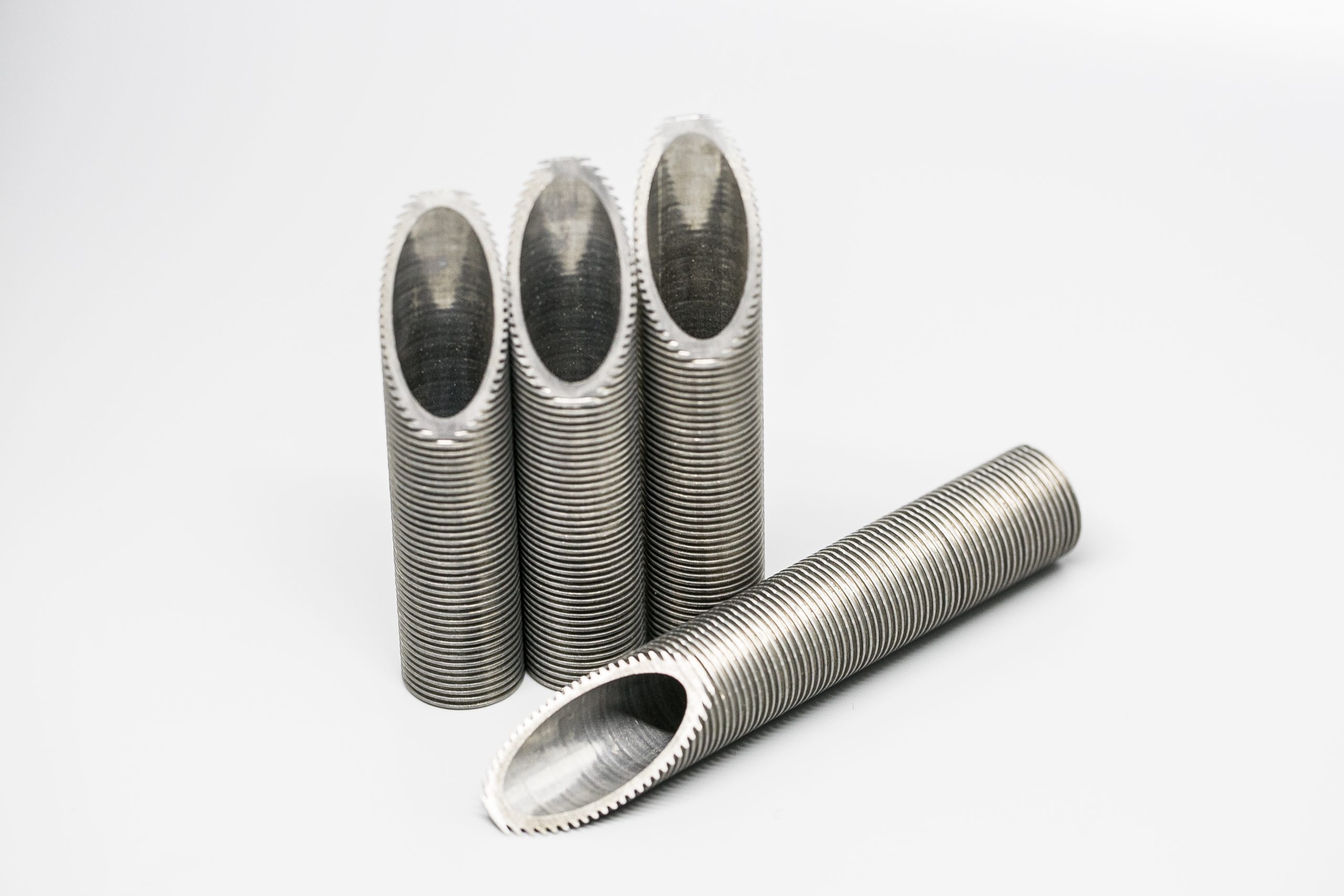
Titanium Low Fin Tube Supply Scope
This page is for buyers searching for titanium low fin tube, titanium low finned tube, Gr1 titanium low fin tube, Gr2 titanium low fin tube, Gr12 titanium low fin tube, titanium low fin condenser tube, titanium low fin tube for seawater and marine condenser titanium tube.
Gr1, Gr2 and Gr12 titanium low fin tubes can be reviewed according to medium, corrosion condition, tube drawing, standard and customer specification.
Common OD includes 7, 7.94, 9.52, 12.7, 15.88, 19.05, 25.4 and 38.1 mm, with other sizes reviewed by project.
Common base wall thickness includes 1.0, 1.1, 1.2, 1.5, 1.8 and 2.0 mm.
Fin or groove depth should be reviewed according to titanium grade, tube base wall thickness and forming feasibility.
What Is Titanium Low Fin Tube?
Titanium low fin tube is a titanium heat transfer tube with external low fins formed on the outside surface of the base tube. The low fin structure increases external surface area and may improve outside-tube or shell-side heat transfer in selected condenser, evaporator and heat exchanger designs.
GAOFA TECH mainly reviews titanium low fin tubes in Gr1, Gr2 and Gr12. Other titanium grades may be reviewed when a confirmed drawing, standard or end-user specification requires them, but they are not treated as default supply directions.
Titanium low fin tube selection should consider titanium grade, tube OD, base wall thickness, fin geometry, medium, chloride level, pH, temperature, pressure, crevice condition, galvanic corrosion, tube sheet material, tube connection method and customer specification.
When Titanium Low Fin Tube Is Reviewed
- When the working medium is seawater, brine or chloride-rich cooling water.
- When copper or copper alloy tubes face corrosion, erosion, ammonia compatibility or contamination concerns.
- When stainless steel tubes may face pitting or crevice corrosion under chloride conditions.
- When the equipment is used in marine cooling, coastal cooling or corrosive industrial cooling systems.
- When leakage, shutdown or frequent replacement creates high lifecycle cost.
- When the end user requires Gr1, Gr2, Gr12 or another titanium grade in the specification.
Key Review Points for Titanium Low Fin Tubes
Titanium low fin tube procurement should not only confirm tube size and fin geometry. Grade selection, corrosion condition, tube sheet connection and lifecycle cost should also be reviewed.
Confirm Gr1, Gr2, Gr12 or Other Required Grade
Gr1, Gr2 and Gr12 are the main titanium low fin tube directions. Other titanium grades should be reviewed only when drawings or specifications require them.
Confirm Seawater, Brine or Chloride Level
Titanium is often reviewed for chloride-rich cooling water, seawater and brine, but temperature, pH and crevice condition still need checking.
Review Galvanic and Connection Details
Titanium tube selection should consider tube sheet material, expansion, welding, sealing method and possible galvanic corrosion.
Check Performance, Not Only Material Life
Titanium may solve corrosion concerns, but heat transfer design, wall thickness, fin geometry and equipment performance still need review.
Use Titanium Where Stainless May Be at Risk
For high chloride, seawater or repeated stainless corrosion failure, titanium low fin tube may be a more suitable review direction.
Compare Initial Cost and Replacement Risk
Titanium material cost is higher, so selection should compare service life, leakage risk, downtime cost and maintenance cost.
Applications of Titanium Low Fin Tubes
Titanium low fin tubes are mainly reviewed where corrosion resistance, heat transfer surface area and long-term equipment reliability need to be evaluated together.
Seawater Cooling Systems
Reviewed for seawater cooling equipment where chloride corrosion is a key concern and longer service life is required.
Marine Condensers
Suitable for review in marine condenser and shipboard cooling applications according to seawater condition and equipment design.
Brine and Chloride-Rich Water
Can be reviewed for brine and chloride-rich cooling water where stainless steel or copper alloys may face corrosion risk.
Corrosion-Resistant Heat Exchangers
Used in selected shell and tube heat exchangers where corrosion resistance and external surface enhancement are both required.
Condensers
Titanium low fin condenser tubes may be reviewed when cooling water corrosion risk is higher than standard material can handle.
Evaporators
Reviewed for selected evaporator and refrigeration equipment where titanium corrosion resistance is required by medium or specification.
Chemical Cooling
Can be reviewed for selected chemical cooling systems according to medium, pH, temperature and corrosion mechanism.
Replacement Tube Bundles
Reviewed when copper or stainless steel tube bundles fail due to corrosion and the replacement project requires longer service life.
Coastal Industrial Cooling
Used for review in coastal plants where cooling water quality, chloride concentration and corrosion risk must be carefully evaluated.
Gr1, Gr2, Gr12 and Other Titanium Grades for Low Fin Tubes
Titanium grade should be selected according to the working medium, corrosion condition, tube drawing, equipment design, applicable standard and customer specification. GAOFA TECH mainly reviews Gr1, Gr2 and Gr12 titanium low fin tubes.
| Material Grade | Common Review Application | Selection Notes |
|---|---|---|
| Titanium Grade 1 / Gr1 Low Fin Tube | Selected titanium low fin tube projects where good formability and corrosion resistance are required, especially when customer specification calls for Gr1. | Gr1 has lower strength than Gr2 and is often reviewed where forming requirement, corrosion resistance and specification compatibility are important. Final suitability depends on tube size, wall thickness, fin geometry and working condition. |
| Titanium Grade 2 / Gr2 Low Fin Tube | Common review direction for seawater cooling, marine condensers, chloride-rich cooling water, heat exchangers and industrial titanium tube applications. | Gr2 is a widely used commercially pure titanium grade for industrial heat exchanger tubes. It should still be reviewed according to medium, temperature, pressure, chloride level, tube sheet design and customer specification. |
| Titanium Grade 12 / Gr12 Low Fin Tube | More demanding chloride, brine, hot salt water, corrosive cooling water and selected chemical heat exchanger applications. | Gr12 may be reviewed where improved corrosion resistance is required compared with common commercially pure titanium directions. Production feasibility, fin forming, cost and end-user approval should be confirmed case by case. |
| Other Titanium Grades by Confirmed Specification | Project-specific titanium low fin tube applications where customer drawing, applicable standard or end-user specification requires another grade. | Other titanium grades are not default supply directions. Please provide grade, standard, drawing, medium, temperature, pressure, chloride level, quantity and inspection scope for feasibility review. |
| Material Upgrade from Copper or Stainless Steel | Replacement projects where previous copper or stainless steel tubes faced corrosion, leakage, tube wear or shortened service life. | Review original tube material, failure mode, heat transfer target, tube sheet connection and total lifecycle cost before material change. |
Titanium Low Fin Tube vs Stainless Steel and Copper Low Fin Tube
Titanium, stainless steel and copper low fin tubes are selected for different reasons. Titanium is normally reviewed when corrosion resistance and service life are more important than initial material cost.
| Comparison Item | Copper / Copper Alloy Low Fin Tube | Stainless Steel Low Fin Tube | Titanium Low Fin Tube |
|---|---|---|---|
| Main Selection Reason | High thermal conductivity and mature use in HVAC, refrigeration and general heat transfer applications. | Selected strength and corrosion resistance for industrial cooling and stainless material requirements. | Strong corrosion resistance in seawater, chloride-rich water, brine and selected corrosive cooling conditions. |
| Common Grade Direction | Copper or copper alloy according to equipment design. | 304, 316L and other stainless grades by review. | Gr1, Gr2, Gr12 and other titanium grades by confirmed specification. |
| Corrosion Resistance | Needs review in seawater, ammonia, erosive water or corrosive cooling conditions. | Better than copper in selected industrial water conditions, but may face pitting or crevice corrosion in high chloride environments. | Often reviewed where chloride corrosion risk makes copper or stainless steel less suitable. |
| Heat Transfer Review | High thermal conductivity supports many established heat exchanger designs. | Lower thermal conductivity than copper, so wall thickness, fin geometry and equipment performance should be reviewed. | Selected mainly for corrosion resistance; heat transfer design, wall thickness and fin geometry still need careful review. |
| Cost Direction | Material price can fluctuate and may influence replacement decisions. | Often reviewed as a more industrial material option than copper under selected conditions. | Higher material cost, but may reduce lifecycle cost when corrosion failure, leakage or downtime is expensive. |
| Typical Review Applications | Clean water, HVAC, refrigeration and non-aggressive cooling systems. | Industrial cooling, condenser, evaporator and selected copper replacement projects. | Seawater cooling, marine condensers, brine, chloride-rich water, corrosive cooling and chemical heat exchangers. |
| Selection Caution | May not be suitable for all corrosive media. | Not a universal solution for high chloride or seawater service. | Not always necessary for clean water or cost-sensitive non-corrosive applications. |
When Stainless Steel or Copper May Still Be Reviewed Instead
Titanium low fin tubes are valuable for corrosive cooling conditions, but they are not always the most practical or economical choice. In clean water, non-aggressive HVAC, standard refrigeration or cost-sensitive applications, copper or stainless steel low fin tubes may still be reviewed.
Stainless steel low fin tube may be considered when the working condition requires better strength or selected corrosion resistance than copper, but does not require titanium-level corrosion resistance.
Copper or copper alloy low fin tube may still be appropriate where the original equipment is designed around copper thermal performance and the medium is not aggressive. Any material change should review heat transfer capacity, pressure drop, tube layout and tube sheet connection.
- The medium is clean water and corrosion risk is low.
- The equipment is strongly cost-sensitive and service condition is not aggressive.
- The original design is optimized for copper thermal performance and no corrosion issue exists.
- Stainless steel can meet corrosion, strength and service life requirements.
- The end user specification does not allow material change without approval.
- The tube sheet, gasket, expansion or welding design has not been reviewed for titanium.
Titanium Low Fin Tube Specification Information
Titanium low fin tube quotation depends strongly on titanium grade, base tube size, fin geometry and application environment. Please provide drawings whenever possible.
| Specification Item | GAOFA TECH Review Direction | Why It Matters |
|---|---|---|
| Titanium Grade | Gr1, Gr2, Gr12 and other titanium grades reviewed according to drawing, standard, medium and customer specification. | Grade affects corrosion resistance, strength, forming, cost and production feasibility. |
| Tube OD | 7 mm, 7.94 mm, 9.52 mm, 12.7 mm, 15.88 mm, 19.05 mm, 25.4 mm, 38.1 mm and other project-specific sizes by review. | Tube OD affects tube bundle layout, tube sheet design, fin forming and replacement compatibility. |
| Base Wall Thickness | 1.0 mm, 1.1 mm, 1.2 mm, 1.5 mm, 1.8 mm, 2.0 mm by grade, tube size and application. | Base wall thickness affects remaining wall condition, pressure review, fin forming feasibility and corrosion allowance. |
| Outer Diameter Over Fins | Maximum outside diameter after fin forming, according to drawing or equipment design. | Important for tube bundle layout, baffle clearance, tube support and equipment design. |
| Root Diameter | Diameter at the root of the low fin profile, according to drawing or sample. | Important for remaining wall condition, strength and heat transfer geometry. |
| Fin / Groove Depth | 0.5 mm to 1.5 mm, depending on titanium grade and tube base wall thickness. | Affects external surface area, remaining wall condition, fin forming feasibility and heat transfer design. |
| Fin Pitch / Fin Density | Fin pitch, fins per inch or fins per meter according to drawing, sample or heat transfer design. | Affects heat transfer area, fluid flow, fouling, cleaning and manufacturing feasibility. |
| Plain Ends | Plain end length, tube end condition and tube sheet connection method. | Important for tube expansion, welding, rolling, sealing and tube sheet assembly. |
| Working Medium | Seawater, brine, chloride-rich water, chemical cooling medium or other medium details. | Critical for titanium material review, corrosion risk, crevice condition and galvanic corrosion evaluation. |
| Inspection Requirement | Dimensional inspection, visual inspection, eddy current testing, pressure test or other requirement. | Testing scope affects production route, lead time and quotation. |
Quality Control for Titanium Low Fin Tubes
Titanium low fin tube inspection should consider base titanium tube quality, final fin geometry, surface condition, tube end condition and agreed inspection scope.
| Inspection Item | Purpose | Buyer Notes |
|---|---|---|
| Material Verification | Confirm titanium grade, heat number, chemical composition and traceability. | MTC, PMI and material documents can be reviewed according to order requirement. |
| Base Tube Inspection | Review tube OD, base wall thickness, straightness, surface and tube integrity before fin forming. | Base tube condition affects final fin quality and tube performance. |
| Fin Geometry Inspection | Check outer diameter over fins, root diameter, fin / groove depth, fin pitch and fin appearance. | Important for heat transfer area, assembly and tube bundle layout. |
| Plain End Inspection | Check smooth end length, end condition and transition between finned area and plain end. | Important for expansion, welding, rolling, sealing or tube sheet assembly. |
| Surface and Visual Inspection | Review surface condition, fin damage, scratches, dents and handling marks. | Titanium low fin tubes need careful handling and packing to protect tube surface and fins. |
| NDT / Tightness Testing | Review tube integrity according to standard or agreed requirement. | Eddy current, pneumatic, hydrostatic or other testing should be confirmed before production. |
| Packing Review | Protect fins, plain ends and titanium tube surface during shipment. | Bundle protection, wooden case, separators and packing photos can be discussed before shipment. |
View Tube Inspection and Quality Control Details
Review GAOFA TECH’s tube inspection examples, including PMI checking, OD inspection, wall thickness inspection, visual inspection, eddy current testing, pneumatic testing, ultrasonic testing and packing review.
Information Needed for a Titanium Low Fin Tube Quotation
A complete RFQ helps confirm titanium grade, tube OD, base wall thickness, fin geometry, corrosion condition, tube end connection, inspection scope, packing method and quotation accuracy.
For seawater cooling, marine condenser, brine, chloride-rich water, chemical cooling or replacement projects, please provide both tube dimensions and working condition details.
Best RFQ practice: Please send a drawing or sample specification whenever possible. Titanium low fin tube quotation depends on titanium grade, tube OD, base wall thickness, outer diameter over fins, root diameter, fin / groove depth, fin density, plain end length, medium and final application.
- Titanium grade: Gr1, Gr2, Gr12 or other grade required by applicable standard or customer specification
- Base tube form: welded tube, seamless tube or customer-specified tube form
- Tube OD: 7 mm, 7.94 mm, 9.52 mm, 12.7 mm, 15.88 mm, 19.05 mm, 25.4 mm, 38.1 mm or other required OD
- Base wall thickness: 1.0 mm, 1.1 mm, 1.2 mm, 1.5 mm, 1.8 mm, 2.0 mm or project-specific wall thickness
- Outer diameter over fins and root diameter
- Fin / groove depth: 0.5 mm to 1.5 mm, depending on titanium grade and tube base wall
- Fin pitch, fins per inch or fins per meter
- Finned length, plain end length and total tube length
- Quantity: pieces, meters, kilograms, bundles or annual consumption
- Application: seawater cooling, marine condenser, heat exchanger, evaporator, chemical cooling or replacement tube
- Working medium, chloride level, pH, temperature, pressure and flow condition
- Tube sheet material and connection method: expansion, welding, rolling, sealing or other method
- For replacement projects: original tube drawing, material, failure mode and required service life target
- Inspection requirement: dimensional, visual, PMI, eddy current, pneumatic, hydrostatic or other test
- Packing requirement, destination, Incoterms and expected delivery schedule
Send Your Titanium Low Fin Tube Requirement
Please send titanium grade, tube OD, base wall thickness, outer diameter over fins, root diameter, fin / groove depth, fin pitch, finned length, plain end length, quantity, application, medium, chloride level, pH, temperature, pressure, tube sheet connection, inspection requirement and packing details.
Titanium Low Fin Tube FAQ
What is titanium low fin tube?
Titanium low fin tube is a titanium heat transfer tube with external low fins formed on the outside surface of the base tube. It is reviewed for heat exchangers, condensers, evaporators, seawater cooling, marine cooling and corrosion-resistant industrial cooling systems.
What titanium grades can GAOFA TECH review for low fin tubes?
GAOFA TECH mainly reviews titanium low fin tubes in Gr1, Gr2 and Gr12. Other titanium grades may also be reviewed when required by customer drawing, applicable standard or end-user specification, but production feasibility and availability should be confirmed case by case.
What applications use titanium low fin tubes?
Titanium low fin tubes are commonly reviewed for seawater cooling, marine condensers, chloride-rich cooling water, brine, corrosive cooling water, chemical cooling, coastal industrial cooling and replacement tube bundle projects.
What is the difference between Gr1, Gr2 and Gr12 titanium low fin tube?
Gr1 is often reviewed where formability and specification compatibility are important, Gr2 is a common industrial titanium tube direction, and Gr12 may be reviewed for more demanding chloride, brine, hot salt water or corrosive cooling conditions. Final selection depends on medium, temperature, pressure, corrosion mechanism and customer specification.
What tube OD can GAOFA TECH review for titanium low fin tubes?
GAOFA TECH can review titanium low fin tubes with tube OD such as 7 mm, 7.94 mm, 9.52 mm, 12.7 mm, 15.88 mm, 19.05 mm, 25.4 mm and 38.1 mm. Other sizes can be reviewed according to grade, base wall thickness, drawing and production feasibility.
What base wall thickness is commonly used?
Common base wall thickness includes 1.0 mm, 1.1 mm, 1.2 mm, 1.5 mm, 1.8 mm and 2.0 mm. Suitable wall thickness depends on titanium grade, tube OD, fin / groove depth, pressure and application.
What fin or groove depth can be reviewed?
Fin or groove depth can generally be reviewed from 0.5 mm to 1.5 mm, depending on titanium grade and tube base wall thickness. Final feasibility should be confirmed by drawing and production review.
When should titanium low fin tube be selected instead of stainless steel low fin tube?
Titanium low fin tube should be reviewed when the application involves seawater, chloride-rich water, brine, marine cooling water, corrosive cooling water or chemical media where stainless steel may face pitting or crevice corrosion risk.
Can titanium low fin tube replace copper low fin tube?
Titanium low fin tube may be reviewed as an alternative to copper low fin tube when corrosion resistance, seawater compatibility, chloride resistance, contamination control or service life becomes important. Replacement suitability depends on heat transfer requirement, working medium, wall thickness, fin geometry, tube sheet design and customer approval.
Is titanium low fin tube always better than copper or stainless steel?
No. Titanium provides strong corrosion resistance in selected conditions, but copper may offer better thermal conductivity in clean and non-corrosive systems, and stainless steel may be more economical in less corrosive industrial conditions. The best option depends on the complete working condition and equipment design.
What should be checked before using titanium low fin tube in a tube bundle?
Buyers should check titanium grade, tube OD, wall thickness, fin geometry, plain end length, tube sheet material, expansion or welding method, galvanic corrosion risk, crevice condition, medium chemistry, temperature, pressure and inspection requirement.
What information is needed before quotation?
Please provide titanium grade, tube OD, base wall thickness, outer diameter over fins, root diameter, fin / groove depth, fin pitch or fin density, tube length, plain end length, quantity, application, medium, chloride level, temperature, pressure, tube sheet connection, inspection requirement and packing details.
Should buyers provide drawings for titanium low fin tubes?
Yes. Drawings are strongly recommended because quotation depends on titanium grade, tube OD, base wall thickness, final outer diameter, root diameter, fin / groove depth, fin pitch, finned length, plain end length and assembly requirement.