
Nickel Alloy Tubes
Welded and Seamless Nickel Alloy Tubes for Heating Elements, Heat Exchangers, Chemical Processing and Corrosion-Resistant Equipment
GAOFA TECH supplies nickel alloy welded and seamless tubes, including Incoloy, Inconel and Hastelloy tube grades for tubular heating elements, cartridge heaters, heater sheath tubes, heat exchangers, condensers, evaporators, chemical processing equipment, high-temperature equipment and corrosion-resistant applications.
The grades listed on this page are representative nickel alloy tube grades frequently reviewed by industrial buyers. Other nickel alloy grades can also be reviewed according to UNS grade, ASTM / ASME standard, drawings, working medium and customer specification.
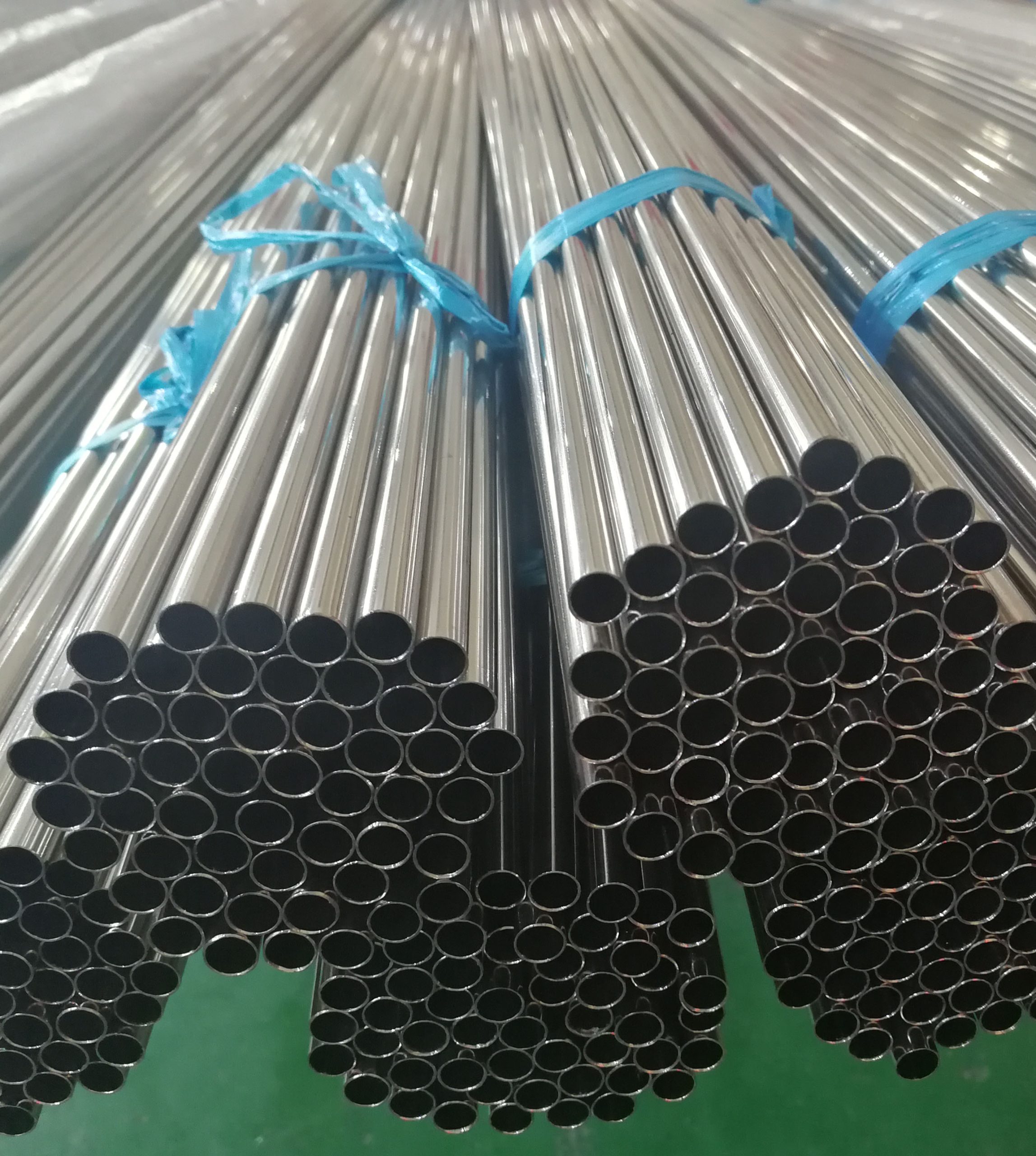
Nickel Alloy Tube Supply Scope
This page is designed for buyers searching for nickel alloy tubes, nickel alloy tubing, nickel alloy welded tube, nickel alloy seamless tube, nickel alloy heat exchanger tube, nickel alloy heating element tube, nickel alloy heater sheath tube, nickel alloy corrosion-resistant tube and nickel alloy tube supplier in China.
Nickel alloy welded and seamless tube directions can be reviewed according to grade, size, standard and application.
Product groups for heating elements, high-temperature equipment, chloride service and chemical corrosion review.
For tubular heaters, cartridge heaters, condensers, evaporators, shell and tube heat exchangers and process equipment.
Listed grades are representative. Other nickel alloy grades can be reviewed by UNS, standard, drawing and working condition.
What Are Nickel Alloy Tubes?
Nickel alloy tubes are welded or seamless tubes made from nickel-based or nickel-containing alloy grades that are selected for high-temperature strength, oxidation resistance, corrosion resistance, chloride resistance, acid service, fabrication performance or a combination of these requirements.
In industrial tube procurement, “nickel alloy tube” is not one single material. Buyers usually need to compare Incoloy, Inconel, Hastelloy and other nickel alloy grades according to the actual working medium, temperature, pressure, corrosion condition, heat transfer requirement, forming or welding process and end-user specification.
GAOFA TECH supplies nickel alloy tube directions for heating element manufacturers, tubular heater manufacturers, cartridge heater manufacturers, shell and tube heat exchanger manufacturers, condenser and evaporator manufacturers, chemical equipment manufacturers and corrosion-resistant process equipment buyers.
Do Not Select Nickel Alloy Tubes by Grade Name Alone
A nickel alloy tube should be selected by service condition, not only by alloy family. The same alloy may perform differently depending on temperature, acid concentration, chloride level, impurities, flow condition, welding, bending and inspection requirement.
- For heating elements, review sheath temperature, watt density, medium and heater construction.
- For heat exchangers, review tube-side and shell-side media, pressure, fouling and cleaning conditions.
- For chemical processing, review acid concentration, oxidizing / reducing condition, chloride level and impurities.
- For seawater or chloride service, review pitting, crevice corrosion and stress corrosion cracking risks.
- For welded fabrication, review weld condition, heat-affected zone behavior and customer approval.
Nickel Alloy Tube Grades Supplied by GAOFA TECH
Use this product family section as a material selection hub. The listed grades are representative product pages, not the full limit of available nickel alloy tube review. For grades not listed here, please send the UNS number, standard, drawing and working condition for review.
Incoloy 800 Tube
Nickel-iron-chromium alloy tube direction for heating elements, high-temperature equipment, heat treatment equipment and process equipment review.
- Heating element sheath review
- High-temperature and oxidation service review
- Welded and seamless tube directions
Incoloy 840 Tube
Nickel alloy tube direction commonly reviewed for electric heating element sheath tubes, tubular heaters, cartridge heaters and water heating equipment.
- Heating element and heater sheath tubes
- Water heating and appliance heater review
- Material choice depends on water chemistry and temperature
Incoloy 825 Tube
Nickel-iron-chromium-molybdenum-copper alloy tube direction for acid service, chemical processing and selected corrosion-resistant equipment.
- Sulfuric and phosphoric acid review
- Chemical processing equipment
- Corrosion-resistant heat exchanger review
Inconel 600 Tube
Nickel-chromium-iron alloy tube direction for thermal processing, chemical processing, caustic service review and selected heater sheath applications.
- Thermal and chemical equipment review
- Caustic service and high-temperature review
- Compare with 601 and 625 by service condition
Inconel 601 Tube
Nickel-chromium alloy tube direction for high-temperature oxidation, furnace components, radiant tubes, thermocouple protection tubes and heater sheath review.
- High-temperature oxidation service
- Furnace and thermal processing equipment
- Heating element sheath review
Inconel 625 Tube
Nickel-chromium-molybdenum-niobium alloy tube direction for chloride service, seawater, chemical processing and corrosive heat exchanger review.
- Seawater and chloride service review
- Chemical and high-temperature corrosive service
- Compare with C276, 825 and titanium
Hastelloy C276 Tube
Nickel-chromium-molybdenum-tungsten alloy tube direction for severe corrosion, mixed acid, chloride-bearing media and chemical processing.
- Mixed acid and severe corrosion review
- FGD, scrubbers and chemical heat exchangers
- Compare with 625, C22, C4 and 825
Hastelloy C22 Tube
Nickel-chromium-molybdenum-tungsten alloy tube direction for oxidizing chloride media, pitting, crevice corrosion and SCC review.
- Oxidizing chloride media review
- Pitting, crevice corrosion and SCC review
- Compare with C276 and C4
Hastelloy C4 Tube
Nickel-chromium-molybdenum alloy tube direction for thermal stability, weld heat-affected-zone corrosion review and corrosive heater sheath applications.
- Thermal stability and weld HAZ review
- Corrosive heater sheath tube review
- Compare with C276, C22 and heater sheath alloys
How to Select Nickel Alloy Tubes by Application and Working Medium
This matrix helps buyers and engineers review which nickel alloy tube family may be suitable for heating elements, heat exchangers, seawater, acid service, chemical processing and high-temperature applications. Final selection should follow actual service data and customer specification.
| Application / Condition | Nickel Alloy Tubes to Review | Selection Notes |
|---|---|---|
| Electric heating element sheath tubes | Incoloy 800 Tube, Incoloy 840 Tube, Inconel 600 Tube, Inconel 601 Tube, Hastelloy C4 Tube | Review sheath temperature, watt density, heating medium, corrosion condition, bending, welding, internal cleanliness and customer specification. |
| Tubular heaters and cartridge heaters | Incoloy 800, Incoloy 840, Inconel 600, Inconel 601, selected Hastelloy grades when corrosive media require review | Material choice depends on heater design, operating temperature, moisture control, insulation, sheath forming and medium chemistry. |
| Water heating and appliance heating | Incoloy 840, Incoloy 800, stainless steel, 310S-Mo and selected nickel alloy directions | Review water chemistry, scale formation, chloride level, temperature, cost target and existing failure mode. |
| High-temperature oxidation service | Inconel 601 Tube, Inconel 600, Incoloy 800 | Review furnace atmosphere, thermal cycling, maximum temperature, oxidation, carburization, sulfidation and creep-related requirements. |
| Seawater or chloride service | Inconel 625 Tube, titanium tubes, Hastelloy C276 Tube, Hastelloy C22 Tube | Review chloride level, temperature, crevice risk, fouling, flow velocity, galvanic corrosion, tube-side and shell-side media. |
| Sulfuric acid / phosphoric acid review | Incoloy 825 Tube, Hastelloy C276, Hastelloy C22 and other nickel alloy directions | Review acid concentration, temperature, oxidizing or reducing condition, impurities, chlorides, fluorides and allowable corrosion rate. |
| Mixed acid and severe chemical corrosion | Hastelloy C276 Tube, Hastelloy C22 Tube, Hastelloy C4 Tube, Inconel 625 | Review full chemistry, minor impurities, chloride contamination, oxidizing / reducing condition, temperature and existing corrosion history. |
| Weld-related corrosion or HAZ concern | Hastelloy C4 Tube, Hastelloy C276, Hastelloy C22 | Review welding method, heat input, post-weld treatment, heat-affected-zone behavior and end-user approval requirement. |
| Corrosive heat exchanger tubes | Inconel 625, Incoloy 825, Hastelloy C276, Hastelloy C22, Hastelloy C4 and titanium tubes | Review tube-side and shell-side media, design pressure, design temperature, fouling, cleaning method and tube expansion or welding process. |
| Other nickel alloy grade by customer specification | Other UNS / ASTM / ASME nickel alloy tube grades can be reviewed case by case | Please provide material grade, standard, tube size, quantity, drawing, working medium, temperature, pressure, inspection requirement and end-user specification. |
The Listed Nickel Alloy Grades Are Not the Full Supply Limit
GAOFA TECH lists Incoloy 800, Incoloy 840, Incoloy 825, Inconel 600, Inconel 601, Inconel 625, Hastelloy C276, Hastelloy C22 and Hastelloy C4 because these grades are commonly reviewed for heating elements, heat exchangers, high-temperature equipment and corrosion-resistant process equipment.
However, many projects use customer-specific nickel alloy grades, UNS numbers, ASTM / ASME standards or internal material codes. If your required grade is not shown on this page, GAOFA TECH can review it according to the exact material designation, standard, quantity, size and application.
Please Send These Details
- Exact grade name, UNS number, W.Nr. number or customer material code
- Applicable standard such as ASTM, ASME, EN, DIN, JIS or customer specification
- Tube form: welded, seamless, coil tube or cut length tube
- OD, wall thickness, length, tolerance and quantity
- Working medium, temperature, pressure and corrosion condition
- Inspection, document and packing requirements
Incoloy Tubes for Heating Elements, High-Temperature Equipment and Acid Service Review
Incoloy tubes are commonly reviewed where nickel-iron-chromium alloy directions are required for heating element sheaths, high-temperature equipment, water heating, chemical equipment or selected acid service.
GAOFA TECH supplies Incoloy 800, Incoloy 840 and Incoloy 825 tube directions. Incoloy 800 and 840 are often reviewed by heating element manufacturers, while Incoloy 825 is more frequently reviewed for acid and chemical corrosion service.
Typical Incoloy Tube Review Questions
- Is the tube used as a heating element sheath tube?
- Is the application related to tubular heaters, cartridge heaters or appliance heating?
- Is high-temperature oxidation or thermal cycling important?
- Is the medium water, air, oil, chemical solution or acid?
- Should Incoloy 825 be reviewed instead of 800 / 840 due to acid corrosion?
- Is the customer comparing Incoloy with stainless steel, Inconel or Hastelloy?
Inconel Tubes for High-Temperature, Chloride and Chemical Corrosion Service
Inconel tubes are reviewed for high-temperature oxidation, furnace equipment, thermal processing, caustic service, chloride service, seawater, chemical processing and corrosive heat exchanger applications.
Inconel 600 and Inconel 601 are more closely connected with high-temperature and thermal equipment review, while Inconel 625 is often reviewed for chloride, seawater, chemical corrosion and high-temperature corrosive service.
Typical Inconel Tube Review Questions
- Is the application mainly high-temperature oxidation or thermal processing?
- Is furnace, radiant tube, thermocouple protection tube or heat treatment equipment involved?
- Is the medium caustic, chloride-containing, seawater or chemical process media?
- Should Inconel 625 be reviewed for chloride or seawater corrosion resistance?
- Should Inconel 601 be reviewed instead of 600 for oxidation resistance?
- Is the customer comparing Inconel with Incoloy, Hastelloy or titanium tubes?
Hastelloy Tubes for Severe Chemical Corrosion, Mixed Acid and Weld-Related Corrosion Review
Hastelloy tubes are reviewed when chemical corrosion conditions become more demanding than common stainless steel, duplex stainless steel, titanium, Incoloy or some Inconel directions. C276, C22 and C4 should be compared according to actual medium, concentration, temperature and fabrication process.
C276 is commonly reviewed for severe corrosion and mixed acid service. C22 is commonly reviewed for oxidizing chloride media and localized corrosion risk. C4 is commonly reviewed where thermal stability, weld heat-affected-zone behavior or corrosive heater sheath review is important.
Typical Hastelloy Tube Review Questions
- Is the application related to mixed acid, acid vapor or chemical process media?
- Is chloride contamination creating pitting, crevice corrosion or SCC risk?
- Is the process oxidizing, reducing or mixed?
- Is the tube used in a scrubber, FGD system, reactor, column or corrosive heat exchanger?
- Does the customer require C276, C22 or C4 specifically?
- Does welding, bending, heater fabrication or heat-affected-zone behavior need review?
Welded vs Seamless Nickel Alloy Tubes
Nickel alloy welded and seamless tubes should not be treated as automatically interchangeable. The correct tube form depends on alloy grade, pressure, corrosion condition, wall thickness, standard, downstream fabrication and customer approval.
| Selection Factor | Welded Nickel Alloy Tube | Seamless Nickel Alloy Tube |
|---|---|---|
| Typical Use Direction | Heating element sheath tubes, welded heat exchanger tubes, process tubing and fabricated equipment when welded tube is accepted. | Applications where seamless construction, higher wall thickness, pressure-related service or end-user specification requires seamless tube. |
| Reference Range | Many GAOFA TECH nickel alloy welded tube directions can be reviewed around OD 6.0–88.9 mm and WT 0.3–2.0 mm, depending on grade and specification. | Seamless size range depends on grade and production route. For Hastelloy C276 / C22 / C4 public reference, OD 6.0 mm and above is recommended; smaller OD may be reviewed case by case. |
| Standards | Commonly reviewed with ASTM / ASME welded tube or pipe standards according to grade and product form. | Commonly reviewed with ASTM / ASME seamless tube or pipe standards according to grade and product form. |
| Inspection Focus | Weld condition, dimensional inspection, eddy current testing, pneumatic or hydrostatic testing when required. | Dimensional inspection, ultrasonic testing, eddy current testing, hydrostatic testing or other inspection according to specification. |
| Cost and Availability | May be more practical for selected thin-wall tube sizes when welded tube is accepted by customer specification. | May be required by pressure, corrosion, wall thickness or end-user specification, but cost and lead time should be reviewed. |
| RFQ Decision | Confirm whether welded tube is accepted and provide medium, pressure, inspection requirement and standard. | Confirm why seamless tube is required and provide full standard, OD, wall thickness, tolerance and inspection scope. |
Applications of Nickel Alloy Tubes
Nickel alloy tubes may be reviewed for heating, heat transfer, chemical corrosion, high-temperature equipment and chloride service. Final suitability depends on actual working condition and customer specification.
Heating Element Tubes
Nickel alloy tubes may be reviewed for tubular heating elements, immersion heaters, water heaters, cartridge heaters and heater sheath tubes.
View Heating Element Tubes →Cartridge Heater Sheath Tubes
Precision nickel alloy tubes may be reviewed for cartridge heater sheath applications according to OD, wall thickness, straightness and cleanliness requirements.
View Cartridge Heater Tubes →Heat Exchanger Tubes
Nickel alloy heat exchanger tubes may be reviewed for corrosive tube-side or shell-side media, acid service, chloride service and chemical process cooling.
View Heat Exchanger Tubes →Condensers and Evaporators
Nickel alloy tubes may be reviewed for condensers, evaporators and thermal equipment where corrosion or high-temperature conditions exceed common stainless steel limits.
View Condenser & Evaporator Tubes →Chemical Processing Tubes
Incoloy, Inconel and Hastelloy tubes may be reviewed for reactors, columns, process tubing, scrubbers, FGD equipment and acid handling equipment.
View Chemical & Corrosive Equipment Tubes →Seawater and Chloride Service
Inconel 625, Hastelloy grades and titanium tubes may be compared for chloride-rich media, seawater cooling and marine cooling applications.
View Seawater / Marine Cooling Tubes →High-Temperature Equipment
Inconel 600 / 601 and Incoloy 800 may be reviewed for thermal processing, furnace equipment, radiant tubes and high-temperature oxidation service.
View High-Temperature Material Review →FGD and Scrubber Equipment
Hastelloy C276, C22 and Inconel 625 may be reviewed for scrubbers, flue gas desulfurization and corrosive gas condensate environments.
View Corrosive Equipment Tubes →Other Project-Specific Applications
Other nickel alloy tube applications can be reviewed according to customer drawings, UNS grade, standard, corrosion condition and end-user specification.
Prepare Tube Inquiry →Nickel Alloy Tube Standards, Inspection and Quality Control
Applicable standards depend on alloy grade, tube form and customer specification. GAOFA TECH can review dimensional inspection, visual inspection, material verification and non-destructive testing according to order requirements.
| Inspection / Document Item | Purpose | Buyer Notes |
|---|---|---|
| Material Grade and MTC | Confirm alloy grade, heat number, chemical composition and mechanical properties. | Please confirm exact material wording required on quotation, contract, MTC and customs documents. |
| Dimensional Inspection | Check OD, wall thickness, length, straightness and tolerance. | Important for heating element sheath tubes, heat exchanger tube assembly, tube expansion and replacement projects. |
| Visual Inspection | Review outer surface, tube ends, handling condition and visible defects. | Surface condition should match downstream bending, welding, expansion or assembly requirements. |
| PMI / Material Verification | Support material identity check for nickel alloy grades. | PMI checking can be discussed as required or as agreed. |
| Eddy Current Testing | Review tube integrity according to standard or agreed requirement. | Testing method, acceptance criteria and record requirement should be confirmed before production. |
| Ultrasonic Testing | Discuss flaw detection for selected seamless or heavier-wall tube directions. | UT feasibility depends on material, size, wall thickness, tube form and specification. |
| Pneumatic / Hydrostatic Testing | Check tightness or pressure-related requirements when specified. | The correct method should be selected according to standard, application and customer requirement. |
| Internal Cleanliness and Dryness | Support heater sheath tube, chemical process tube or heat exchanger cleanliness requirements. | Sponge cleaning, air blowing, drying and end protection should be confirmed when required. |
| Packing Review | Protect tube surface, tube ends and shipment condition. | Bundle protection, wrapping, wooden case and packing photos can be discussed before shipment. |
View Tube Inspection and Quality Control Details
Review GAOFA TECH’s tube inspection examples, including PMI checking, OD inspection, wall thickness inspection, visual inspection, eddy current testing, pneumatic testing, ultrasonic testing, internal cleanliness checking, fatigue testing and packing review.
Information Needed for a Nickel Alloy Tube Quotation
A complete RFQ helps confirm the correct nickel alloy grade, welded or seamless tube form, production route, inspection scope, packing method and quotation accuracy.
For heating element, heat exchanger, chemical processing, seawater, acid service or replacement tube projects, please provide both tube dimensions and working condition details.
Copy Basic RFQ Template
Copy this short template and send us the basic tube requirement.
Material review note: If you are not sure which nickel alloy grade or tube form is suitable, please tell us the actual working condition, including application, working medium, operating temperature, pressure, corrosion or scaling concern, and any previous failure issue if available.
- Material grade: Incoloy, Inconel, Hastelloy, UNS number, W.Nr. number or customer-specific grade
- Tube form: welded tube, seamless tube, coil tube or cut length tube
- OD, wall thickness, tolerance and length
- Quantity: pieces, meters, kilograms or annual consumption
- Standard: ASTM, ASME, EN, DIN, JIS or customer specification
- Application: heating element, cartridge heater, heat exchanger, condenser, evaporator, chemical processing, scrubber or replacement tube
- Working medium, acid type, concentration, pH, chloride level and impurities
- Operating temperature, maximum temperature, sheath temperature if applicable and pressure
- Corrosion condition, existing material, failure mode and expected service life
- Fabrication requirement: bending, coiling, welding, expanding, end forming or heater assembly
- Surface condition, heat treatment, straightness and internal cleanliness requirement
- Inspection requirement: dimensional, visual, PMI, eddy current, UT, pneumatic, hydrostatic or other test
- Documents: MTC, inspection report, packing photos, carbon / CBAM-related documents if required
- Packing requirement, destination, Incoterms and expected delivery schedule
Send Your Nickel Alloy Tube Requirement
Please send material grade, tube form, OD, wall thickness, length, quantity, standard, application, working medium, temperature, pressure, corrosion condition, fabrication requirement, inspection requirement and packing details. GAOFA TECH will review the suitable nickel alloy tube quotation according to your specification.
Nickel Alloy Tubes FAQ
What are nickel alloy tubes used for?
Nickel alloy tubes are used for heating elements, tubular heaters, cartridge heater sheaths, heat exchangers, condensers, evaporators, chemical processing equipment, seawater or chloride service, high-temperature equipment and corrosion-resistant process systems.
Does GAOFA TECH supply both welded and seamless nickel alloy tubes?
Yes. GAOFA TECH can review both welded and seamless nickel alloy tube directions according to alloy grade, OD, wall thickness, standard, application, inspection requirement and customer specification.
Does GAOFA TECH only supply the nickel alloy grades listed on this page?
No. The grades listed on this page are representative grades with dedicated product pages. Other nickel alloy grades can be reviewed according to the exact UNS grade, material standard, drawing, tube size, quantity, application and working condition.
What is the difference between Incoloy, Inconel and Hastelloy tubes?
Incoloy tubes are often reviewed for heating elements, high-temperature equipment and selected acid service. Inconel tubes are often reviewed for high-temperature oxidation, chloride service, seawater and chemical corrosion. Hastelloy tubes are often reviewed for severe chemical corrosion, mixed acid, oxidizing chloride media and weld-related corrosion review.
Which nickel alloy tube is used for heating elements?
Heating element sheath tubes often use Incoloy 800, Incoloy 840, Inconel 600 or Inconel 601. Hastelloy C4 may be reviewed when corrosive chemical media, weld-related corrosion or customer specification points toward UNS N06455. The final choice depends on medium, temperature, watt density, corrosion and heater design.
Which nickel alloy tube should be reviewed for seawater or chloride service?
Inconel 625, titanium tubes, Hastelloy C276 and Hastelloy C22 may be reviewed for seawater or chloride service. The correct material depends on chloride level, temperature, crevice risk, flow condition, fouling, galvanic corrosion and equipment design.
Which nickel alloy tube should be reviewed for acid or chemical processing service?
Incoloy 825, Inconel 625, Hastelloy C276, Hastelloy C22 and Hastelloy C4 may be reviewed for acid or chemical processing service. Selection depends on acid type, concentration, temperature, impurities, chloride level, oxidizing or reducing condition and corrosion history.
When should Hastelloy C276, C22 or C4 be reviewed?
Hastelloy C276 should be reviewed for severe corrosion and mixed acid service. Hastelloy C22 should be reviewed for oxidizing chloride media, pitting, crevice corrosion and SCC risk. Hastelloy C4 should be reviewed for thermal stability, weld heat-affected-zone behavior and selected corrosive heater sheath or chemical service.
How should buyers choose between welded and seamless nickel alloy tubes?
Welded or seamless tube selection depends on standard, pressure, wall thickness, corrosion condition, customer approval, tube size, inspection requirement and fabrication process. Welded tube may be practical for selected thin-wall applications, while seamless tube may be required by specification, pressure or corrosion service.
Can nickel alloy tubes replace stainless steel, copper or titanium tubes?
Nickel alloy tubes may be reviewed as an alternative when stainless steel, copper alloy or titanium tubes do not match corrosion, temperature, cost or fabrication requirements. However, replacement suitability depends on working medium, temperature, pressure, corrosion mechanism, heat transfer requirement, equipment design and customer approval.
When should nickel alloy tubes be reviewed for high-temperature or corrosive applications?
Nickel alloy tubes should be reviewed when stainless steel, copper alloy or titanium cannot meet the required combination of temperature, oxidation resistance, chloride resistance, acid resistance, corrosion allowance, fabrication route or customer specification. High-temperature and corrosive applications should be reviewed according to working medium, concentration, temperature, pressure, flow, fouling, cleaning and existing failure history.
Can nickel alloy tubes be reviewed for copper tube replacement?
Yes, nickel alloy tubes may be reviewed for selected copper tube replacement projects when copper price pressure, corrosion history, seawater, chloride, acid or temperature conditions justify a different material direction. Replacement should not be decided by material price alone because heat transfer, wall thickness, pressure drop, fabrication, tube sheet connection and equipment approval must also be reviewed.
What is enough for an initial nickel alloy tube quotation?
For an initial quotation, buyers can first provide material grade, tube form, OD, wall thickness, length and quantity. If the material grade or welded / seamless route is not confirmed, please also provide the application, working medium, temperature, pressure, corrosion concern and previous failure information so the material direction can be reviewed more carefully.
What information is needed before quotation?
Please provide material grade, tube form, OD, wall thickness, length, quantity, standard, application, working medium, temperature, pressure, corrosion condition, fabrication requirement, inspection requirement and packing details.