
Stainless Steel Tubes
Welded, Seamless and Coiled Stainless Steel Tubes for Heating Elements, Heat Exchangers and Industrial Cooling Applications
GAOFA TECH supplies stainless steel tubes in welded, seamless, coiled and selected enhanced tube forms for heating elements, heat exchangers, condensers and evaporators, refrigeration equipment, cooling systems and selected replacement projects.
Tube grade and tube form should be reviewed according to working medium, temperature, pressure, chloride level, forming method, inspection requirement, applicable standard and customer specification.
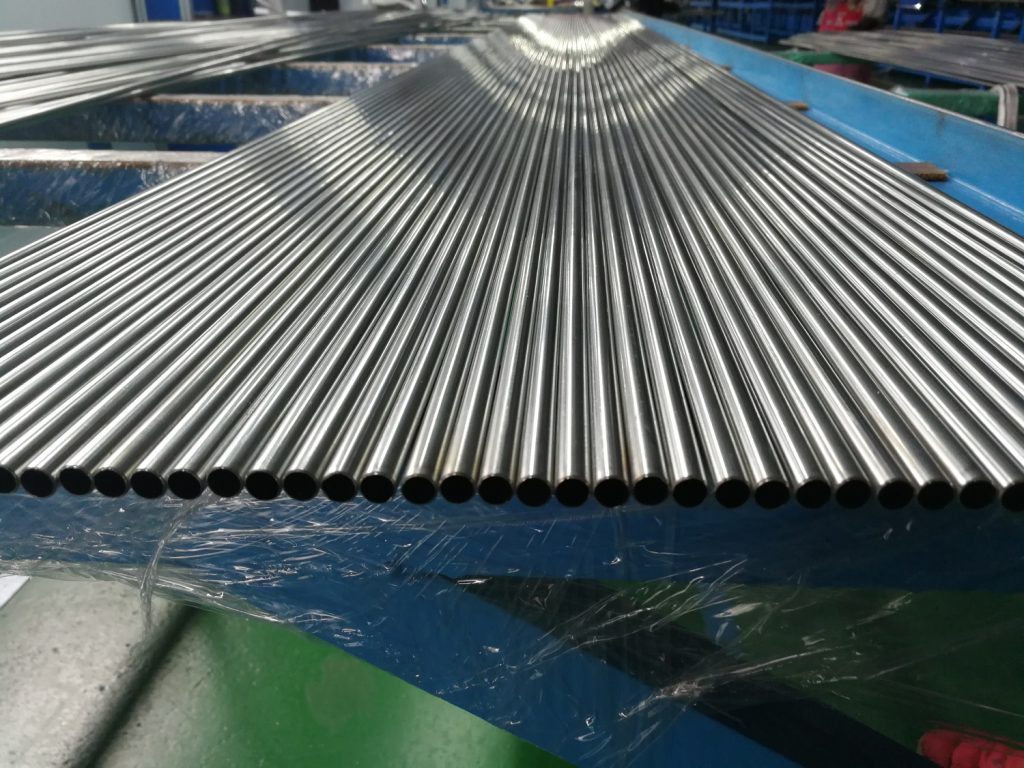
Stainless Steel Tube Supply Scope
This page is the stainless steel tube family hub for buyers comparing stainless steel welded tubes, seamless tubes, coiled tubes and selected enhanced tube directions. It links to detailed product pages and application pages for heating elements, heat exchangers, condensers, evaporators and industrial cooling systems.
Tube form should be selected by size, wall thickness, pressure, forming, cost, standard and customer specification.
Grades are reviewed according to temperature, corrosion condition, chloride level, fabrication and application.
For tubular heaters, cartridge heaters, heat exchangers, condensers, evaporators and refrigeration equipment.
For faster quotation, provide material grade, tube form, OD, wall thickness, length, quantity and drawing if available.
Stainless Steel Tubes for Industrial Tube Procurement
Stainless steel tubes are widely used in industrial heating, heat transfer and cooling equipment, but tube selection should not be based on material name alone. A 304 tube, 316L tube, 321 tube, 310S tube or duplex stainless steel tube may perform differently depending on working medium, temperature, pressure, chloride level, forming process and inspection requirement.
GAOFA TECH uses this stainless steel tube page as a product family hub. Buyers can start here when they need to compare stainless steel welded tube, stainless steel seamless tube, stainless steel coiled tube, selected stainless steel low fin tube and inner grooved tube directions.
For heating element, heat exchanger or refrigeration projects, the stainless steel grade should be reviewed together with the application and downstream fabrication process, instead of being treated as a universal material choice.
Start with Tube Form, Grade and Application
- Use welded tubes when thin-wall sizes, cost efficiency, straightness and standard acceptance are suitable.
- Use seamless tubes when pressure, heavier wall, machining, U-bending, end-user specification or special service requires review.
- Use coiled tubes when long continuous length, coil form, heat exchanger coil or compact routing is required.
- Use stainless steel low fin tubes when enhanced external surface area is required and stainless steel is accepted by the medium.
- Use inner grooved tubes when tube-side or refrigerant-side heat transfer enhancement needs review by drawing, groove geometry and working condition.
- Review titanium, nickel alloy or other material directions when chloride, seawater, acid, high temperature or corrosion risk exceeds stainless steel capability.
Stainless Steel Tube Forms and Enhanced Tube Options
Stainless steel tube quotation depends on both material grade and tube form. Welded, seamless and coiled tubes cover common supply forms, while low fin and inner grooved tubes are reviewed when enhanced heat transfer geometry is required. U-bent tubes can also be reviewed as a fabrication form according to the drawing, bend radius and equipment specification.
Stainless Steel Welded Tube
Thin-wall stainless steel tube direction for heating elements, heat exchangers, condensers and selected industrial tube applications when accepted by specification.
View Welded Tube →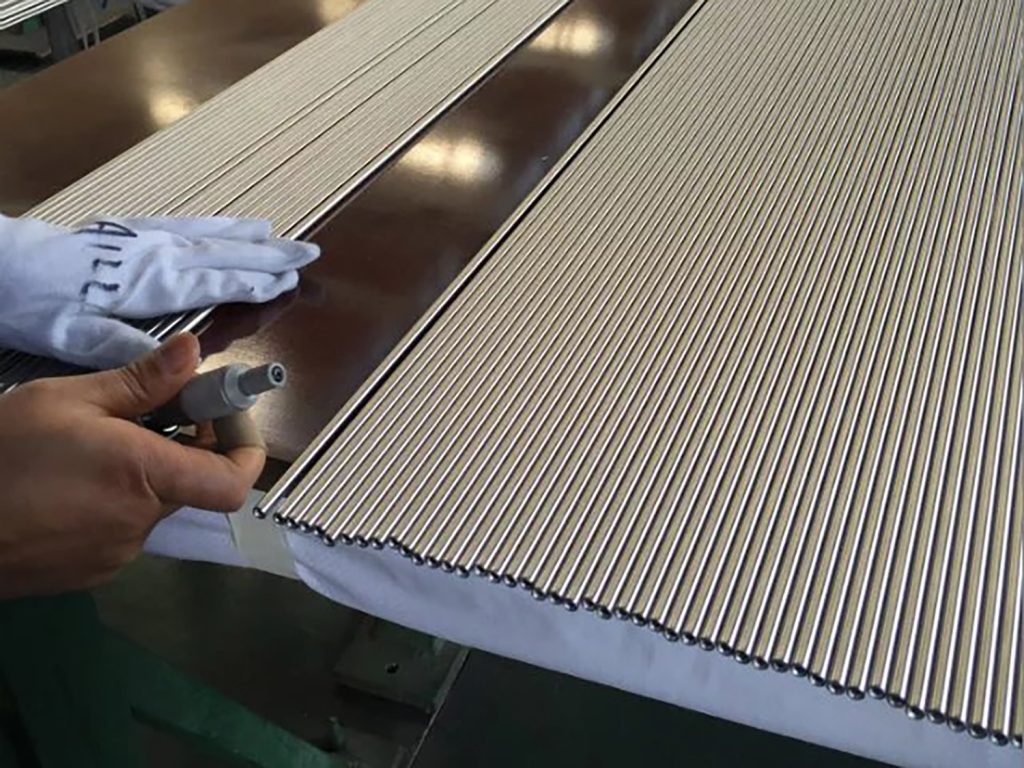
Stainless Steel Seamless Tube
Reviewed for higher pressure, heavier wall, special standard, U-bend, machining, replacement project or customer-specified seamless tube requirements.
View Seamless Tube →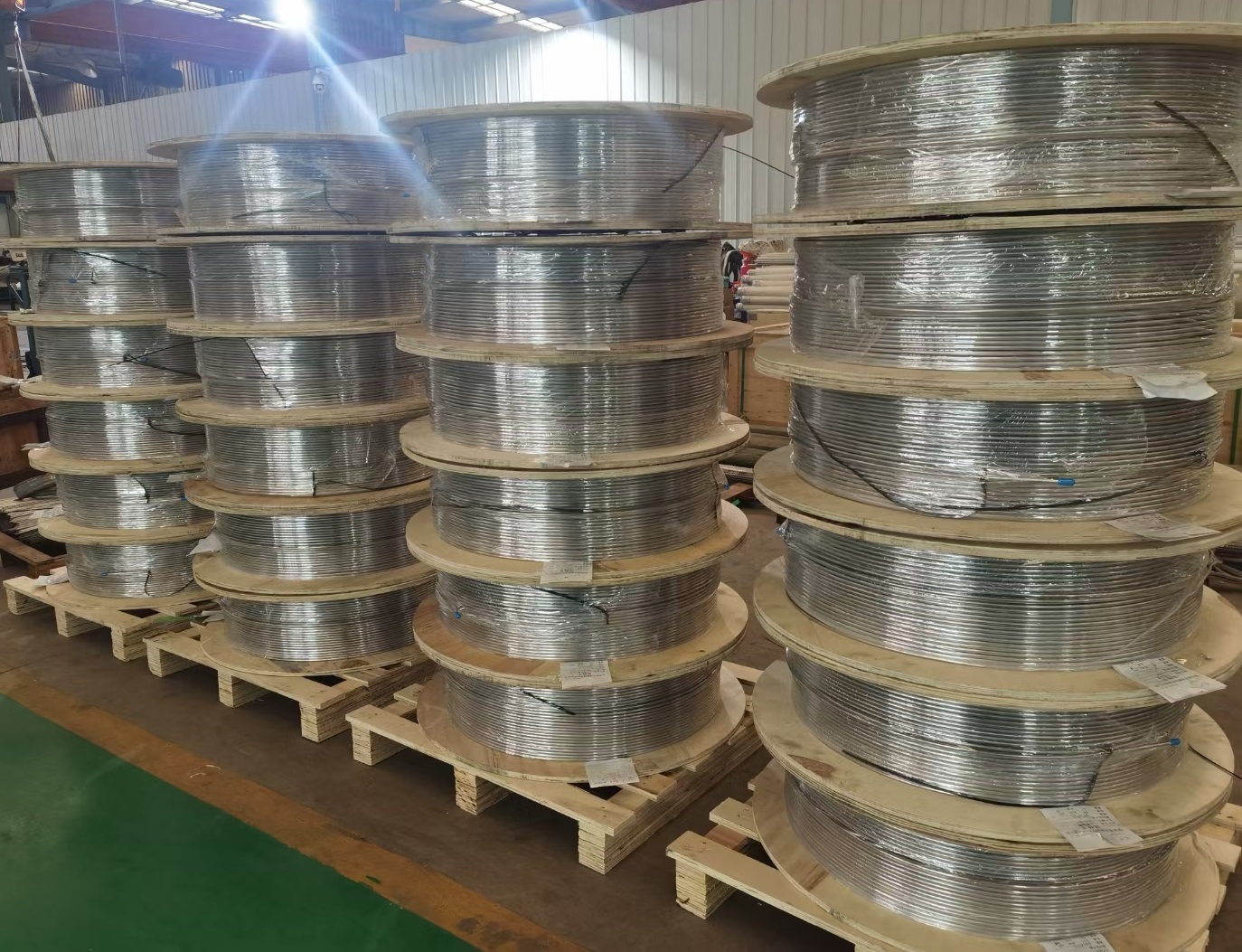
Stainless Steel Coiled Tube
Coil form stainless steel tube for long continuous length, cooling coil, heat exchanger coil and project-specific routing requirements.
View Coiled Tube →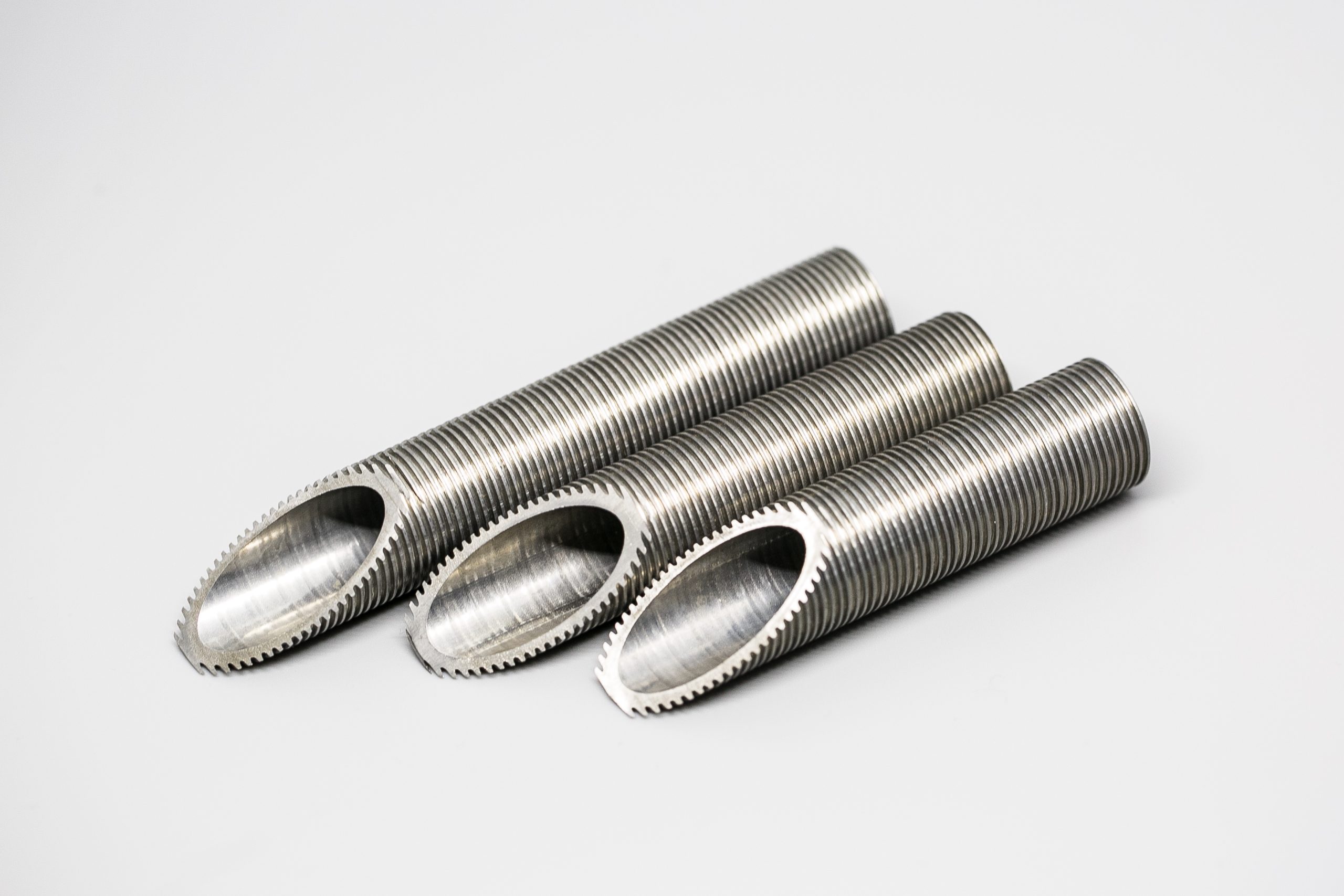
Stainless Steel Low Fin Tube
External low fin stainless steel tube direction for selected heat exchanger, condenser and evaporator projects requiring enhanced surface area.
View Low Fin Tube →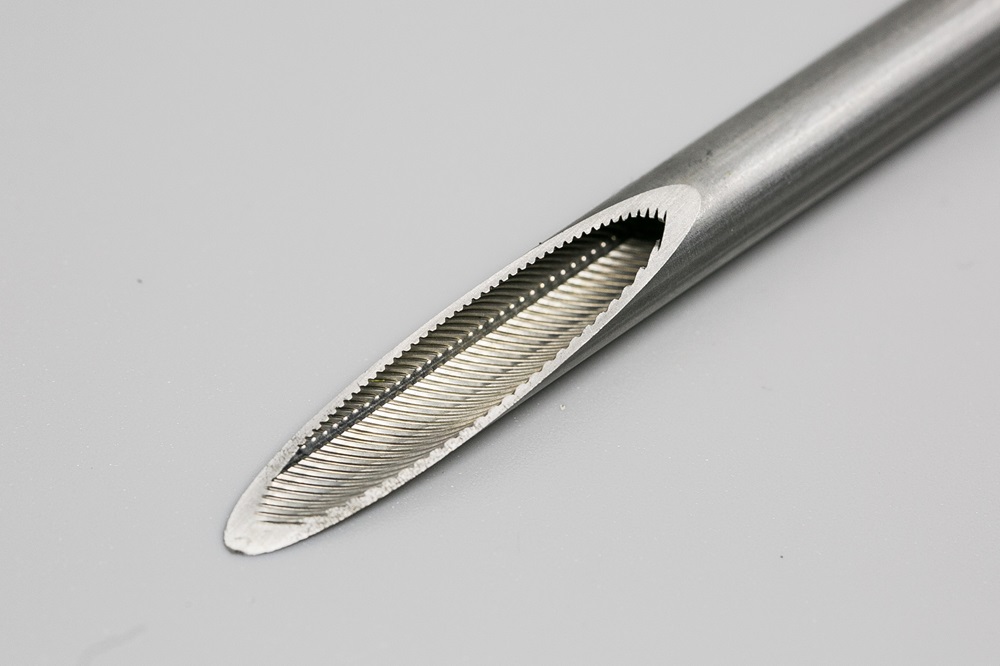
Inner Grooved Tube
Internal groove tube direction for selected evaporator, refrigeration, condenser and tube-side heat transfer applications where groove geometry is required by design.
View Inner Grooved Tube →New Stainless Steel Tube Directions
These application-led products use stainless steel as the main tube material but are specified around the equipment design, connection method and downstream fabrication rather than grade alone.
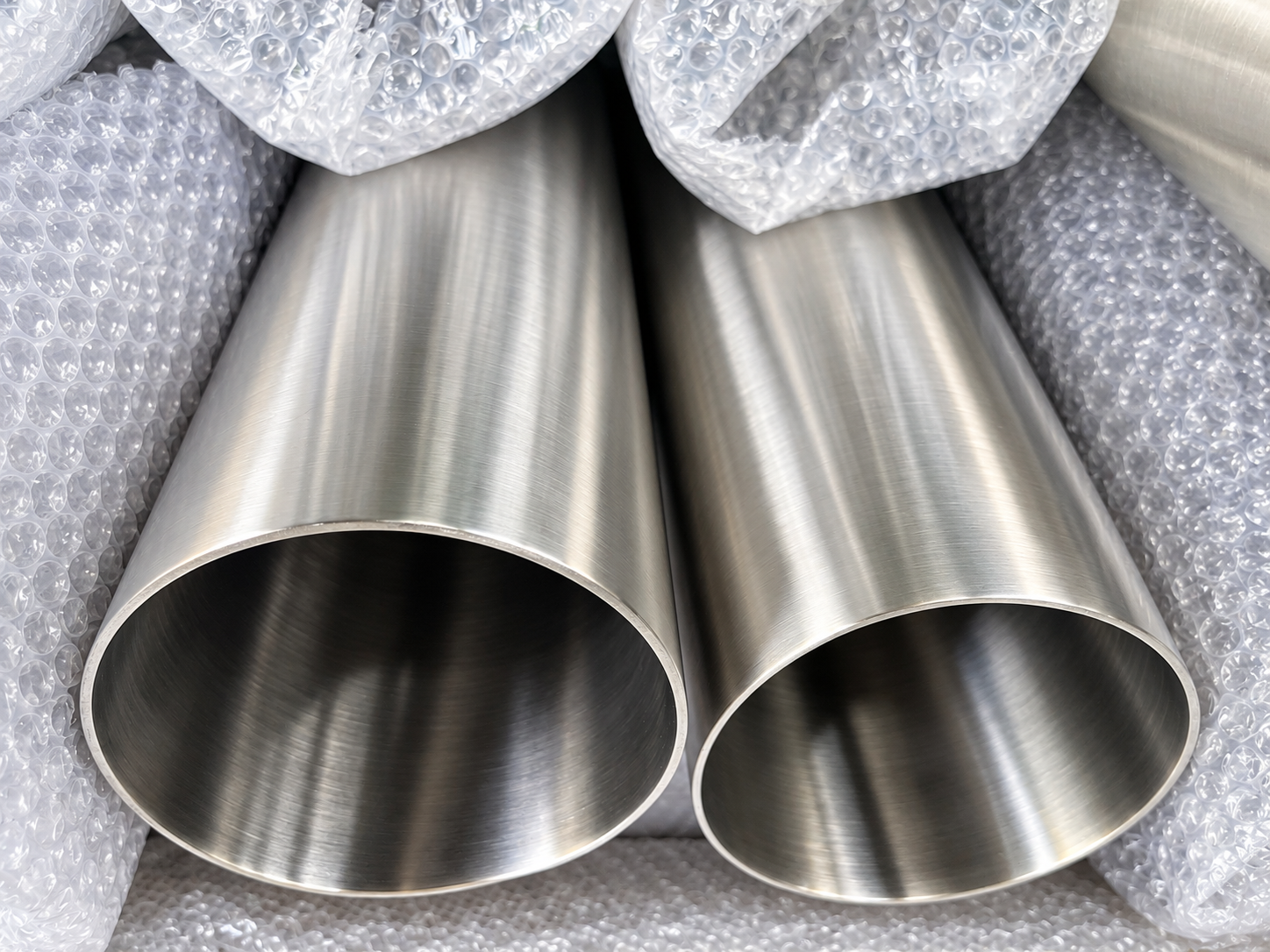
CDU & Liquid Cooling Stainless Steel Tubes
Stainless steel tube and pipe directions for CDU internal piping, supply / return headers and manifolds, reviewed by coolant chemistry, pressure, temperature, cleanliness, fabrication and project specification.
View CDU & AI Liquid Cooling Tubes →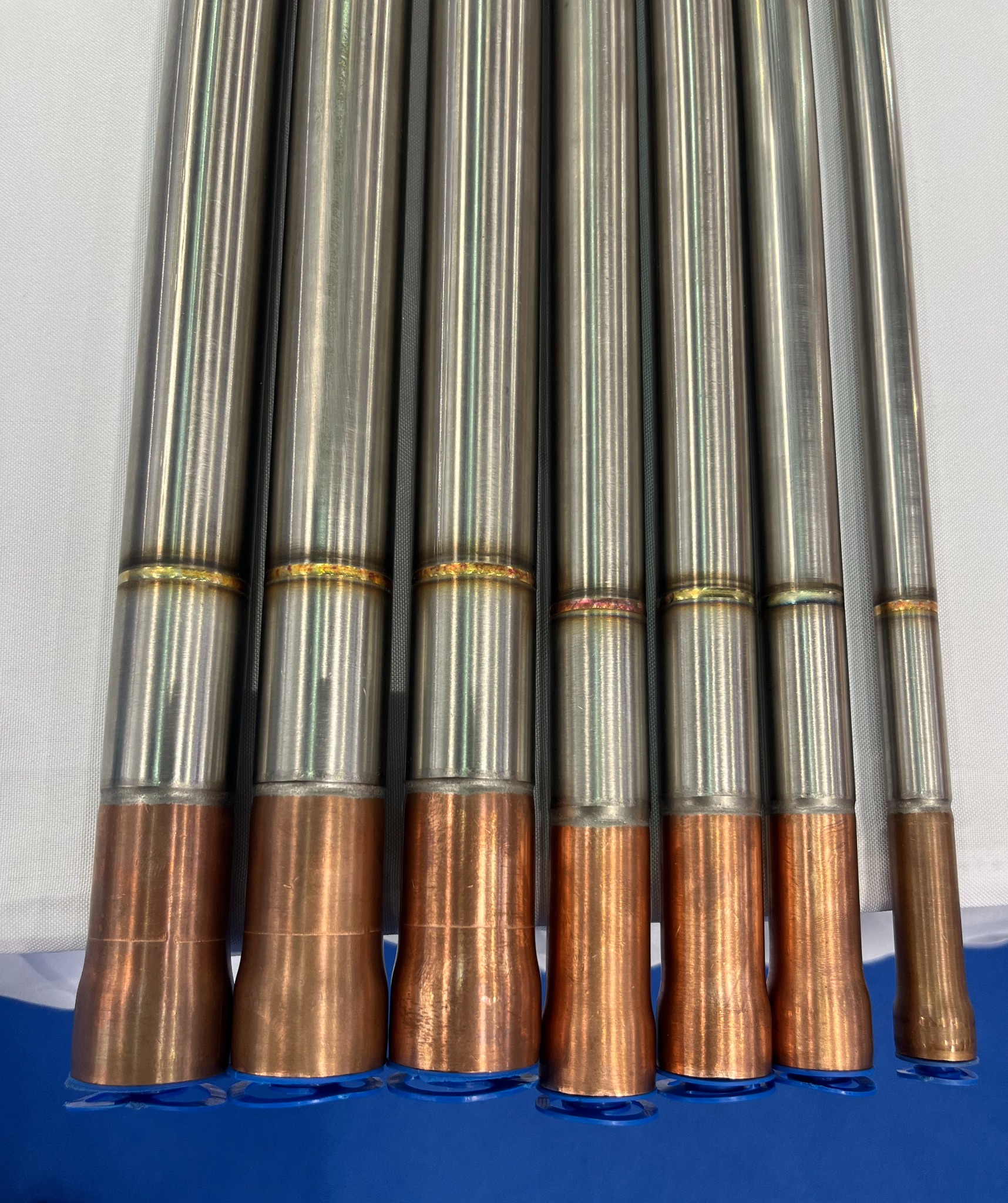
Stainless Steel Tubes with Copper Ends
304 stainless steel main tubes with copper connection ends for selected HVAC evaporator, refrigeration and commercial air-conditioning projects where copper-side connection sections are retained.
View Stainless Steel Tubes with Copper Ends →Common Stainless Steel Grades for Tube Applications
The table below is a practical grade review guide, not a final material guarantee. Final suitability depends on working medium, temperature, pressure, chloride level, cleaning method, corrosion history, fabrication process and customer specification.
| Grade Direction | Typical Review Direction | Buyer Notes |
|---|---|---|
| 304 / 304L | General stainless steel tube use, mild cooling water, heating element tube review and selected industrial applications. | Review chloride level, cleaning chemical, forming, welding and whether 304 is enough for the actual service condition. |
| 316L | General corrosion resistance upgrade from 304 for selected heat exchanger, condenser, evaporator and cooling water applications. | 316L is commonly reviewed, but it is not automatically enough for all chloride, brine or seawater applications. |
| 321 | Stabilized stainless steel direction for selected higher-temperature or fabrication-related applications. | Review actual service temperature, forming process, welding condition and customer standard before selection. |
| 310S | High-temperature oxidation resistance direction for heating-related and selected thermal equipment applications. | Review operating temperature, atmosphere, thermal cycling, tube wall, fabrication route and end-user specification. |
| 904L | Selected corrosive service review where higher alloyed stainless steel is considered. | Availability, cost, size route and corrosion mechanism should be checked before quotation. |
| 2205 Duplex | Higher strength and chloride corrosion review for selected heat exchanger, cooling water and process applications. | Duplex stainless steel is not a direct replacement for 316L in every project. Welding, forming and corrosion condition should be reviewed. |
| 2507 Super Duplex | More demanding chloride or corrosion review direction when duplex performance needs to be increased. | Requires project-specific review of medium, temperature, chloride, availability, fabrication and inspection. |
| Special Stainless Directions | ESHR-03 is a project-specific Mo-modified Cr–Ni stainless steel direction for water-contact heater sheaths; other specialty grades require separate review. | ESHR-03 was previously described as 310S-Mo in some enquiries. Do not assume standard 310S equivalence; confirm agreed chemistry, finished-tube requirements and heater validation. |
Stainless Steel Tubes by Application
Stainless steel tubes are used in heating, cooling, heat transfer and selected replacement projects. The same grade and tube form may not fit every service, so each application should be reviewed according to working medium, temperature, pressure, corrosion condition, fabrication process and customer specification.
Heating Element Tubes
304, 316L, 321 and 310S can be reviewed for the relevant heater design; ESHR-03 is a separate project-specific option for selected water-contact sheaths. Suitability depends on working medium and customer qualification.
View Heating Element Tubes →Heat Exchanger Tubes
Stainless steel tubes can be reviewed for heat exchangers where cooling water, process medium, pressure, temperature and corrosion conditions are suitable.
View Heat Exchanger Tubes →Shell & Tube Heat Exchanger Tubes
For tube bundles, stainless steel tube review should include OD / WT tolerance, straightness, tube-to-tubesheet expansion or welding, U-bend requirements and inspection scope.
View Shell & Tube HX Tubes →Condenser & Evaporator Tubes
316L, duplex stainless and selected enhanced tube directions may be reviewed for condensers, evaporators, chillers and refrigeration equipment.
View Condenser & Evaporator Tubes →Industrial Refrigeration Tubes
Stainless steel tubes may be reviewed for chillers, brine coolers, ammonia-related equipment and industrial refrigeration systems according to equipment specification.
View Industrial Refrigeration Tubes →Chemical & Corrosive Equipment Tubes
For corrosive cooling water, process liquid or chemical equipment, stainless steel should be compared with titanium, nickel alloy or Hastelloy according to actual medium and corrosion risk.
View Chemical & Corrosive Tubes →Enhanced Heat Transfer Tubes
Stainless steel low fin tubes, inner grooved tubes and other enhanced tube directions can be reviewed when external surface area, tube-side enhancement or compact heat transfer design is required.
View Enhanced Tubes →Copper Tube Replacement Review
When stainless steel is considered due to copper price pressure or corrosion requirements, heat transfer, pressure drop, tube wall, tube sheet connection and equipment approval should be reviewed together.
View Copper Replacement Review →Seamless vs Welded Tube Selection
For many stainless steel projects, welded or seamless tube selection depends on pressure, wall thickness, standard, forming route, inspection requirement, budget and customer specification.
View Seamless vs Welded Guide →Welded vs Seamless Stainless Steel Tubes
Welded and seamless stainless steel tubes should not be treated as automatically interchangeable. Welded tubes should not be rejected only because they are welded, and seamless tubes are not automatically better for every application. The correct tube form depends on standard, pressure, wall thickness, fabrication, inspection and customer specification. For a broader comparison, see the Seamless vs Welded Tubes Selection Guide.
| Selection Factor | Stainless Steel Welded Tube | Stainless Steel Seamless Tube |
|---|---|---|
| Typical Review Direction | Welded tubes are often reviewed for thin-wall sizes, heating element production, general heat exchanger tubes, condensers and larger quantity projects when accepted by specification. | Seamless tubes may be reviewed for higher pressure, heavier wall, machining, U-bending, special standards or end-user requirements. |
| Common Standards | ASTM A249, ASTM A269, EN or customer standard depending on application and order requirement. | ASTM A213, ASTM A269, EN or customer standard depending on pressure, grade and specification. |
| Inspection Focus | OD, wall thickness, weld condition, straightness, surface, eddy current, pneumatic or hydrostatic testing by order requirement. | OD, wall thickness, straightness, surface, UT, eddy current, hydrostatic or other tests by specification. |
| Cost and Lead Time | Often practical for selected thin-wall sizes and repeat quantities, but feasibility depends on grade, size and standard. | May involve different MOQ, cost and production route depending on grade, size, wall thickness and availability. |
| Buyer Decision | Suitable when the drawing or standard accepts welded tube and the service condition is appropriate. | Suitable when the project specification, pressure design or downstream fabrication requires seamless tube. |
Inspection and Quality Control for Stainless Steel Tubes
Inspection scope should be confirmed before production according to tube grade, tube form, applicable standard and customer requirement. For heat exchanger, heating element and replacement projects, dimensional stability, surface condition and tube integrity are especially important.
| Inspection Item | Purpose | Buyer Notes |
|---|---|---|
| Material Grade and MTC | Confirm heat number, chemical composition, mechanical properties and traceability. | EN 10204 3.1 MTC or equivalent documentation can be reviewed according to order requirement. |
| PMI Checking | Support material verification when required by buyer, project or internal control plan. | PMI should be specified before production or shipment if required. |
| OD / WT / Length Inspection | Support tube fitting, heater fabrication, heat exchanger assembly, replacement matching and packing control. | Please confirm tolerance, fixed length, straightness and cut end requirement if critical. |
| Eddy Current / Hydrostatic / Pneumatic Test | Review tube integrity according to applicable standard or order requirement. | Testing method and acceptance criteria should be agreed before production. |
| UT for Selected Seamless Tubes | Review seamless tube integrity when required by specification, grade or service condition. | UT is not automatically required for every order and should be confirmed by standard or buyer specification. |
| Surface and Packing Review | Reduce risk of surface damage, contamination, deformation or tube end damage during transport. | Bundle packing, wrapping, wooden case, tube end protection and packing photos can be discussed before shipment. |
Review Tube Inspection and Quality Control Details
GAOFA TECH can review dimensional inspection, visual inspection, PMI checking, eddy current testing, pneumatic testing, hydrostatic testing, ultrasonic testing for selected tubes and packing review according to order requirements.
Information Needed for Stainless Steel Tube Quotation
For most stainless steel tube inquiries, buyers do not need to provide a long engineering questionnaire. A clear material grade, tube form, size, length and quantity are usually enough for an initial quotation.
For special applications such as heat exchanger replacement, copper replacement, corrosive cooling water, enhanced tubes or tight inspection requirements, additional working condition details can help us review the quotation more accurately.
Copy Basic RFQ Template
Copy this short template and send us the basic stainless steel tube requirement.
Material review note: If you are not sure which stainless steel grade or tube form is suitable, please tell us the actual working condition, including application, working medium, operating temperature, pressure, corrosion or scaling concern, and any previous failure issue if available. You can also use our Tube Inquiry Checklist for a more detailed RFQ.
- Material grade: 304, 316L, 321, 310S, 2205, 2507 or other stainless steel grade
- Tube form: welded, seamless, coiled, low fin, inner grooved, straight length or cut-to-length tube
- Tube size: OD × wall thickness × length
- Quantity: meters, pieces, kg or tons
- Standard, drawing or sample reference if available
- Application: heating element, heat exchanger, condenser, evaporator, refrigeration, cooling or replacement project
- Inspection requirement: MTC, PMI, eddy current, hydrostatic, pneumatic, UT or other tests if required
- Destination, Incoterms, packing requirement and expected delivery schedule
Send Your Stainless Steel Tube Requirement
Please send material grade, tube form, OD, wall thickness, length, quantity, standard or drawing, application and delivery requirement. For special projects, working medium, temperature, pressure, corrosion condition and inspection requirement can help us review the suitable quotation.
Stainless Steel Tubes FAQ
What stainless steel tube grades and standards does GAOFA TECH supply?
GAOFA TECH can review stainless steel tube inquiries in common grades such as 304 / 304L, 316L, 321, 310S, 2205 duplex, 2507 super duplex and selected project-specific stainless steel grades. Common order standards can include ASTM A249 / ASME SA249 for welded heat exchanger and condenser tubes, ASTM A213 / ASME SA213 for seamless heat exchanger and boiler tubes, ASTM A269 for general tubing, and customer drawings or EN specifications when applicable. Final availability depends on tube form, size, quantity, standard and production route.
ASME SA249 welded tube vs. ASME SA213 seamless tube: which should be reviewed for thermal equipment?
ASME SA249 welded stainless steel tubes can be practical for many heat exchanger, condenser, evaporator and heating element applications when the design and customer specification allow welded tubes. With suitable welding, cold working, annealing and inspection control, welded stainless steel tubes can provide stable dimensional consistency for many thermal equipment applications. ASME SA213 seamless stainless steel tubes may still be required for higher pressure, heavier wall, U-bending, special specifications or end-user approval. The correct choice depends on pressure, wall thickness, tube expansion, bending, corrosion condition, inspection requirement and customer specification.
Which stainless steel tube specifications are important for tubular heating elements?
For a standard tubular heating element tube quotation, material grade, OD, wall thickness, length and quantity are usually enough for an initial review. For forming-sensitive heating element production, buyers may also review wall thickness uniformity, annealed condition, bendability, flaring or end forming behavior, surface condition, internal cleanliness, fixed length tolerance and packing protection. The final requirement should follow the heater design, filling process, bending process and customer specification.
Which stainless steel tube grades are commonly reviewed for high-temperature air or gas heating?
321 stainless steel tubes may be reviewed for selected elevated-temperature applications where a stabilized stainless steel direction is required. 310S stainless steel tubes may be reviewed for higher-temperature oxidation resistance compared with common 304 or 316L directions. For more demanding heating conditions, nickel alloy tubes may also need review. Final selection depends on service temperature, atmosphere, thermal cycling, oxidation, scaling, carburizing or sulfur-containing environment, forming process and customer specification.
Which stainless steel grades are commonly used for shell and tube heat exchangers?
For shell and tube heat exchanger projects, 304 / 304L may be reviewed for mild water or general service, while 316L is commonly reviewed when better general corrosion resistance is required. 317L, 904L, 2205 duplex or 2507 super duplex may be reviewed when chloride level, temperature, crevice risk or corrosion severity increases. Final material choice depends on tube-side and shell-side media, chloride level, temperature, pressure, cleaning method, tube sheet material and customer specification.
Is 316L stainless steel always sufficient for cooling water applications?
No. 316L stainless steel is commonly reviewed for general cooling water, but it is not automatically sufficient for all chloride-rich water, brine, seawater, stagnant zones, crevice conditions or elevated-temperature cooling service. Chloride concentration, temperature, pH, oxygen content, fouling, cleaning chemicals and corrosion history can increase pitting, crevice corrosion or chloride stress corrosion cracking risk. In more demanding cooling conditions, duplex stainless steel, titanium tubes or nickel alloy tubes may need review.
How should stainless steel tubes be reviewed when replacing copper heat exchanger tubes?
Stainless steel tubes should not be treated as a direct copper tube substitute. Stainless steel has lower bulk thermal conductivity than copper alloys, so buyers should review wall thickness, OD, tube pitch, flow velocity, pressure drop, tube sheet connection, fouling behavior and overall heat transfer coefficient. In selected designs, thin-wall stainless steel tubes, stainless steel low fin tubes, inner grooved tubes or other enhanced surface directions may help compensate for part of the conductivity difference, but the replacement should be confirmed by thermal calculation and equipment approval. For selected HVAC and evaporator projects that retain copper connection sections, also review Stainless Steel Tubes with Copper Ends.
Why is bright annealing important for selected stainless steel heating element and heat exchanger tubes?
Bright annealing can be important when buyers require a cleaner oxide-free surface, stable forming behavior, improved surface quality and restored corrosion resistance after cold working. It can be useful for selected heating element tubes, heat exchanger tubes, condenser tubes and applications where internal cleanliness or surface condition matters. Bright annealing is not a universal requirement for every stainless steel tube order; the required heat treatment and surface condition should follow the customer specification.
What quality inspection and material documents can GAOFA TECH provide?
Depending on material, standard and order requirement, GAOFA TECH can review dimensional inspection, visual inspection, wall thickness inspection, PMI, eddy current testing, hydrostatic or pneumatic testing, and selected UT requirements for seamless tubes. Material documents can include MTC review and EN 10204 3.1 material certificate when applicable and specified by the purchase order. Inspection scope, acceptance criteria and document requirements should be confirmed before production. See our Quality Control page for more inspection-related examples.
Can stainless steel tubes be used for chemical and corrosive equipment?
Stainless steel tubes may be reviewed for selected chemical, process liquid and corrosive equipment applications, but they are not suitable for every corrosive medium. Buyers should confirm working medium, concentration, chloride level, temperature, pH, cleaning chemicals, crevice condition and corrosion history. For severe chloride, seawater, strong acid or mixed chemical service, titanium tubes, nickel alloy tubes or Hastelloy directions may also need review. See Chemical & Corrosive Equipment Tubes.
What is the first information needed for a stainless steel tube quotation?
For a quick stainless steel tube quotation, the first information is material grade, tube form, size and quantity. A simple RFQ can start with Material Grade, Tube Form: Welded / Seamless, Size: OD × Wall Thickness × Length, and Quantity. If the material grade is not clear, working medium, operating temperature, pressure and corrosion or scaling concern should also be provided for review.
What technical information is needed for a stainless steel tube quotation?
For a standard stainless steel tube quotation, please provide material grade, tube form, OD, wall thickness, length, quantity, standard or drawing, application and destination or Incoterms if freight is required. For special applications, inspection requirement, packing requirement, working medium, temperature, pressure, corrosion condition or replacement details can help quotation review. Buyers can also use GAOFA TECH’s Tube Inquiry Checklist.