
Stainless Steel Low Fin Tube
Stainless Steel Low Finned Tubes for Heat Exchangers, Condensers, Evaporators and Industrial Cooling Equipment
GAOFA TECH supplies stainless steel low fin tubes for shell and tube heat exchangers, condensers, evaporators, refrigeration equipment, industrial cooling systems and selected copper low fin tube replacement projects.
This page focuses on stainless steel low fin tubes. For general low fin tube material comparison, please review the Low Fin Tube page. For seawater or strong chloride conditions, titanium low fin tube should also be reviewed.
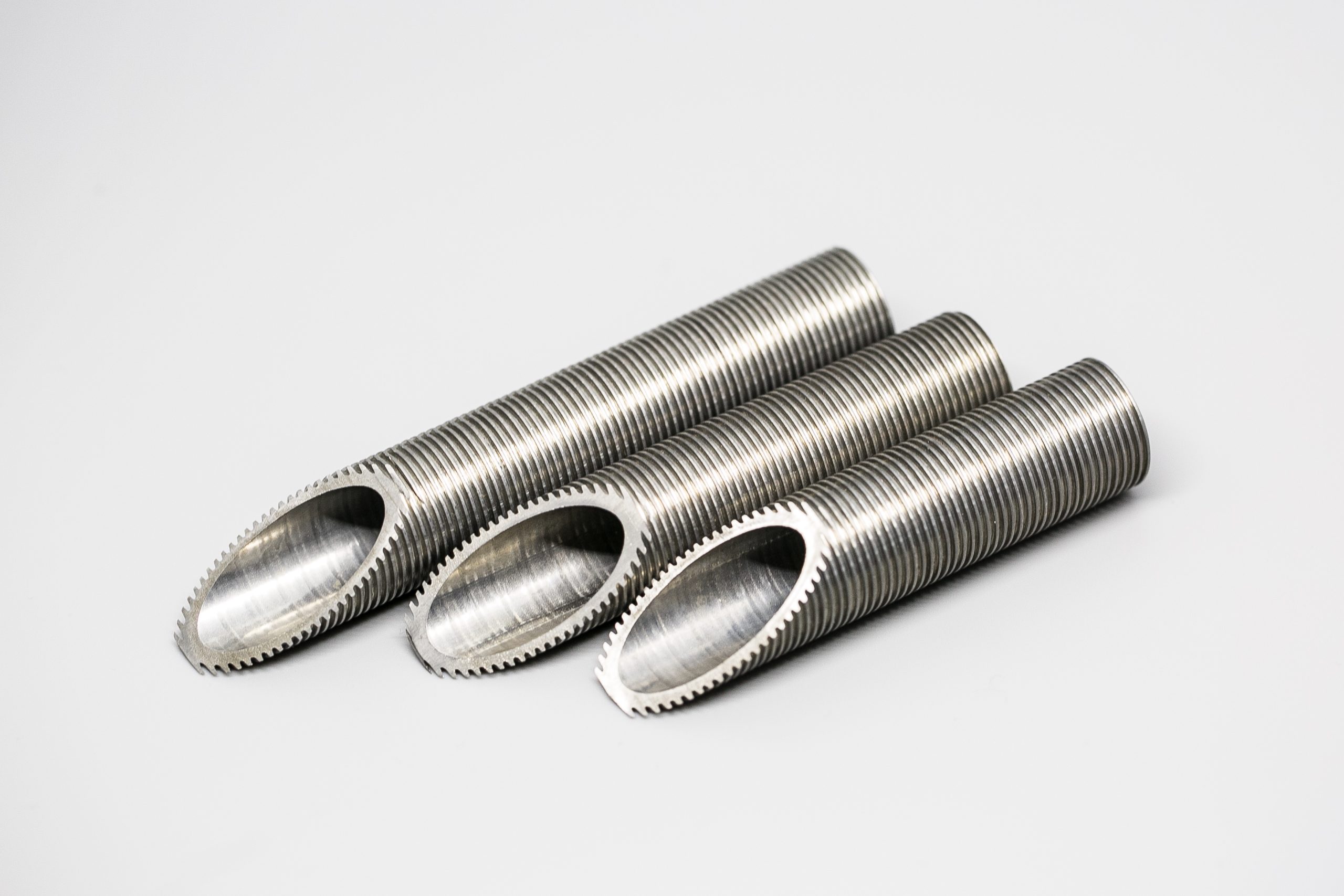
Stainless Steel Low Fin Tube Supply Scope
This page is for buyers searching for stainless steel low fin tube, stainless steel low finned tube, 304 low fin tube, 316L low fin tube, stainless condenser low fin tube, stainless evaporator low fin tube and stainless steel low fin tube supplier for heat exchanger applications.
Other stainless grades can be reviewed according to corrosion condition, temperature, pressure and customer specification.
Common OD includes 7, 7.94, 9.52, 12.7, 15.88, 19.05, 25.4 and 38.1 mm, with other sizes reviewed by project.
Common base wall thickness includes 1.0, 1.1, 1.2, 1.5, 1.8 and 2.0 mm.
Fin or groove depth should be reviewed according to stainless grade, tube base wall thickness and forming feasibility.
What Is Stainless Steel Low Fin Tube?
Stainless steel low fin tube is a stainless steel heat transfer tube with low external fins formed on the outside surface of the base tube. The fins increase the outside surface area and may improve outside-tube or shell-side heat transfer in selected heat exchanger designs.
This page focuses specifically on stainless steel low fin tubes, not general low fin tube material selection. It is intended for condenser, evaporator, industrial cooling and heat exchanger buyers who are reviewing stainless steel as the base material.
Stainless steel low fin tube selection should consider material grade, tube OD, base wall thickness, fin geometry, working medium, chloride level, temperature, pressure, fouling, cleaning method, tube sheet connection and customer specification.
When Stainless Steel Low Fin Tube Is Reviewed
- When copper low fin tube faces corrosion, erosion or service life concerns.
- When higher mechanical strength than copper is required in the equipment design.
- When stainless steel is preferred for medium compatibility or contamination control.
- When the buyer wants to review a more stable material option under copper price pressure.
- When condenser, evaporator or heat exchanger tube bundle replacement requires stainless material review.
- When the working condition is not severe enough to require titanium or nickel alloy.
Key Review Points for Stainless Steel Low Fin Tubes
To avoid repeating the general Low Fin Tube page, this section focuses on the practical review points that are specific to stainless steel low fin tube procurement.
Confirm 304, 316L or Other Stainless Grade
Material grade should be selected according to chloride level, water chemistry, operating temperature, corrosion history and customer specification.
Do Not Compare by Material Price Alone
Stainless steel may be reviewed as a copper alternative, but heat transfer capacity, wall thickness, fin geometry and pressure drop must also be checked.
Plain End and Expansion Area Matter
Plain end length, tube sheet connection, expansion, rolling or welding method should be confirmed before production.
Review OD, Root Diameter and Fin Depth
Outer diameter over fins, root diameter, fin or groove depth and fin density affect heat transfer area and tube bundle assembly.
Check Chloride and Crevice Conditions
Stainless steel is not always suitable for high chloride or seawater service. Titanium or other alloy options may be required.
New Design vs Replacement Project
Replacement projects should provide the original tube drawing, material, failure mode, tube sheet details and required performance target.
Applications of Stainless Steel Low Fin Tubes
Stainless steel low fin tubes are mainly reviewed where heat transfer enhancement and stainless steel material performance are both required.
Shell and Tube Heat Exchangers
Used where external surface area enhancement and stainless steel material performance are required in shell and tube heat exchanger designs.
Condensers
Stainless low fin condenser tubes can be reviewed when cooling water condition, tube bundle design and cleaning method are suitable.
Evaporators
Used in selected evaporator and refrigeration equipment where stainless steel material and low fin geometry are required.
Refrigeration Equipment
Can be reviewed for industrial refrigeration condensers, evaporators and cooling equipment according to refrigerant and system design.
Industrial Cooling Systems
Reviewed for industrial cooling applications where water quality, strength, corrosion risk and service life need stainless steel evaluation.
Replacement Tube Bundles
Can be reviewed for replacement tube bundles when original tube material, tube OD, wall thickness, fin geometry and failure history are known.
Copper Replacement Review
Stainless steel low fin tube may be reviewed as an alternative to copper low fin tube when corrosion, strength or price pressure becomes important.
Water Cooling Equipment
Suitable for selected water cooling applications where water chemistry, chloride level and temperature support stainless steel use.
Industrial Heat Transfer
Reviewed for process cooling and industrial heat transfer equipment according to working medium and equipment design.
How to Select Stainless Steel Grade for Low Fin Tubes
The stainless steel grade should be selected according to working medium, chloride level, temperature, pressure, corrosion history, cleaning method, fabrication process and customer specification.
| Stainless Grade Direction | Common Review Application | Selection Notes |
|---|---|---|
| 304 / 304L Stainless Steel Low Fin Tube | General heat exchangers, condensers, evaporators and industrial cooling equipment with limited aggressive corrosion risk. | Review water chemistry, chloride level, temperature and cleaning method. 304 / 304L should not be used blindly in chloride-rich conditions. |
| 316L Stainless Steel Low Fin Tube | Cooling water, refrigeration, condenser and evaporator applications requiring better corrosion resistance than 304. | 316L may be reviewed when chloride exposure exists, but chloride level, temperature and crevice risk must still be checked. |
| 321 Stainless Steel Low Fin Tube | Selected high-temperature or welded fabrication review where stabilized stainless steel is required by specification. | Use only when temperature, fabrication or customer specification supports 321 selection. |
| 904L Stainless Steel Low Fin Tube | Selected corrosion-resistant applications where stronger corrosion resistance than 304 / 316L is required. | Review medium, acid, chloride, temperature, availability and cost before selection. |
| Duplex Stainless Steel Low Fin Tube | Selected higher-strength or chloride-related applications where duplex stainless steel is specified. | Review forming feasibility, welding, tube sheet connection, corrosion condition and customer approval. |
| Other Stainless Steel Grades | Project-specific grades according to drawing, standard or end-user specification. | Please provide grade, standard, tube drawing, working medium, temperature, pressure and corrosion condition for review. |
Stainless Steel Low Fin Tube vs Copper Low Fin Tube
Many heat exchanger, condenser and evaporator buyers compare stainless steel low fin tubes with copper or copper alloy low fin tubes. This comparison should review both material performance and heat transfer design.
| Comparison Item | Copper / Copper Alloy Low Fin Tube | Stainless Steel Low Fin Tube |
|---|---|---|
| Thermal Conductivity | High thermal conductivity and widely used in many HVAC, refrigeration and heat exchanger designs. | Lower thermal conductivity than copper, so fin geometry, wall thickness, surface area and equipment design should be reviewed carefully. |
| Corrosion Resistance | Suitable in many clean water and HVAC conditions, but may face corrosion or erosion in some media. | Can provide better corrosion resistance in selected industrial water and process conditions, depending on stainless grade and working medium. |
| Mechanical Strength | Lower strength compared with many stainless steel options. | Higher mechanical strength can be useful for selected industrial equipment and tube bundle replacement projects. |
| Media Compatibility | May require review for ammonia, certain process fluids, contamination-sensitive systems or corrosive water. | Can be reviewed where stainless steel material compatibility is preferred, subject to corrosion and heat transfer evaluation. |
| Cost and Market Pressure | Copper price fluctuation may affect project cost and replacement decisions. | May be reviewed when buyers want an alternative material under copper price pressure, but total equipment performance must be checked. |
| Replacement Risk | Original equipment may already be designed around copper thermal performance. | Replacement is not automatic. Heat transfer capacity, pressure drop, tube layout, wall thickness, fin geometry and customer approval should be reviewed. |
When Titanium Low Fin Tube Should Be Reviewed Instead
Stainless steel low fin tubes are suitable for many industrial heat exchanger, condenser and evaporator applications, but they should not be used as a universal solution for all corrosive media.
Titanium low fin tube should be reviewed when the equipment handles seawater, chloride-rich water, brine, marine cooling water, corrosive cooling water or chemical media where stainless steel may face pitting, crevice corrosion or shortened service life.
If the project involves seawater cooling, marine condensers or strong chloride conditions, buyers should compare stainless steel and titanium according to corrosion risk, service life target, tube sheet material, galvanic corrosion, fabrication and total equipment cost.
- The working medium is seawater, brine or chloride-rich water.
- Past stainless steel tubes failed due to pitting or crevice corrosion.
- The equipment is used in marine cooling or coastal industrial cooling.
- The buyer needs longer service life under corrosive cooling conditions.
- The end user specification already requires titanium or equivalent corrosion resistance.
- The total cost of leakage, shutdown or replacement is higher than material upgrade cost.
Stainless Steel Low Fin Tube Specification Information
Stainless steel low fin tube quotation depends strongly on base tube size and fin geometry. Please provide drawings whenever possible.
| Specification Item | GAOFA TECH Review Direction | Why It Matters |
|---|---|---|
| Stainless Steel Grade | 304, 304L, 316L and other stainless grades by project review. | Grade affects corrosion resistance, strength, forming, cost and delivery feasibility. |
| Tube OD | 7 mm, 7.94 mm, 9.52 mm, 12.7 mm, 15.88 mm, 19.05 mm, 25.4 mm, 38.1 mm and other project-specific sizes by review. | Tube OD affects tube bundle layout, tube sheet design, fin forming and replacement compatibility. |
| Base Wall Thickness | 1.0 mm, 1.1 mm, 1.2 mm, 1.5 mm, 1.8 mm, 2.0 mm by grade, tube size and application. | Base wall thickness affects strength, fin forming feasibility, pressure review and corrosion allowance. |
| Outer Diameter Over Fins | Maximum outside diameter after fin forming, according to drawing or equipment design. | Important for tube bundle layout, tube support, baffle clearance and equipment design. |
| Root Diameter | Diameter at the root of the low fin profile, according to drawing or sample. | Important for remaining wall condition, strength and heat transfer geometry. |
| Fin / Groove Depth | 0.5 mm to 1.5 mm, depending on stainless grade and tube base wall thickness. | Affects external surface area, remaining wall condition, fin forming feasibility and heat transfer design. |
| Fin Pitch / Fin Density | Fin pitch, fins per inch or fins per meter according to drawing, sample or heat transfer design. | Affects heat transfer area, fluid flow, fouling, cleaning and manufacturing feasibility. |
| Plain Ends | Plain end length, tube end condition and tube sheet connection method. | Important for tube expansion, welding, rolling, sealing and assembly. |
| Tube Length and Quantity | Straight tube length, cut length, bundle quantity or project quantity. | Important for production planning, packing, shipping and cost calculation. |
| Inspection Requirement | Dimensional inspection, visual inspection, eddy current testing, pressure test or other requirement. | Testing scope affects production route, lead time and quotation. |
Quality Control for Stainless Steel Low Fin Tubes
Low fin tube inspection should consider both base stainless tube quality and final fin geometry. Inspection scope should be confirmed according to grade, equipment design and customer specification.
| Inspection Item | Purpose | Buyer Notes |
|---|---|---|
| Material Verification | Confirm stainless steel grade, heat number, chemical composition and traceability. | MTC, PMI and material documents can be reviewed according to order requirement. |
| Base Tube Inspection | Review tube OD, base wall thickness, straightness, surface and tube integrity before fin forming. | Base tube condition affects final fin quality and tube performance. |
| Fin Geometry Inspection | Check outer diameter over fins, root diameter, fin / groove depth, fin pitch and fin appearance. | Important for heat transfer area, assembly and tube bundle layout. |
| Plain End Inspection | Check smooth end length, end condition and transition between finned area and plain end. | Important for tube expansion, welding, rolling or sealing into tube sheet. |
| Visual Inspection | Review surface condition, fin damage, scratches, dents and handling marks. | Stainless low fin tubes need careful handling and packing to protect fin surfaces. |
| NDT / Tightness Testing | Review tube integrity according to standard or agreed requirement. | Eddy current, pneumatic, hydrostatic or other testing should be confirmed before production. |
| Packing Review | Protect fins, plain ends and tube surface during shipment. | Bundle protection, wooden case, separators and packing photos can be discussed before shipment. |
View Tube Inspection and Quality Control Details
Review GAOFA TECH’s tube inspection examples, including PMI checking, OD inspection, wall thickness inspection, visual inspection, eddy current testing, pneumatic testing, ultrasonic testing and packing review.
Information Needed for a Stainless Steel Low Fin Tube Quotation
A complete RFQ helps confirm stainless steel grade, tube OD, base wall thickness, fin geometry, tube end condition, inspection scope, packing method and quotation accuracy.
For heat exchanger, condenser, evaporator, refrigeration or copper replacement projects, please provide both tube dimensions and working condition details.
Best RFQ practice: Please send a drawing or sample specification whenever possible. Stainless steel low fin tube quotation depends on tube OD, base wall thickness, outer diameter over fins, root diameter, fin / groove depth, fin density, plain end length and final application.
- Stainless steel grade: 304, 304L, 316L or other stainless grade
- Base tube form: welded tube, seamless tube or customer-specified tube form
- Tube OD: 7 mm, 7.94 mm, 9.52 mm, 12.7 mm, 15.88 mm, 19.05 mm, 25.4 mm, 38.1 mm or other required OD
- Base wall thickness: 1.0 mm, 1.1 mm, 1.2 mm, 1.5 mm, 1.8 mm, 2.0 mm or project-specific wall thickness
- Outer diameter over fins and root diameter
- Fin / groove depth: 0.5 mm to 1.5 mm, depending on stainless grade and tube base wall
- Fin pitch, fins per inch or fins per meter
- Finned length, plain end length and total tube length
- Quantity: pieces, meters, kilograms, bundles or annual consumption
- Application: heat exchanger, condenser, evaporator, refrigeration, industrial cooling or replacement tube
- Working medium, refrigerant, water chemistry, chloride level, temperature and pressure
- Tube sheet connection: expansion, welding, rolling, brazing or other method
- For copper replacement: original copper tube drawing, material, failure mode and required performance target
- Inspection requirement: dimensional, visual, PMI, eddy current, pneumatic, hydrostatic or other test
- Packing requirement, destination, Incoterms and expected delivery schedule
Send Your Stainless Steel Low Fin Tube Requirement
Please send stainless steel grade, tube OD, base wall thickness, outer diameter over fins, root diameter, fin / groove depth, fin pitch, finned length, plain end length, quantity, application, working medium, temperature, pressure, inspection requirement and packing details. For copper replacement projects, please also send the existing copper tube drawing and failure condition if available.
Stainless Steel Low Fin Tube FAQ
What is stainless steel low fin tube?
Stainless steel low fin tube is a stainless steel heat transfer tube with external low fins formed on the outside surface of the base tube. It is reviewed for heat exchangers, condensers, evaporators, refrigeration equipment and industrial cooling systems.
What stainless steel grades can be reviewed for low fin tubes?
Common grades include 304, 304L and 316L. Other stainless grades such as 321, 904L or duplex stainless steel can be reviewed according to working medium, temperature, pressure, corrosion condition and customer specification.
What tube OD can GAOFA TECH review for stainless steel low fin tubes?
GAOFA TECH can review stainless steel low fin tubes with tube OD such as 7 mm, 7.94 mm, 9.52 mm, 12.7 mm, 15.88 mm, 19.05 mm, 25.4 mm and 38.1 mm. Other sizes can be reviewed according to grade, base wall thickness, drawing and production feasibility.
What base wall thickness is commonly used?
Common base wall thickness includes 1.0 mm, 1.1 mm, 1.2 mm, 1.5 mm, 1.8 mm and 2.0 mm. The suitable wall thickness depends on stainless grade, tube OD, fin / groove depth, pressure and application.
What fin or groove depth can be reviewed?
Fin or groove depth can generally be reviewed from 0.5 mm to 1.5 mm, depending on stainless grade and tube base wall thickness. Final feasibility should be confirmed by drawing and production review.
Can stainless steel low fin tube replace copper low fin tube?
Stainless steel low fin tube may be reviewed as an alternative to copper low fin tube when corrosion resistance, mechanical strength, contamination control, media compatibility, service life or copper price pressure becomes important. Replacement suitability depends on heat transfer requirement, working medium, fin geometry, wall thickness and equipment design.
Use the Copper Tube Replacement Review for broader material selection and the stainless steel vs copper heat exchanger guide for the underlying thermal and mechanical review.
Is stainless steel low fin tube better than copper low fin tube?
Not always. Stainless steel can offer higher strength and selected corrosion resistance, while copper has higher thermal conductivity. The better choice depends on heat transfer design, corrosion risk, working medium, pressure, temperature, service life target and total equipment cost.
When should titanium low fin tube be considered instead of stainless steel?
Titanium low fin tube should be considered when the application involves seawater, chloride-rich water, brine, marine cooling water, corrosive cooling water or chemical media where stainless steel may face pitting or crevice corrosion risk.
Why does this page use only one product image?
This page is intentionally differentiated from the general Low Fin Tube page. It uses one Hero image and focuses on stainless steel grade selection, copper comparison, specification review and RFQ details. Additional stainless-specific inspection, plain-end or packing photos can be added later.
What information is needed before quotation?
Please provide stainless steel grade, tube OD, base wall thickness, outer diameter over fins, root diameter, fin / groove depth, fin pitch or fin density, tube length, plain end length, quantity, application, working medium, temperature, pressure, inspection requirement and packing details.
Should buyers provide drawings for stainless steel low fin tubes?
Yes. Drawings are strongly recommended because quotation depends on tube OD, base wall thickness, final outer diameter, root diameter, fin / groove depth, fin pitch, finned length, plain end length and assembly requirement.