
Tubes for Chemical & Corrosive Equipment
Stainless Steel, Titanium, Nickel Alloy and Hastelloy Tubes for Acid Service, Chemical Process Media and Corrosion-Resistant Equipment
GAOFA TECH supplies stainless steel, duplex stainless steel, titanium tubes, Incoloy, Inconel and Hastelloy tubes for chemical equipment, acid service, chloride-rich media, corrosive heat exchangers, chemical heaters, process systems and replacement projects.
This page is organized around corrosive media, failure modes and material escalation. Final tube selection should be reviewed according to medium, concentration, temperature, pressure, impurities, flow condition, corrosion history, fabrication process and customer specification.
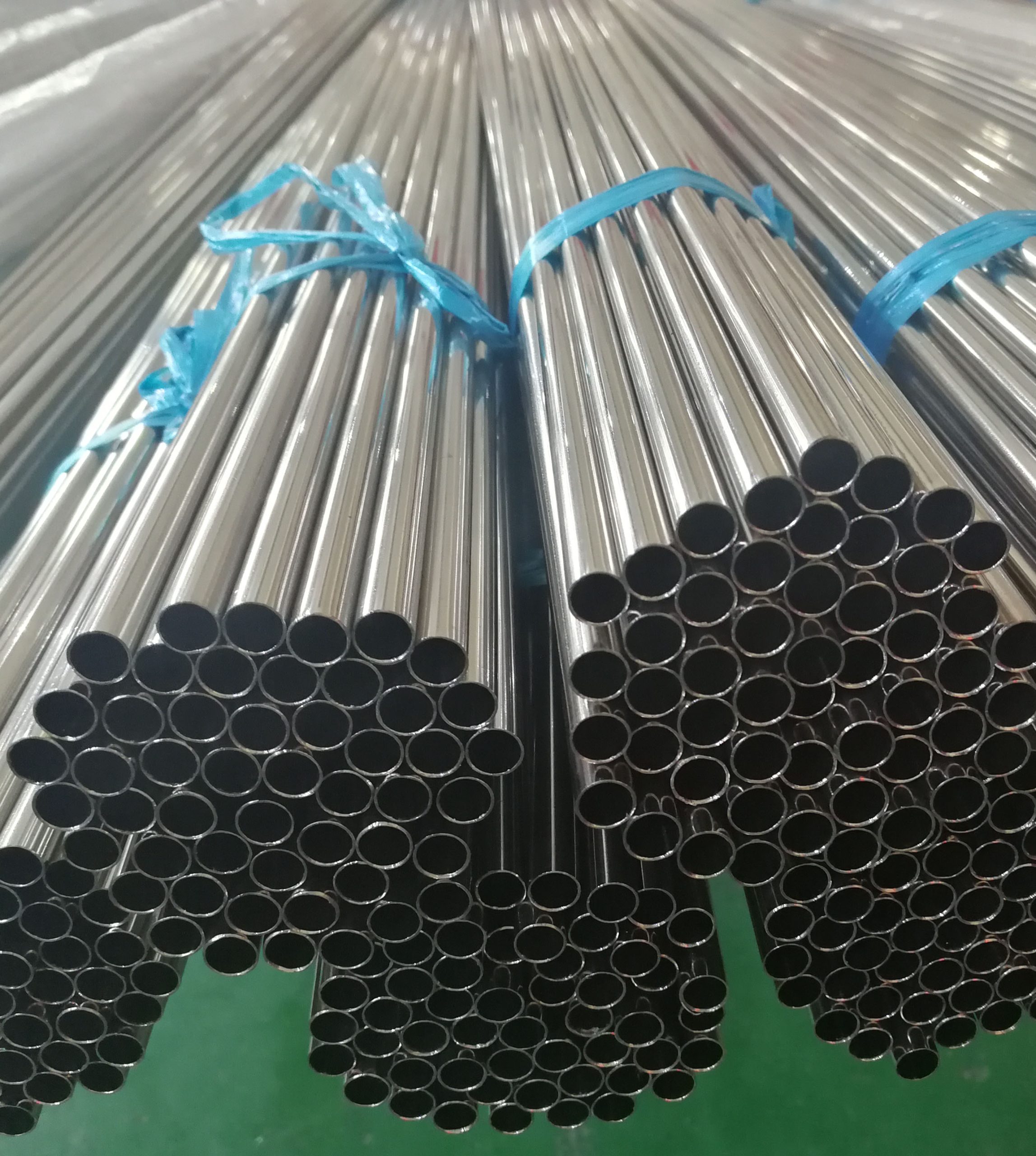
Chemical & Corrosive Equipment Tube Supply Scope
Unlike a general heat exchanger tube page, this page starts from corrosive media and corrosion mechanisms. It helps buyers review tube materials for acid service, chloride-rich media, seawater, chemical heating, corrosive process systems and equipment where common stainless steel may not be enough.
304 / 316L, 904L, duplex, titanium, Incoloy, Inconel and Hastelloy directions can be reviewed.
Material review should start from actual chemistry, not only from the tube grade name.
For chemical heaters, acid tank heaters, process tubing, corrosive heat exchangers and chloride-rich cooling systems.
Medium, concentration, temperature, pressure, impurities and failure history are important for quotation review.
Corrosive Service Requires Full Working Condition Details
A tube used in chemical or corrosive equipment must be reviewed by the actual corrosion environment. The same grade may perform differently when acid concentration, chloride content, fluoride content, temperature, impurities, oxygen level, flow condition, welding, crevice design or cleaning method changes.
For many buyers, the correct question is not “which alloy is the best?”, but “which tube materials should be reviewed for this medium, temperature and equipment design?” GAOFA TECH helps buyers compare stainless steel, titanium, nickel alloy and Hastelloy tube directions according to the project specification.
Working Condition Data to Provide
- Medium name, concentration, pH and operating temperature.
- Chloride, fluoride, sulfur compounds, impurities and cleaning chemicals.
- Oxidizing or reducing condition, aeration, flow velocity and stagnant zones.
- Pressure, heat transfer requirement and equipment structure.
- Welding, bending, tube expansion, end forming or heater assembly.
- Existing material, failure mode, service life and photos if replacing failed tubes.
Tube Materials to Review by Corrosive Medium and Working Condition
This table is a material review guide, not a final material guarantee. Final selection depends on full working condition, fabrication process, equipment design, inspection requirement and customer approval.
| Corrosive Condition | Tube Materials to Review | Selection Notes |
|---|---|---|
| Mild chemical water or weak corrosion | 304 / 316L stainless steel | Review chloride level, pH, temperature, scale, cleaning chemicals and acceptable corrosion rate. |
| Higher chloride water | 316L, 904L, 2205, 2507, titanium Gr2 | Pitting and crevice corrosion risk increases with chloride level and temperature. Common 304 may not be enough. |
| Seawater or marine cooling | Titanium Gr2 / Gr12 tubes, Inconel 625 by review | Titanium is commonly reviewed for seawater service, but tube sheet material, galvanic corrosion and crevice design still matter. |
| Sulfuric acid service | Incoloy 825, Hastelloy C276 / C22 by review | Acid concentration, temperature, oxidizing condition, impurities and chloride content must be confirmed. |
| Phosphoric acid service | Incoloy 825, Hastelloy C276, titanium by review | Selection depends on acid grade, impurities, chloride level, fluoride content and temperature. |
| Hydrochloric acid or strong chloride acid | Hastelloy C276, Hastelloy C22 by review | Detailed chemistry review is required. Common stainless steel is usually not enough for strong chloride acid service. |
| Acidic condensate or acid vapor condensation | Incoloy 825, Inconel 625, Hastelloy C276 / C22 | Review acid dew point, condensate composition, temperature, gas impurities and cleaning method. |
| Caustic or alkaline service | Inconel 600, selected nickel alloy and selected stainless steel | Caustic concentration, temperature and stress corrosion risk should be reviewed before material confirmation. |
| Chemical tank heaters | Titanium Gr1 / Gr2, Incoloy 825, Inconel 625, Hastelloy C276 / C22 / C4 | Material depends on liquid chemistry, heater surface temperature, watt density, scale and corrosion history. |
| Severe mixed acid or unknown media | Hastelloy C276 / C22 / C4, Inconel 625 | Full working condition review is required before quotation or replacement recommendation. |
| Replacement of failed stainless tubes | 904L, duplex stainless, titanium, nickel alloy or Hastelloy | Existing failure mode should be reviewed before choosing a higher alloy replacement. |
Material Escalation Guide for Chemical & Corrosive Equipment Tubes
As chemical severity increases, buyers may need to move from standard stainless steel tubes to duplex stainless, titanium tubes, Incoloy, Inconel or nickel alloy tube options. This is a review sequence, not a universal ranking.
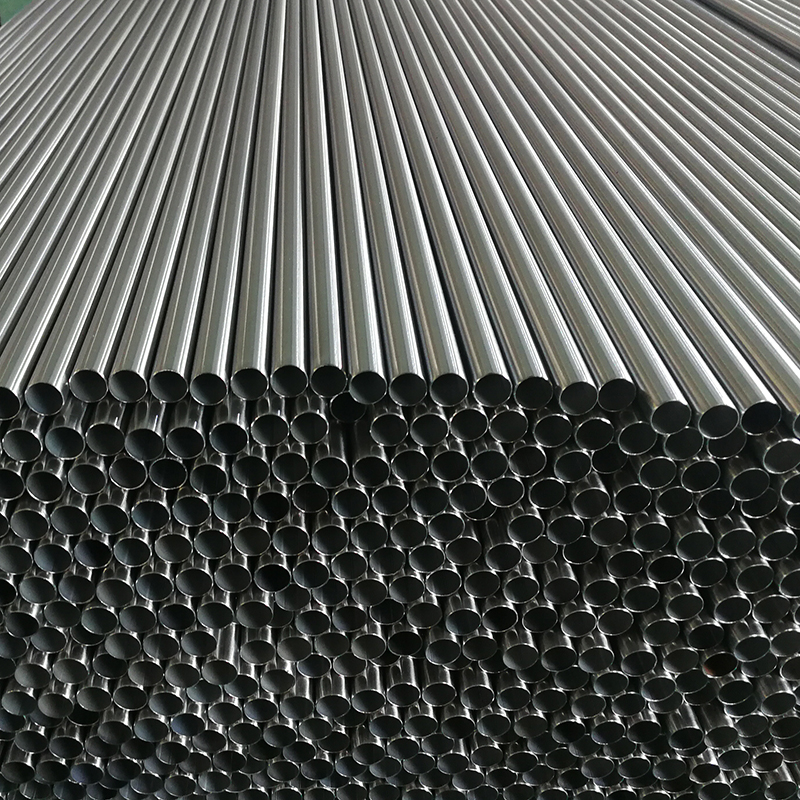
Stainless / Duplex Review
For mild to moderate service, higher stainless and duplex directions may be reviewed before titanium or nickel alloy.
Review chloride, low pH, high temperature, crevice areas and cleaning chemicals.
View Stainless Steel Tubes →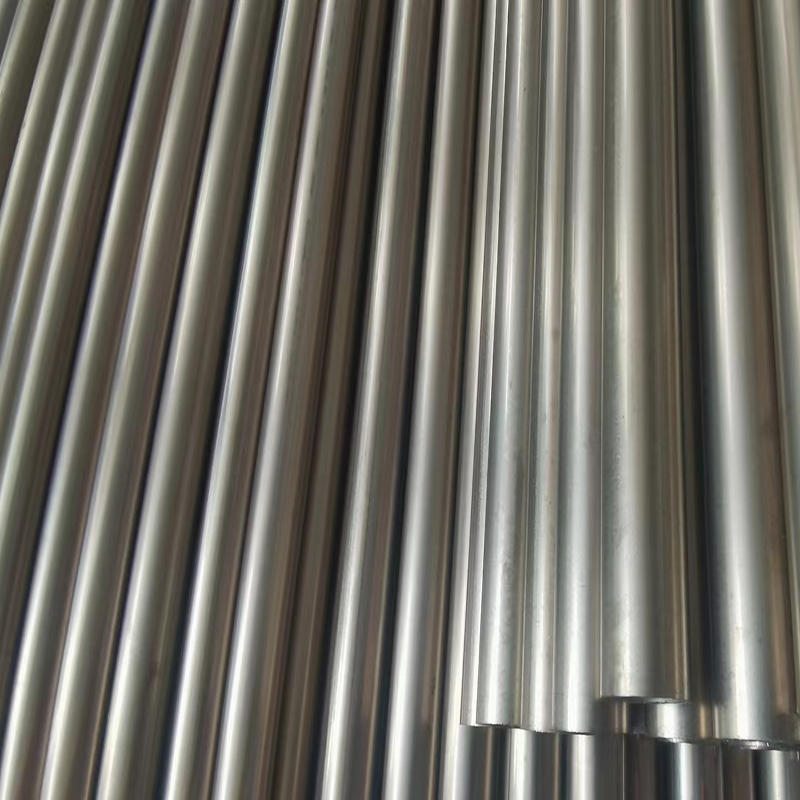
Titanium Tube Review
Gr1, Gr2, Gr7 and Gr12 may be reviewed according to chemistry and specification.
Review fluoride, reducing acid conditions, crevice design, temperature and customer approval.
View Titanium Tubes →Nickel Alloy / Hastelloy
For acid service, acidic condensate, severe mixed acid and high-temperature corrosive service.
Compare Incoloy 825, Inconel 625 and Hastelloy C276 / C22 / C4 by real medium data.
View Nickel Alloy Tubes →Common Chemical Equipment Tube Failure Modes
Failure review helps buyers avoid choosing the next material only by price or alloy name. It is especially important for replacement projects.
| Failure Mode | What It May Indicate | Data to Provide |
|---|---|---|
| Pitting / crevice corrosion | Chloride, deposits, stagnant zones, gasket areas or under-deposit corrosion. | Chloride level, photos, failure location, deposits and cleaning method. |
| Stress corrosion cracking | Interaction among material, stress, temperature, chemical medium and fabrication condition. | Temperature, medium, stress condition, bending / welding history and photos. |
| Intergranular corrosion | Sensitization, welding-related condition, heat treatment or unsuitable material condition. | Weld location, heat treatment condition, material grade and service temperature. |
| Acid dew point corrosion | Acidic condensate from gas streams, sulfur / chloride compounds or temperature cycling. | Gas composition, condensate pH, sulfur / chloride data and operating temperature. |
| Erosion-corrosion | High flow velocity, suspended solids, impingement or unsuitable tube material. | Flow velocity, solids, tube layout, failure orientation and medium data. |
| Heater sheath failure | Local overheating, watt density, scale, deposits, stagnant liquid or chemical concentration near surface. | Heater type, watt density, bulk temperature, sheath temperature if known and failure photos. |
Stainless Steel, 904L and Duplex Tubes for Chemical Equipment
Stainless steel tubes may be reviewed for mild to moderate chemical or cooling water conditions when chloride level, temperature, cleaning chemicals and corrosion risk are within the customer’s acceptable range.
304 / 316L / 321 are not the default choice for high chloride, strong acid, stagnant crevice zones or previous corrosion failure. 904L, 2205 and 2507 may be reviewed when common stainless steel is not enough but titanium or nickel alloy has not yet been confirmed.
Using PREN Without Overusing It
PREN can help compare pitting-resistance tendency among stainless and duplex grades such as 316L, 904L, 2205 and 2507. However, PREN does not replace chemical service review.
- Useful for initial stainless / duplex pitting-risk comparison.
- Not a corrosion guarantee.
- Not a main comparison tool for titanium, Incoloy, Inconel or Hastelloy.
- Always review pH, temperature, chloride, crevice design, deposits and impurities.
Titanium Gr1, Gr2, Gr7 and Gr12 for Chemical and Chloride-Related Service
Titanium Gr1 and Gr2 tubes may be reviewed for chloride-rich water, seawater-related service, chemical tank heaters and selected oxidizing chloride environments. Gr7 and Gr12 may be reviewed when a more demanding titanium grade is specified or additional service margin is required.
Titanium selection must be handled carefully when fluoride-containing media, strong reducing acids, high-temperature chemical exposure, crevice zones or galvanic contact are present.
Review Questions
- Is the service oxidizing, reducing or mixed?
- Are fluorides, strong reducing acids or unknown impurities present?
- Will the tube be expanded, welded, bent, coiled or used as a heater sheath?
- Are crevice zones, tube sheet contact or galvanic contact important?
- Does the customer specify Gr1, Gr2, Gr7, Gr12 or another titanium grade?
Incoloy, Inconel and Hastelloy Tubes for Chemical Corrosion Review
Nickel alloy tube selection should be based on acid type, chloride level, acidic condensate, temperature, impurities, fabrication and previous failure history. Buyers can review Incoloy, Inconel and Hastelloy directions from this application page according to service severity.
Incoloy 825
Reviewed for sulfuric acid, phosphoric acid, acidic process media, acid tank heaters, chemical heating elements and corrosive heat exchangers when stainless steel is not enough.
Inconel 625
Reviewed for chloride-rich media, acidic condensate, seawater-related corrosion, high-temperature corrosive service and demanding chemical process equipment.
Hastelloy C276 / C22 / C4
Reviewed for severe mixed acid, oxidizing chloride media, acid vapor condensation, wet scrubbers, FGD equipment and aggressive process systems.
Chemical Tank Heater and Acid Immersion Heater Tube Review
Chemical heater tubes and acid immersion heater tubes should be reviewed by both corrosion resistance and heater operation. For more general heater sheath selection, see Heating Element Tubes.
The bulk liquid temperature may be lower than the heater sheath surface temperature, especially under high watt density, scale, deposits, poor circulation or stagnant liquid conditions.
Additional Data for Corrosive Heater Tubes
- Heater type, watt density and sheath surface temperature if known.
- Bulk liquid temperature, chemical concentration and cleaning method.
- Flow, agitation, scale, deposits or stagnant-zone information.
- Bending, welding, end sealing, filling or heater assembly process.
- Previous heater tube material and failure mode if replacing an existing design.
Quality Control for Corrosive Service Tubes
Inspection scope depends on alloy grade, tube form, standard, application and customer specification. For corrosive service, traceability and surface / tube end condition are especially important. See the Quality Control page for broader inspection and packing support.
| Control Item | Purpose | Buyer Notes |
|---|---|---|
| Material grade and heat number | Supports traceability and MTC review. | Confirm exact grade wording, UNS number and standard. |
| PMI if agreed | Supports material identity checking for high-alloy tubes. | Can be discussed according to order and customer requirement. |
| OD, wall thickness and length | Affects fabrication, tube sheet connection, heater assembly and replacement fit. | Provide tolerance and drawing when available. |
| Surface and tube ends | Important for bending, welding, expansion, sealing and corrosion-sensitive service. | Surface condition should match downstream fabrication. |
| Eddy current / pneumatic / hydrostatic | Used to check tube integrity according to standard or agreed requirement. | Test method depends on grade, tube form and specification. |
| UT if specified | May be reviewed for selected seamless or heavier-wall tubes. | Not a default requirement for every tube; follow standard or customer specification. |
| Packing and end protection | Protects tube surface, tube ends and shipment condition. | Bundle protection, wrapping, wooden case and packing photos can be discussed. |
Review Tube Inspection and Quality Control Details
GAOFA TECH can review dimensional inspection, material verification, visual inspection, agreed NDT, pressure testing, tube end protection and packing controls according to customer specification.
Information Needed for Chemical & Corrosive Equipment Tube Quotation
A complete RFQ helps confirm the suitable material direction, tube form, inspection scope, packing method and quotation accuracy. For corrosion-resistant tube requirements inside heat exchangers or condenser and evaporator systems, tube-side and shell-side media should be provided together.
For corrosive service, working medium details are as important as tube dimensions. Please include chemical composition and operating condition whenever possible.
Best RFQ practice: If this is a replacement project, please provide the existing material, service life, failure photos, corrosion location and target improvement.
- Material grade or materials to review: 316L, 904L, 2205, 2507, titanium Gr1 / Gr2 / Gr7 / Gr12, Incoloy 825, Inconel 625, Hastelloy C276 / C22 / C4 or other grade
- Tube form: welded tube, seamless tube, coiled tube or cut length tube
- OD, wall thickness, length, tolerance and quantity
- Application: chemical heater, acid tank heater, process tubing, corrosive heat exchanger, evaporator, condenser, seawater cooling or replacement tube
- Exact working medium, concentration, pH, chloride, fluoride, sulfur compounds, impurities and cleaning chemicals
- Operating temperature, maximum temperature, pressure and flow condition
- Oxidizing / reducing condition, aeration, stagnant areas, deposits, scaling and fouling condition
- Fabrication requirement: bending, coiling, welding, tube expansion, end forming, cutting or heater assembly
- Inspection requirement: dimensional, visual, MTC, PMI, eddy current, pneumatic, hydrostatic or other agreed tests
- Existing material, previous failure mode, service life and target improvement if this is a replacement project
- Packing requirement, destination, Incoterms and expected delivery schedule
Send Your Chemical or Corrosive Tube Requirement
Please send tube size, material grade, quantity, working medium, concentration, temperature, pressure, corrosion condition, fabrication requirement and inspection requirement. GAOFA TECH will review suitable stainless steel, titanium, nickel alloy or Hastelloy tube directions according to your specification.
Chemical & Corrosive Equipment Tubes FAQ
What tube materials are reviewed for chemical and corrosive process equipment?
Chemical and corrosive process equipment may require stainless steel, duplex stainless steel, titanium, Incoloy, Inconel or Hastelloy tube options depending on the exact service condition. 304, 316L and 321 stainless steel may be reviewed for mild chemical water or moderate process media. 904L, 2205 or 2507 may be reviewed when chloride or localized corrosion risk exceeds common stainless steel limits. Titanium Gr1, Gr2, Gr7 and Gr12 may be reviewed for chloride-rich water, seawater-related service and selected chemical media. Incoloy 825, Inconel 625 and Hastelloy C276 / C22 / C4 may be reviewed for acid service, acidic condensate, high-chloride media, wet scrubbers, FGD systems and severe chemical corrosion.
Why must chemical tube material selection be based on full operating conditions?
A chemical equipment tube should not be selected only by alloy name because corrosion behavior can change sharply with concentration, temperature, chloride level, pH, oxidizing or reducing condition, impurities, flow velocity, deposits, crevice zones and cleaning chemicals. Buyers should provide the exact chemical medium, concentration, temperature, pressure, chloride / fluoride / sulfur information, cleaning method, fabrication route and any existing failure history.
When is 304 / 316L / 321 stainless steel still acceptable?
304, 316L and 321 stainless steel tubes may be reviewed for mild chemical water, weak process media, general industrial cooling, low-risk cleaning systems and moderate corrosion environments when the customer specification allows stainless steel. They should be reviewed carefully when chloride level, low pH, high temperature, stagnant zones, crevice areas, deposits, cleaning chemicals or previous corrosion failure are present.
How can PREN help compare stainless and duplex tube options?
PREN can help compare the pitting-resistance tendency of stainless steel and duplex stainless steel options such as 316L, 904L, 2205 and 2507. However, PREN is not a complete corrosion selection method and should not replace review of medium, concentration, temperature, chloride level, pH, impurities, crevice design, deposits and customer specification. PREN should not be used as the main comparison tool for titanium, Incoloy, Inconel or Hastelloy grades.
When should Titanium Gr1 or Gr2 tubes be reviewed?
Titanium Gr1 and Gr2 tubes may be reviewed for chemical process systems where corrosion resistance in chloride-rich water, seawater-related service, oxidizing chloride environments, chemical tank heaters or selected corrosive liquid heating and cooling applications is important. Fluoride-containing media, strong reducing acids, crevice zones, high-temperature chemical exposure, galvanic contact and customer approval must be reviewed before selection.
When should Titanium Gr7 or Gr12 be reviewed?
Titanium Gr7 and Gr12 may be reviewed when Gr1 or Gr2 does not provide enough corrosion or mechanical margin for the confirmed service condition, or when the customer specification directly requires these grades. Final selection should still depend on exact chemistry, concentration, temperature, crevice risk, fabrication method, welding requirement, inspection scope and customer approval.
When should Incoloy 825, Inconel 625 or Hastelloy tubes be reviewed?
Incoloy 825 may be reviewed for sulfuric acid, phosphoric acid, acidic process media, acid tank heaters and corrosive heat exchangers. Inconel 625 may be reviewed for chloride-rich media, acidic condensate, seawater-related corrosion and high-temperature corrosive service. Hastelloy C276 / C22 / C4 may be reviewed for severe mixed acid, oxidizing chloride media, acid vapor condensation, wet scrubbers, FGD equipment and aggressive process systems.
How should chemical tank heater and acid immersion heater tubes be selected?
Chemical tank heater and acid immersion heater tube selection should consider both corrosion resistance and heater operation. Bulk liquid temperature is not always the same as heater sheath surface temperature. High watt density, scale formation, stagnant liquid, deposits, poor circulation or chemical concentration near the heater surface may increase corrosion, local overheating or stress-related failure risk.
What causes tube failure in chemical equipment?
Tube failure may be related to pitting corrosion, crevice corrosion, stress corrosion cracking, intergranular corrosion, under-deposit corrosion, erosion-corrosion, galvanic corrosion, acid dew point corrosion, cleaning chemical attack, welding-related issues, unsuitable heat treatment or incorrect material replacement. Failure photos and service data help review the next material direction before quotation.
What quality controls are important for corrosive service tubes?
Common review items include material grade and heat number verification, MTC, PMI if agreed, OD / wall thickness / length inspection, visual inspection, surface and tube end review, eddy current testing, pneumatic or hydrostatic testing when specified, UT when required by standard or customer specification, and packing or end protection for export handling.
What information is needed for quotation?
Please provide exact medium name, concentration, pH, temperature, pressure, chloride, fluoride, sulfur compounds, impurities, oxidizing or reducing condition, flow velocity, aeration, fouling, cleaning method, equipment type, tube-side and shell-side media if applicable, tube form, OD, wall thickness, length, tolerance, quantity, fabrication process, inspection requirement, documents, packing requirement and destination. For replacement projects, also provide existing material, service life, failure photos and target improvement.