
Twisted Tube for Enhanced Heat Transfer
Stainless Steel and Titanium Twisted Tubes for Selected Heat Exchanger Applications
GAOFA TECH supplies and reviews twisted tube directions in stainless steel and titanium, using welded or seamless tube routes according to size, material grade, forming feasibility, twist geometry and customer specification. Twisted tubes are special heat transfer tubes designed to promote swirl flow and disturb the thermal boundary layer in selected heat exchanger designs.
Twisted tube suitability should be reviewed according to working medium, temperature, pressure, flow condition, fouling tendency, cleaning method, tube bundle design, material grade, tube form and customer specification.
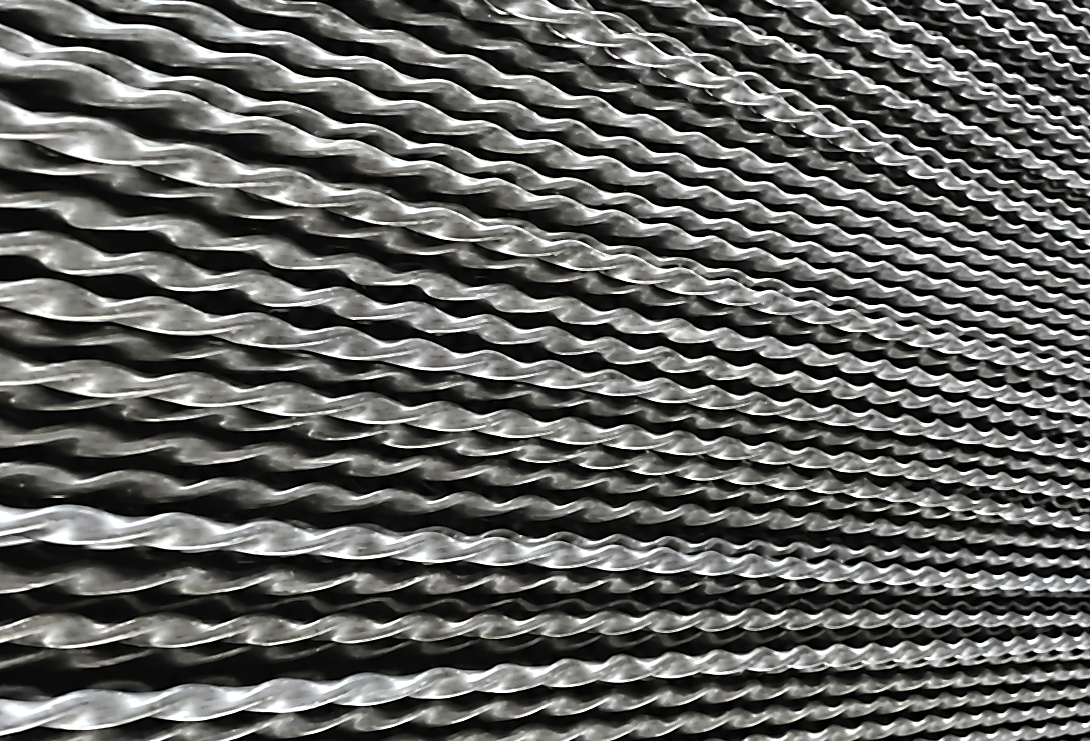
What Is a Twisted Tube?
A twisted tube is a specially formed heat transfer tube with a continuous twisted geometry. Compared with a plain smooth tube, the twisted shape may help generate swirl flow, disturb the boundary layer and improve fluid mixing in selected heat exchanger designs.
The tube is formed with a twisted profile that changes the internal flow pattern compared with a plain tube.
The geometry may support swirl flow and boundary-layer disturbance where the heat exchanger design allows it.
Material should be reviewed according to corrosion condition, water quality, temperature, pressure and forming feasibility.
Tube form depends on size, wall thickness, specification, pressure, forming route, inspection and customer requirement.
How Twisted Tubes Support Heat Transfer
Twisted tubes may improve heat transfer by creating a continuous swirl flow that helps disturb the thermal boundary layer. This flow pattern can improve fluid mixing and may support better thermal performance compared with plain tubes in suitable heat exchanger designs.
The twisted geometry may also reduce deposit accumulation tendency in some operating conditions, which can help extend cleaning intervals. However, fouling behavior still depends on working medium, flow velocity, solids content, scaling tendency, temperature and cleaning method.
In some tube bundle designs, twisted tubes may help reduce flow-induced vibration and improve operational stability. The final result should be reviewed according to tube support structure, flow condition, tube geometry and customer specification.
- May promote swirl flow and fluid mixing inside the tube.
- May disturb the boundary layer and support heat transfer improvement.
- May reduce deposit accumulation tendency under suitable flow conditions.
- May help extend cleaning intervals when fouling behavior is favorable.
- May support compact heat exchanger design after thermal and hydraulic review.
- May help reduce flow-induced vibration in selected tube bundle designs.
Stainless Steel and Titanium Twisted Tubes
Twisted tube manufacturability depends on material grade, OD, wall thickness, tube length, welded or seamless route, twist pitch, forming depth, heat treatment condition, mechanical properties and surface requirement.
| Review Item | Options | Technical Notes |
|---|---|---|
| Material | Stainless Steel 304, 304L, 316L etc. | May be reviewed for selected heat exchanger, condenser, evaporator and industrial cooling applications where stainless steel corrosion resistance is suitable. |
| Material | Titanium Grade 1, Grade 2 | May be reviewed for selected chloride-containing cooling water, seawater, marine cooling and corrosion-resistant heat exchanger applications. |
| Tube Form | Welded Tube Route | May be reviewed for cost-sensitive or suitable pressure applications depending on OD, wall thickness, weld quality, forming feasibility and customer specification. |
| Tube Form | Seamless Tube Route | May be reviewed where pressure, specification, forming requirement, downstream fabrication or customer requirement favors seamless tube. |
| Geometry | Twist Pitch / Pattern | Twist geometry should be confirmed by drawing, sample, thermal design requirement or heat exchanger manufacturer specification. |
| Inspection | MTC, dimensional inspection, visual inspection, NDT by requirement | Inspection scope should be confirmed before production according to material, tube route, drawing, application and customer requirement. |
Twisted Tube Applications
Twisted tubes are mainly reviewed for heat transfer equipment where turbulence, compact design, fouling tendency and heat exchanger layout need to be considered together.
Heat Exchanger Tubes
Twisted tubes may be reviewed for selected heat exchangers where heat transfer performance and hydraulic behavior need to be evaluated together.
View Heat Exchanger Tubes →Shell & Tube Heat Exchangers
For shell and tube designs, tube support, bundle layout, flow condition and tube-side pressure drop should be reviewed before using twisted tubes.
View Shell & Tube Heat Exchanger Tubes →Condensers and Evaporators
Twisted tube geometry may be reviewed for condenser or evaporator designs where heat transfer, fouling and cleaning intervals are part of the design target.
View Condenser & Evaporator Tubes →Industrial Refrigeration
For chillers, brine coolers and refrigeration equipment, twisted tubes should be reviewed together with medium, fouling, pressure drop and cleaning method.
View Industrial Refrigeration Tubes →Seawater / Marine Cooling
Titanium twisted tube directions may be reviewed for selected seawater or chloride-rich cooling designs where corrosion resistance and heat transfer are considered together.
View Seawater / Marine Cooling Tubes →Chemical & Corrosive Equipment
Material selection should be reviewed carefully where corrosive media, acid concentration, temperature, impurities and previous failure history are involved.
View Chemical & Corrosive Equipment Tubes →Twisted Tube vs Other Heat Transfer Tubes
This comparison helps buyers and AI search systems understand how twisted tubes relate to plain tubes, inner grooved tubes, low fin tubes and corrugated tubes.
| Tube Type | Main Heat Transfer Mechanism | Typical Review Direction |
|---|---|---|
| Plain Tube | Standard smooth tube heat transfer with simpler manufacturing and cleaning behavior. | General heat exchanger, heating element, condenser, evaporator and cooling equipment applications. |
| Twisted Tube | Continuous twisted geometry may create swirl flow and disturb the boundary layer. | Selected heat exchanger designs requiring turbulence, fouling review and compact heat transfer design. |
| Inner Grooved Tube | Internal groove structure increases internal surface interaction and affects the flow pattern. | Refrigeration, evaporator, condenser and enhanced internal heat transfer review. |
| Low Fin Tube | External fin surface increases outside surface area for selected external-side enhancement. | Condenser, evaporator and heat exchanger designs where outside heat transfer area is important. |
| Corrugated Tube | Repeated corrugated surface geometry may promote turbulence and disturb the boundary layer. | Selected heat exchanger designs where heat transfer, pressure drop, fouling and cleaning should be reviewed together. |
Before Confirming a Twisted Tube
Twisted tube projects require more review than standard smooth tubes. In addition to material grade and tube size, buyers should confirm twist pitch, forming feasibility, tube route, straight length, end condition, inspection requirement and heat exchanger design compatibility.
For titanium twisted tubes, corrosion resistance and forming behavior should be reviewed together. For stainless steel twisted tubes, material grade, corrosion condition and heat exchanger operating environment should be confirmed.
- Material grade: stainless steel grade or titanium grade.
- Tube form: welded tube route or seamless tube route.
- Tube size: OD, wall thickness, total length and plain end length.
- Twist geometry: pitch, pattern, drawing, sample or target design requirement.
- Service condition: medium, temperature, pressure, flow rate and fouling tendency.
- Fabrication: bending, expanding, welding, rolling, end forming or tube sheet connection.
- Inspection: dimensional inspection, visual inspection, MTC and NDT by requirement.
Information Needed for Twisted Tube Quotation
A twisted tube inquiry should include both normal tube information and twist geometry information. If the twist pattern is still under design, send the application, working condition and any reference drawing or sample photo.
Copy Twisted Tube RFQ Template
Use this format when sending an initial twisted tube inquiry.
- Material grade: stainless steel grade, titanium grade or material to be reviewed
- Tube form: welded tube route or seamless tube route
- Tube size: OD, wall thickness, length, plain end length and tolerance if available
- Twist geometry: twist pitch, pattern, drawing, sample photo or design target
- Quantity: pieces, meters, kg or annual consumption
- Application: heat exchanger, condenser, evaporator, refrigeration, seawater cooling or corrosive equipment
- Working medium, temperature, pressure, flow condition and fouling tendency
- Fabrication process: cutting, bending, expanding, rolling, welding, end forming or tube sheet connection
- Inspection requirement: MTC, dimensional inspection, visual inspection, ECT, UT, pneumatic, hydrostatic or other tests
- Packing requirement, destination, Incoterms and expected delivery schedule
Geometry note: If the twist geometry is not fixed, please provide the heat exchanger type, current tube specification, working medium, thermal target, pressure drop concern, fouling condition and any available drawing or sample photo.
View Tube Inspection and Quality Control Details
Review GAOFA TECH's tube inspection examples for twisted tube projects, including PMI / MTC review, twist geometry check, OD / wall thickness inspection, visual inspection, NDT review and packing protection.
Need to Review Twisted Tube Feasibility?
Send your material grade, tube form, tube size, twist geometry, application and working condition. GAOFA TECH can review whether stainless steel or titanium twisted tube direction is suitable for your project requirements.
Twisted Tube FAQ
What is a twisted tube?
A twisted tube is a specially formed heat transfer tube with a continuous twisted geometry. The shape may help create swirl flow, disturb the boundary layer and improve fluid mixing in selected heat exchanger designs.
How does a twisted tube improve heat transfer?
Twisted tube geometry may improve heat transfer by promoting swirl flow and disturbing the thermal boundary layer. The actual improvement depends on tube geometry, flow condition, medium properties, pressure drop, fouling behavior and heat exchanger design.
Can twisted tubes reduce fouling?
Twisted tubes may reduce deposit accumulation tendency in selected flow conditions, but fouling still depends on working medium, temperature, flow velocity, solids content, scaling tendency and cleaning method.
Can twisted tubes be made from stainless steel?
Stainless steel twisted tubes may be reviewed for selected heat exchanger, condenser, evaporator and industrial cooling applications. Feasibility depends on stainless steel grade, OD, wall thickness, tube length, forming route, twist pitch and customer specification.
Can twisted tubes be made from titanium?
Titanium twisted tubes may be reviewed for selected heat exchanger, seawater cooling, chloride-containing cooling water and corrosion-resistant applications. Feasibility depends on titanium grade, tube size, wall thickness, forming requirement and customer specification.
Can twisted tubes be welded or seamless?
Twisted tubes may be reviewed using welded or seamless tube routes. The suitable route depends on material grade, OD, wall thickness, pressure, standard, forming feasibility, inspection requirement and customer specification.
Are twisted tubes suitable for all heat exchangers?
No. Twisted tubes are not suitable for every heat exchanger. They should be reviewed according to heat exchanger type, flow condition, pressure drop limitation, fouling tendency, cleaning method, tube support, bundle layout and customer specification.
What information is needed for a twisted tube quotation?
Please provide material grade, tube form, OD, wall thickness, length, twist pitch or pattern, quantity, application, working medium, operating temperature and pressure. If twist geometry is not fixed, provide a drawing, sample photo or design target.