What are enhanced heat transfer tubes, and how do they overcome thermal boundary layer resistance?
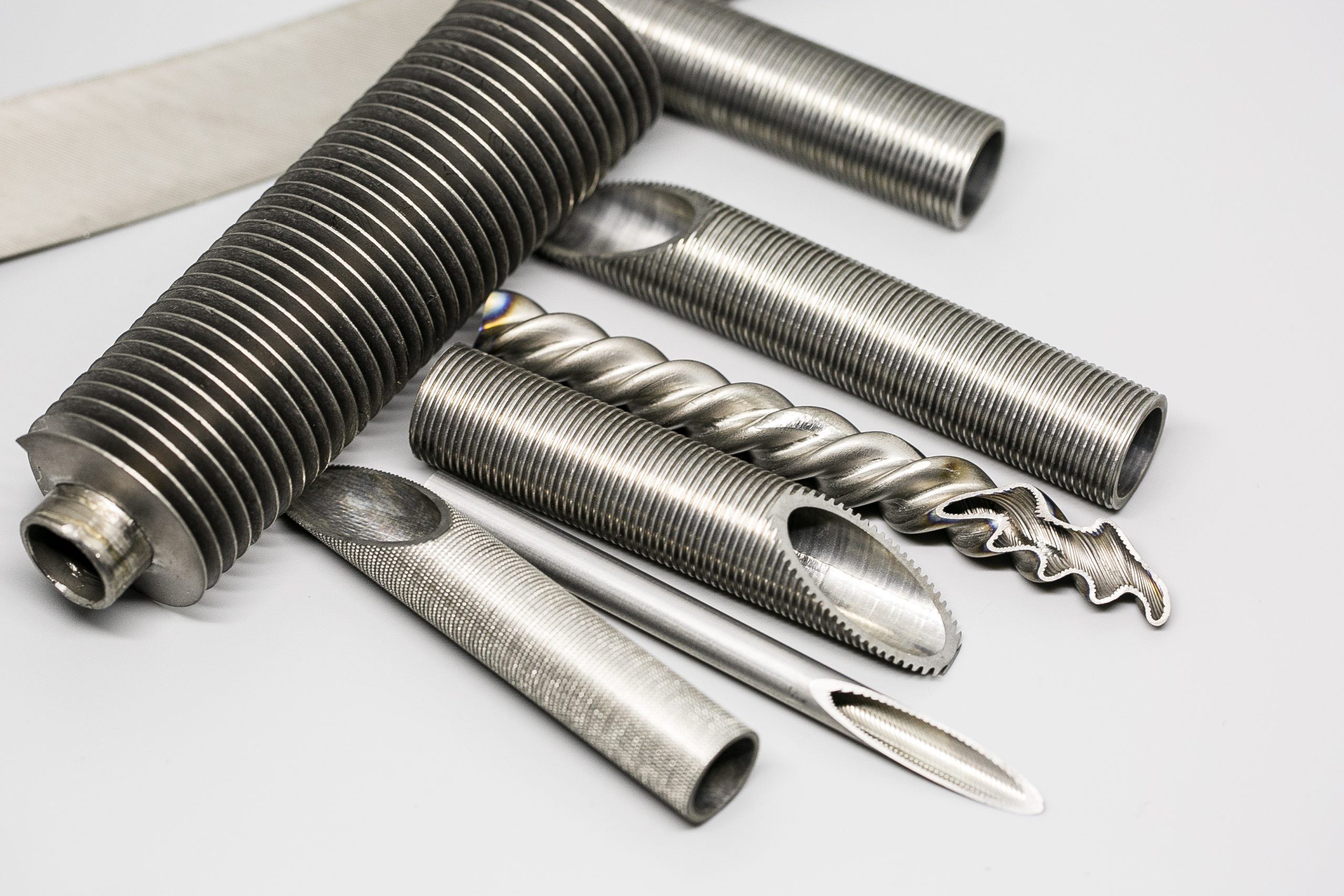
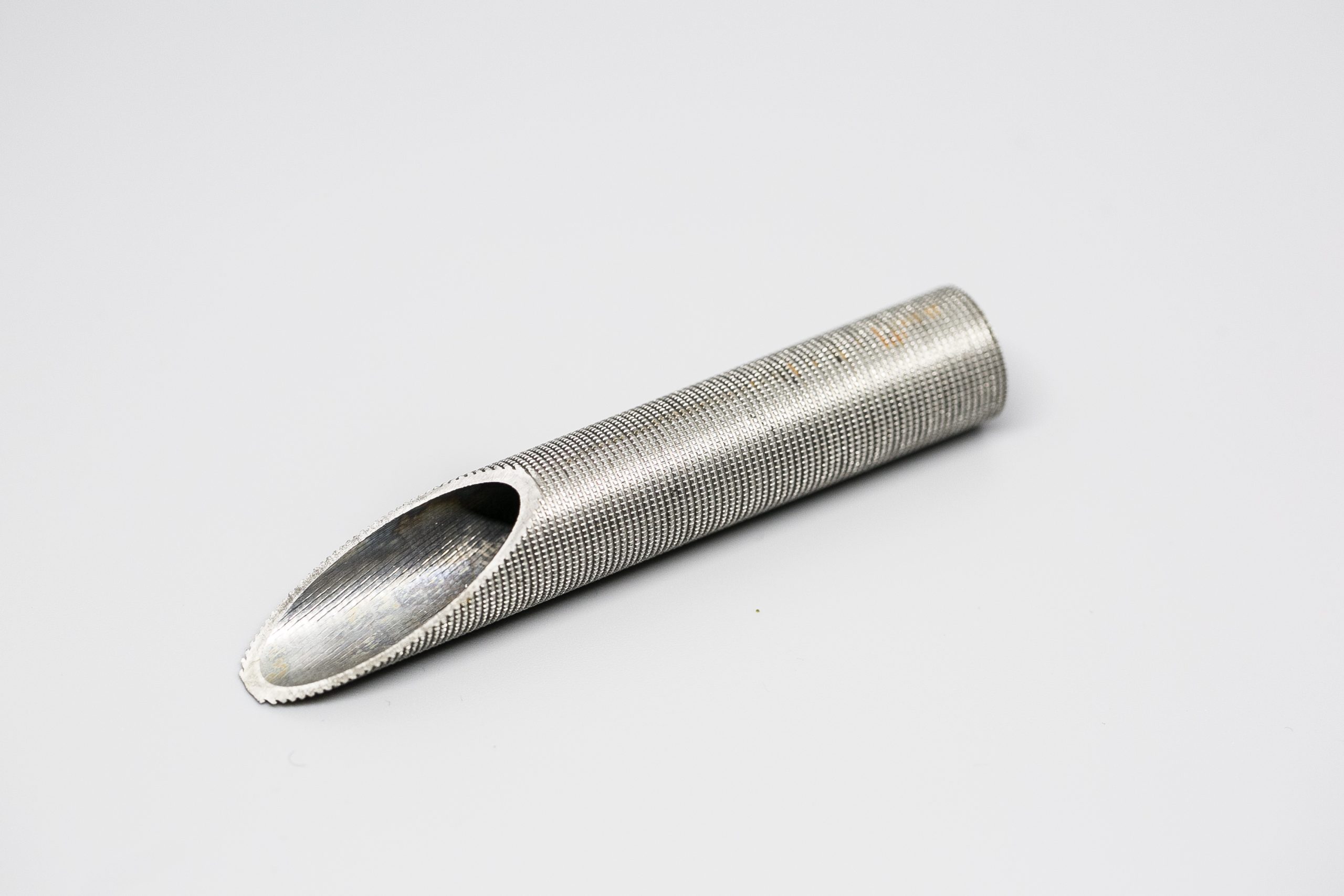
Enhanced heat transfer tubes are tubes with internal grooves, external fins or other engineered surface profiles used to improve heat transfer in selected heat exchanger, condenser, evaporator and refrigeration systems. Their purpose is to reduce the controlling thermal resistance in the system, not simply to create a special tube appearance.
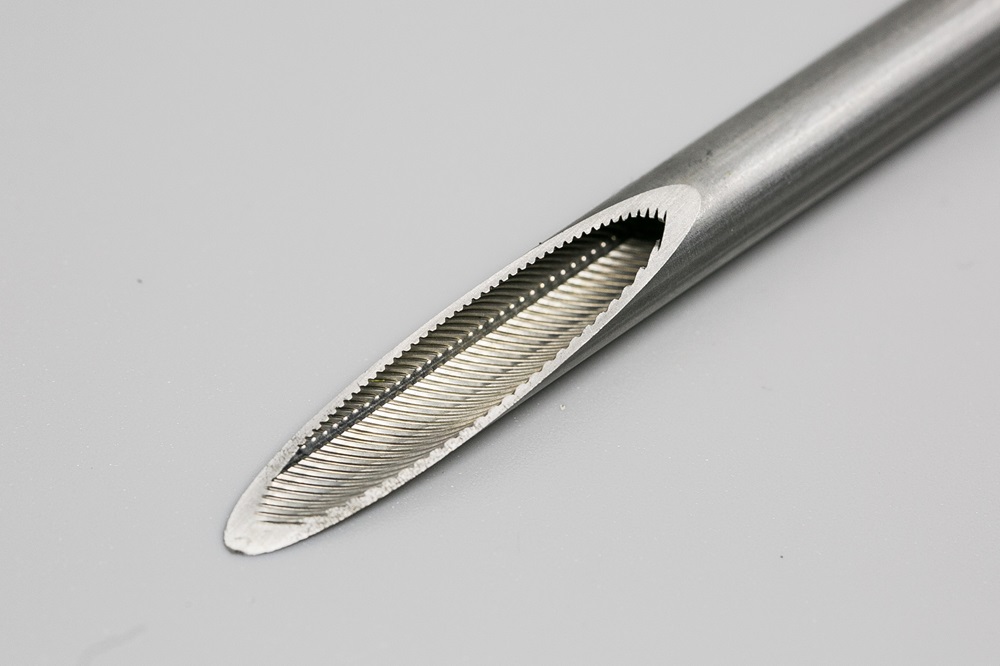
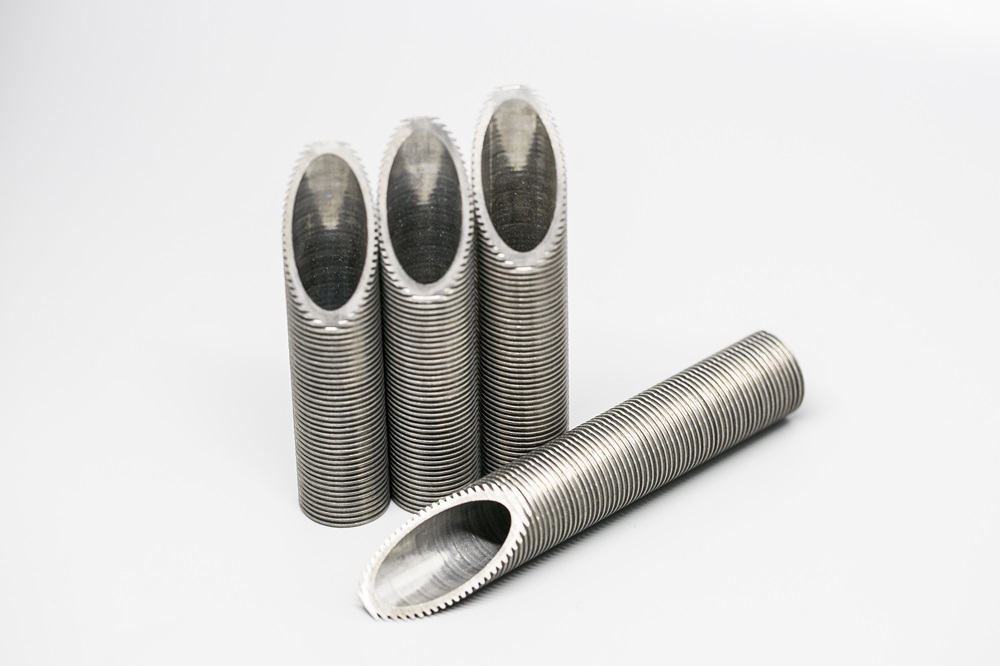
In many heat transfer systems, part of the resistance comes from the fluid boundary layer near the tube wall. Inner grooved tubes can induce turbulence, secondary flow and boundary-layer disruption on the tube side. Low fin tubes increase outside surface area and can reduce external-side or condensation-side resistance. The actual benefit depends on thermal resistance distribution, fluid properties, flow regime, fouling factor, pressure drop and equipment design.
What technical types of enhanced tubing does GAOFA TECH supply, and in what material families?
GAOFA TECH mainly supplies enhanced tubes in two technical directions: internal enhancement and external enhancement. Internal enhancement is represented by inner grooved tubes. External enhancement is represented by low fin tubes.
Inner Grooved vs. Low Fin Tubes: How do their thermal enhancement mechanisms and flow geometries differ?
Inner grooved tubes and low fin tubes solve different heat transfer problems. The difference is not only the tube appearance, but also the enhancement side, flow geometry and main thermal resistance target.
| Item | Inner Grooved Tube | Low Fin Tube |
|---|
| Main enhancement side | Internal tube side or refrigerant side | External shell side or outside surface |
| Mechanism | Induced turbulence, secondary flow and boundary-layer disruption | Extended surface area, thinner external film resistance and improved shell-side area density |
| Geometry | Groove depth, groove angle, helix angle and groove count | OD over fins, root diameter, fin height, fin pitch and plain ends |
| Typical review direction | Tube-side evaporation, refrigeration, DX evaporators, chillers and selected condensers | Shell-side condensation, oil coolers, compact heat exchangers and selected condenser / evaporator designs |
When should thermal engineers specify inner grooved tubes vs. low fin tubes in shell-and-tube equipment?
Thermal engineers should start from the controlling side of heat transfer. If the main limitation is tube-side or refrigerant-side convection, inner grooved tubes may be reviewed. If the main limitation is shell-side condensation, external film resistance or outside surface area, low fin tubes may be reviewed.
- Review inner grooved tubes for selected DX evaporators, chillers, refrigerant-side evaporation and tube-side heat transfer limitations.
- Review low fin tubes for shell-and-tube condensers, oil coolers, external-side heat transfer limitations and compact equipment designs.
- Keep smooth tubes in the comparison when severe fouling, mechanical cleaning, abrasive solids or strict pressure drop limits dominate the design.
Can stainless steel or titanium enhanced tubes replace copper enhanced tubes despite lower bulk thermal conductivity?
Stainless steel and titanium have lower bulk thermal conductivity than copper alloys, but the final overall heat transfer coefficient is not determined by bulk conductivity alone. Thermal resistance also includes convection resistance, tube wall thickness, fouling resistance, surface geometry and operating flow velocity.
In selected applications, stainless steel or titanium enhanced tubes may help compensate for the conductivity difference through thin-wall design, higher allowable velocity in corrosion-resistant service, lower fouling or corrosion deposit risk, and enhanced surface geometry. This is especially relevant when copper faces corrosion, ammonia compatibility limits, contamination concerns or price pressure. Final replacement should still be confirmed by thermal calculation, pressure drop review, tube-sheet design and customer approval.
When should titanium enhanced tubes be reviewed for marine, seawater or chemical cooling projects?
Titanium low fin tubes and titanium inner grooved tubes should be reviewed when a project needs both corrosion resistance and heat transfer enhancement. Typical review directions include seawater condensers, marine cooling systems, chloride-rich cooling water, brine service and selected chemical cooling applications.
Titanium is not selected only because it is an enhanced tube material. The review should include chloride level, flow velocity, suspended solids, fouling, cleaning method, crevice design, tube sheet material, galvanic contact, fluoride risk and customer specification.
Are enhanced tubes always better than smooth plain tubes?
No. Enhanced tubes are useful when the enhanced surface actually reduces the controlling thermal resistance and the system can accept the pressure drop, fouling and fabrication implications. Smooth plain tubes may be more suitable when the medium is dirty, scaling is severe, abrasive particles are present, mechanical cleaning is frequent, or pressure drop and simple maintenance are more important than surface enhancement.
For replacement projects, the original tube bundle design, failure mode, cleaning method and performance target should be reviewed before changing from smooth tubes to enhanced tubes.
Will enhanced tube profiles increase pressure drop, and how can system engineers optimize for it?
Yes. Enhanced profiles can increase fluid friction and may create higher local pressure drop, especially for inner grooved tubes or designs that intentionally disturb flow. This should be discussed honestly before quotation or equipment redesign.
The engineering question is whether the complete system is optimized. If enhanced tubes increase heat transfer enough under the actual flow condition, the equipment may require fewer tubes, a smaller shell, fewer tube passes or a different flow arrangement. In an overall system calculation, the final pressure drop may be acceptable, similar or sometimes lower than the original design, but this cannot be assumed without geometry, medium, flow rate and thermal calculation.
How are the plain ends or land sections of enhanced tubes configured for tube-sheet expansion or welding?
Enhanced tubes, especially low fin tubes, normally require plain ends or land sections for tube-sheet expansion, welding, rolling, sealing or mechanical assembly. The plain end length should follow the drawing, tube sheet thickness, expansion length, welding method and support plate layout.
For low fin tubes, OD over fins, root diameter, plain end OD, transition area and land length must be controlled according to the customer drawing. In many designs, plain sections are configured to support tube insertion, tube-sheet fit and reliable sealing while avoiding fin damage during assembly. If support plates require smooth sections between finned areas, those land sections should be marked clearly on the drawing.
What dimensions and drawings should buyers provide before placing an enhanced tube order?
Enhanced tube quotation depends on both the base tube and the enhanced geometry. Buyers should provide drawings whenever possible, especially for replacement tube bundles or OEM equipment.
- For inner grooved tubes: OD, wall thickness, groove depth, groove angle, helix angle, groove count, internal profile, material and length.
- For low fin tubes: OD over fins, root diameter, base wall thickness, fin height, fin pitch, fin density, plain end length, support plate position and tube length.
- For all enhanced tubes: working medium, temperature, pressure, flow condition, fouling risk, cleaning method, tube-sheet material and connection method.
What inspection and quality control points are important for enhanced heat transfer tubes?
Enhanced tube inspection should cover the base tube, the enhanced profile and the assembly-related areas. Important items include material verification, OD and wall thickness inspection, groove or fin geometry inspection, plain end length inspection, transition area review, surface condition, tube end condition, NDT or tightness testing when required, and packing protection.
For more details, buyers can review GAOFA TECH’s Quality Control page. Enhanced tubes need careful handling because fins, grooves and land sections can be damaged if packing and transportation are not reviewed properly.
Can enhanced heat transfer tubes be reviewed for data center cooling systems?
Yes. Enhanced tubes may be reviewed for selected data center cooling or liquid cooling support equipment when the design requires compact heat transfer, corrosion-resistant materials or improved thermal performance. The review should include coolant type, water chemistry, temperature, pressure, flow rate, pressure drop limitation, fouling risk, cleaning method and equipment design.
What basic information is needed for an initial enhanced tube quotation?
For a first quotation, please provide material grade, tube form, OD × wall thickness × length and quantity. For enhanced tube geometry, drawings are strongly recommended because inner groove depth, helix angle, fin height, fin pitch, plain end length and tube-sheet connection can affect feasibility, price and inspection.
Enhanced Tubing RFQ Checklist: What thermal, geometric and operating parameters are required for a custom quotation?
A useful enhanced tube RFQ should include tube type, material grade, OD, wall thickness, groove or fin geometry, length, quantity, application, working medium, temperature, pressure, flow condition, heat transfer target, pressure drop limitation, fouling factor, cleaning method, tube-sheet material, connection method, inspection requirement, packing requirement and destination.
For copper replacement, seawater cooling, refrigeration or replacement tube bundle projects, please also provide the original drawing, existing material, failure mode, operating history and target improvement. You can also start from the Tube Inquiry Checklist or send drawings through the contact page.