
Titanium Welded Tube
Gr1, Gr2, Gr4 and Gr12 Titanium Welded Tubes for Heat Exchangers, Condensers, Cooling Systems and Corrosion-Resistant Equipment
GAOFA TECH supplies titanium welded tubes with outer diameter from 6.0 mm to 88.9 mm and wall thickness from 0.3 mm to 2.0 mm. Main titanium grades include Gr1, Gr2, Gr4 and Gr12 for heat exchangers, condensers, evaporators, seawater cooling, chemical equipment, heating elements and selected exhaust applications.
Titanium welded tube selection should be reviewed according to grade, OD, wall thickness, welded tube approval, weld quality, working medium, temperature, pressure, corrosion condition, bending or forming process, inspection requirement and customer specification.
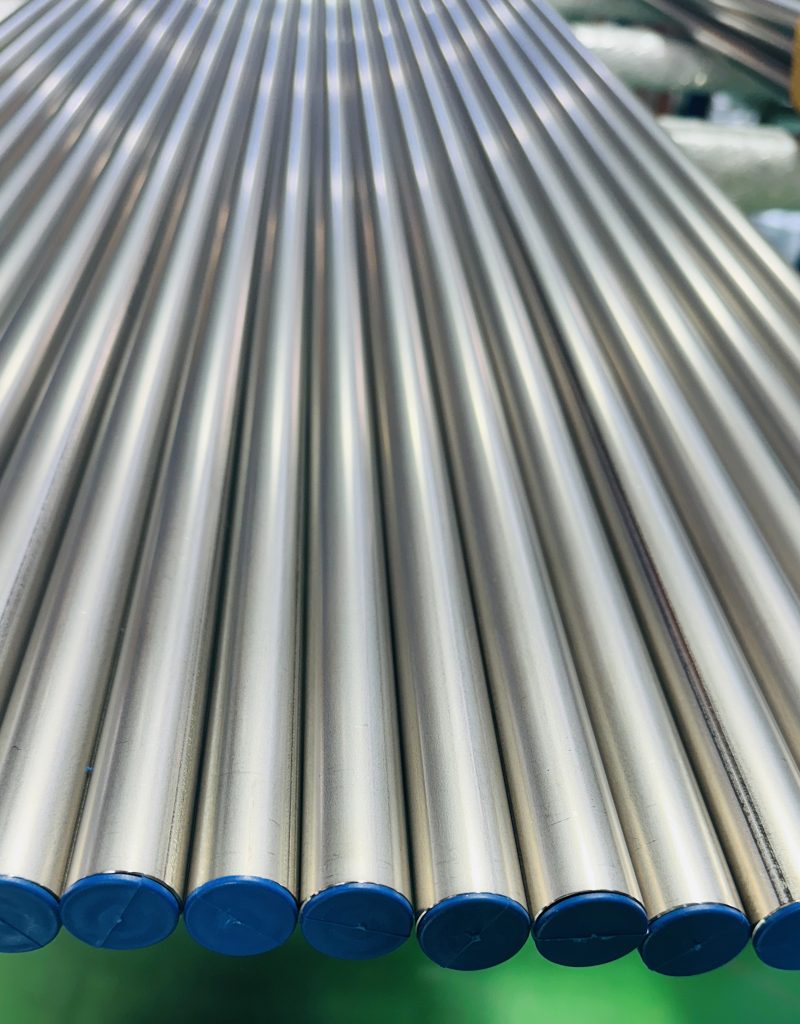
Titanium Welded Tube Supply Scope
This page is for buyers searching for titanium welded tube, titanium welded tubing, Gr2 titanium welded tube, Gr12 titanium welded tube, titanium heat exchanger tube, titanium condenser tube, titanium tube for seawater cooling and titanium welded tube supplier.
Grade selection should be reviewed according to forming, strength, corrosion condition, temperature and customer specification.
Suitable for heat exchanger tubes, condenser tubes, industrial cooling tubes, heating element tubes and project-specific welded tubing.
Thin-wall welded titanium tubing can be reviewed where dimensional consistency and cost control are important.
Testing scope should be confirmed according to standard, application, pressure requirement and customer specification.
What Is Titanium Welded Tube?
Titanium welded tube is produced from titanium strip or coil through forming, welding, sizing and heat treatment processes. It is commonly reviewed where corrosion resistance, thin wall thickness, dimensional consistency and cost efficiency are required.
Compared with titanium seamless tube, titanium welded tube is often suitable for heat exchangers, condensers and evaporators, cooling systems, heating elements, chemical equipment and selected exhaust applications when the working condition and customer specification allow welded tubing.
The correct tube choice depends on titanium grade, OD, wall thickness, pressure level, weld integrity, working medium, corrosion condition, forming requirement, tube sheet connection, inspection scope and end-user approval.
Practical Purchasing Reasons
- Thin wall thickness and stable wall control are required.
- The project needs corrosion resistance in seawater, chloride-rich water or chemical environments.
- Tube cost and lead time need to be balanced against seamless tube options.
- Heat exchanger, condenser or evaporator design allows welded titanium tubing.
- Heating element or exhaust applications require titanium tube with bending or forming review.
- Inspection requirements such as eddy current, ultrasonic, pneumatic or hydrostatic testing can be confirmed before production.
Titanium Welded Tube Specifications
Please provide the exact titanium grade, standard, OD, wall thickness, length, tolerance, application and inspection requirement before quotation.
| Specification Item | GAOFA TECH Review Direction | Buyer Notes |
|---|---|---|
| Available Titanium Grades | Gr1, Gr2, Gr4, Gr12 | Other titanium grades should be discussed case by case according to standard, drawing, quantity and production feasibility. |
| Outer Diameter | 6.0 mm to 88.9 mm | OD affects tube sheet design, bending, forming, pressure review and replacement compatibility. |
| Wall Thickness | 0.3 mm to 2.0 mm | Wall thickness affects welding route, pressure review, forming feasibility and corrosion allowance. |
| Length | Straight length according to customer requirement; common project length can be reviewed. | Please confirm fixed length, random length, tolerance and packing requirement. |
| Standards | ASTM B338, ASTM B862 or customer specification by project review. | Please confirm whether the order is for tubing, pipe, heat exchanger tube or project-specific specification. |
| Heat Treatment | Heat treatment or annealing route reviewed according to grade, size and requirement. | Confirm required delivery condition and mechanical properties before production. |
| Inspection | Dimensional inspection, visual inspection, eddy current testing, ultrasonic testing, pneumatic test, hydrostatic test or other requirement. | Testing method should be confirmed according to application, pressure level and customer specification. |
| Surface and Ends | Surface finish, weld bead condition, tube end condition and cleanliness by requirement. | Important for heat exchangers, heating elements, bending, welding, expansion and assembly. |
Gr1, Gr2, Gr4 and Gr12 Titanium Welded Tubes
Titanium grade should be selected according to corrosion condition, strength requirement, forming process, temperature, pressure and customer specification.
| Titanium Grade | Common Review Application | Selection Notes |
|---|---|---|
| Grade 1 / Gr1 Titanium Welded Tube | Heating element tubes, bending or forming applications, selected exhaust tube review and applications where higher formability is important. | Gr1 has lower strength than Gr2 and Gr4. It is often reviewed when forming, bending or specification compatibility is important. |
| Grade 2 / Gr2 Titanium Welded Tube | Heat exchangers, condensers, evaporators, seawater cooling, chemical equipment, industrial cooling and general titanium welded tubing projects. | Gr2 is a common commercially pure titanium grade for industrial welded tubes. Medium, temperature, pressure and corrosion condition should still be confirmed. |
| Grade 4 / Gr4 Titanium Welded Tube | Projects requiring higher strength among commercially pure titanium grades, subject to forming and welding feasibility review. | Gr4 has higher strength but lower formability compared with Gr1 and Gr2. Confirm bending, forming, tube sheet connection and specification requirements. |
| Grade 12 / Gr12 Titanium Welded Tube | More demanding chloride, brine, hot salt water, corrosive cooling water and selected chemical heat exchanger applications. | Gr12 may be reviewed where improved corrosion resistance is required compared with common commercially pure titanium directions. Production feasibility and cost should be checked case by case. |
Applications of Titanium Welded Tubes
Titanium welded tube is used where corrosion resistance, thin wall control and welded tube cost efficiency are suitable for the equipment design.
Heat Exchangers
Reviewed for shell and tube heat exchangers where titanium corrosion resistance and welded tube dimensions are suitable for the design.
Condensers
Used in selected condenser applications, especially where cooling water condition supports titanium tube material selection.
Evaporators and MVR Systems
Reviewed for evaporators, MVR systems and process equipment according to medium, temperature, pressure and tube specification.
Seawater Cooling
Gr2 or Gr12 titanium welded tubes can be reviewed for seawater cooling, marine cooling and chloride-rich water conditions.
Chemical Equipment
Reviewed for chemical equipment and corrosive process lines according to medium chemistry, concentration, temperature and specification.
Heating Elements
Gr1 titanium welded tubes can be reviewed for heating element sheath tube applications where corrosion resistance and forming are required.
Exhaust Tube Review
Selected titanium welded tube applications can be reviewed for motorcycle or automotive exhaust systems according to grade, size, wall and forming requirement.
Heat Pumps and Cooling Equipment
Reviewed for heat pump, cooling and thermal equipment where titanium tube corrosion resistance is required by water condition or end-user specification.
Replacement Tube Projects
Replacement projects should provide original tube material, drawing, failure history, working medium, pressure and expected service life.
Who Commonly Reviews Titanium Welded Tubes?
Titanium welded tubing is usually reviewed by equipment builders who need corrosion resistance, stable thin-wall tube dimensions, tube sheet compatibility and a practical alternative to seamless titanium tube when the specification allows welded construction.
Heat Exchanger and Condenser Manufacturers
Review Gr2 or Gr12 titanium welded tubes for heat exchanger tubes, condenser tubes and evaporator tube bundles where welded titanium tubing is accepted.
Seawater and Marine Cooling Equipment Buyers
Review titanium welded tubes for seawater cooling, marine condensers and chloride-containing cooling water systems according to water chemistry and design conditions.
Chemical and Corrosive Cooling Equipment Manufacturers
Review titanium welded tubing for corrosion-resistant equipment when medium composition, temperature, pressure and corrosion mechanism support titanium selection.
Industrial Refrigeration and Heat Pump Equipment Builders
Review titanium welded tubes for cooling equipment, heat pumps, condensers and evaporators when corrosion resistance or replacement tube compatibility is required.
Heating Element and Tubular Heater Manufacturers
Review Gr1 or Gr2 titanium welded tubes for heating element sheath tubes when corrosion resistance, forming and customer specification allow welded tube use.
Exhaust and Special Fabrication Projects
Review titanium welded tube for selected exhaust tube or special fabrication requirements according to grade, wall thickness, bending radius and downstream welding process.
Titanium Welded Tube vs Titanium Seamless Tube
Welded and seamless titanium tubes are not the same product route. The correct option depends on pressure, wall thickness, size, specification, fabrication process and end-user approval.
| Comparison Item | Titanium Welded Tube | Titanium Seamless Tube |
|---|---|---|
| Production Route | Formed from titanium strip or coil and welded into tube, followed by sizing, heat treatment and inspection as required. | Produced through seamless tube manufacturing processes without a welded seam. |
| Wall Thickness Direction | Often reviewed where thin wall thickness and consistent wall control are important. | Often reviewed for higher-pressure, thicker-wall, mechanical or special specification applications. |
| Cost and Lead Time | Can be more cost-efficient for suitable sizes and applications. | May have higher cost or longer production review depending on grade, size and quantity. |
| Application Fit | Heat exchangers, condensers, cooling systems, heating elements and selected industrial applications when welded tube is approved. | Higher pressure, critical mechanical applications, special tubing requirements or projects requiring seamless tube by specification. |
| Key Risk Review | Weld integrity, weld bead condition, NDT, pressure test and customer approval. | Size availability, wall tolerance, surface condition, cost and lead time. |
Key Points Before Choosing Titanium Welded Tube
Many buyers search for titanium welded tube because they need corrosion resistance, thinner wall, specific OD or a more economical alternative to seamless tube. The project should still be checked carefully before quotation.
Confirm Gr1, Gr2, Gr4 or Gr12
Grade selection affects strength, formability, corrosion resistance, cost and application suitability.
Check End-User Specification
Some projects require seamless tube by specification. Confirm welded tube acceptance before changing product route.
Review Water Chemistry or Process Fluid
Seawater, chloride level, brine, pH, chemical concentration and temperature should be provided for material review.
Confirm Downstream Fabrication
Heating elements, coils and exhaust tubes may require bending or forming review before grade and wall thickness are confirmed.
Confirm ET, UT, Pneumatic or Hydro Test
Testing scope affects production route, documentation, lead time and price. Confirm inspection requirements before production.
Protect Tube Surface and Ends
Tube end protection, inner cleanliness, bundle packing and wooden cases should be reviewed according to shipment and application.
Common Questions Before Buying Titanium Welded Tubes
These questions match common RFQ and engineering review points from heat exchanger, condenser, heating element, seawater cooling and exhaust tube buyers.
Can welded titanium tube replace seamless tube?
It can be reviewed when the specification allows welded tube, pressure level is suitable and inspection requirements are clearly confirmed. Some projects still require titanium seamless tube.
Which grade should I choose: Gr1, Gr2, Gr4 or Gr12?
Gr1 is often reviewed for forming, Gr2 for general industrial titanium tube applications, Gr4 for higher strength review, and Gr12 for more demanding chloride or corrosive cooling conditions.
Can titanium welded tube be bent or formed?
Bending or forming feasibility depends on grade, OD, wall thickness, bend radius, heat treatment condition and downstream process. This is important for heating elements, coils and exhaust tubes.
What inspection is required for heat exchanger tubes?
Heat exchanger tube orders may require dimensional inspection, visual inspection, weld seam review, eddy current testing, ultrasonic testing, pneumatic or hydrostatic testing and documentation.
Is Gr2 suitable for seawater cooling?
Gr2 is commonly reviewed for seawater cooling, but the final choice should consider chloride level, temperature, flow condition, crevice risk, tube sheet material and end-user specification.
When should Gr12 be reviewed?
Gr12 may be reviewed for more demanding chloride, brine, hot salt water or selected chemical cooling conditions where improved corrosion resistance is required.
Quality Control for Titanium Welded Tubes
Titanium welded tube inspection should focus on base material traceability, weld quality, dimensional accuracy, surface condition, tube integrity, cleanliness and packing protection. More inspection examples are available on the Quality Control & Tube Inspection page.
| Inspection Item | Purpose | Buyer Notes |
|---|---|---|
| Material Verification | Confirm titanium grade, heat number, chemical composition and traceability. | MTC, PMI and material documents can be reviewed according to order requirement. |
| Dimensional Inspection | Check OD, wall thickness, length, straightness and tolerance. | Important for tube sheet assembly, bending, forming, replacement compatibility and pressure review. |
| Weld Seam Review | Review weld integrity, weld bead condition and weld area consistency. | Weld quality is a key point for titanium welded tube acceptance. |
| Surface Inspection | Review scratches, dents, oxidation, surface marks and handling damage. | Titanium tube surface should be protected during production, handling and packing. |
| NDT Review | Review eddy current testing, ultrasonic testing or other agreed NDT scope. | NDT should be confirmed according to standard, application and buyer requirement. |
| Tightness / Pressure Test | Review pneumatic test, hydrostatic test or other tightness test requirement. | Testing route should be confirmed before production and quotation. |
| Packing Review | Protect tube surface, tube ends, bundle condition and inner cleanliness during shipment. | End caps, wrapping, separators, wooden cases and packing photos can be discussed before shipment. |
View Tube Inspection and Quality Control Details
Review GAOFA TECH’s tube inspection examples, including PMI checking, OD inspection, wall thickness inspection, visual inspection, eddy current testing, pneumatic testing, ultrasonic testing and packing review.
Information Needed for a Titanium Welded Tube Quotation
A complete RFQ helps confirm titanium grade, welded tube route, tube size, tolerance, application, inspection scope, packing method and quotation accuracy.
For heat exchanger, condenser, evaporator, seawater cooling, heating element, chemical equipment or exhaust tube projects, please provide both tube dimensions and working condition details.
Copy Basic RFQ Template
Copy this short template and send us the basic tube requirement.
Material Grade:
Tube Form:
Size: OD × Wall Thickness × Length
Quantity:
Application:
- Titanium grade: Gr1, Gr2, Gr4, Gr12 or other required grade
- Applicable standard: ASTM B338, ASTM B862 or customer specification
- Outer diameter: 6.0 mm to 88.9 mm or required OD
- Wall thickness: 0.3 mm to 2.0 mm or required wall thickness
- Tube length, length tolerance and quantity
- Application: heat exchanger, condenser, evaporator, seawater cooling, chemical equipment, heating element, exhaust or replacement tube
- Working medium, chloride level, pH, temperature, pressure and flow condition
- Downstream process: bending, forming, expansion, welding, rolling, cutting or assembly
- Inspection requirement: dimensional, visual, PMI, eddy current, ultrasonic, pneumatic, hydrostatic or other test
- Documentation requirement: MTC, inspection report, packing photos or other documents
- Packing requirement, destination, Incoterms and expected delivery schedule
Best RFQ practice: If this is a replacement or new equipment project, please tell us the existing tube material, failure reason if any, working medium, operating temperature, pressure and target improvement. This helps us review whether titanium welded tube, titanium seamless tube or another tube direction should be discussed.
Send Your Titanium Welded Tube Requirement
Please send titanium grade, standard, OD, wall thickness, length, quantity, application, working medium, temperature, pressure, tolerance, downstream fabrication, inspection requirement, packing requirement and destination. We will review the welded titanium tube route according to your specification and application.
Titanium Welded Tube FAQ
What is titanium welded tube?
Titanium welded tube is produced from titanium strip or coil through forming, welding, sizing and heat treatment processes. It is reviewed for applications requiring corrosion resistance, thin wall thickness, dimensional consistency and welded tube cost efficiency.
What titanium grades can GAOFA TECH supply for welded tubes?
GAOFA TECH mainly supplies titanium welded tubes in Gr1, Gr2, Gr4 and Gr12. Grade selection should be reviewed according to corrosion condition, strength, forming requirement, temperature, pressure and customer specification.
What OD and wall thickness can be reviewed?
Titanium welded tubes can be reviewed with outer diameter from 6.0 mm to 88.9 mm and wall thickness from 0.3 mm to 2.0 mm. Final feasibility depends on grade, size, tolerance, quantity and inspection requirement.
What standards are commonly reviewed for titanium welded tubes?
ASTM B338 and ASTM B862 can be reviewed according to project requirement. Buyers should confirm whether the order is for tubing, pipe, heat exchanger tube or customer-specific specification.
What applications use titanium welded tubes?
Titanium welded tubes are reviewed for heat exchangers, condensers, evaporators, seawater cooling, chemical equipment, heat pumps, heating elements, selected exhaust systems and replacement tube projects.
When should Gr1 titanium welded tube be reviewed?
Gr1 titanium welded tube is often reviewed for heating elements, bending or forming applications, selected exhaust tube review and projects where higher formability is important.
When should Gr2 or Gr12 titanium welded tube be reviewed?
Gr2 is commonly reviewed for industrial titanium welded tube applications such as heat exchangers, condensers and cooling equipment. Gr12 may be reviewed for more demanding chloride, brine, hot salt water or corrosive chemical conditions.
When should Gr4 titanium welded tube be reviewed?
Gr4 titanium welded tube can be reviewed when higher strength among commercially pure titanium grades is required. Forming, bending, welding, tube sheet connection and customer specification should be checked carefully.
Is titanium welded tube a replacement for titanium seamless tube?
Not always. Titanium welded tube may be suitable for selected heat exchangers, condensers, cooling systems, heating elements and thin-wall applications, but seamless tube may still be required for higher pressure, thicker wall, mechanical applications or specifications that require seamless tubing.
What inspection can be reviewed for titanium welded tubes?
Dimensional inspection, visual inspection, PMI, eddy current testing, ultrasonic testing, pneumatic testing, hydrostatic testing and packing review can be discussed according to standard and customer requirement.
Can titanium welded tubes be bent or formed?
Titanium welded tubes can be reviewed for bending or forming applications such as heating elements, coils and selected exhaust tubes. Suitability depends on titanium grade, OD, wall thickness, bend radius, delivery condition and customer fabrication process.
Can Gr2 titanium welded tube be used for seawater cooling?
Gr2 titanium welded tube is commonly reviewed for seawater cooling and condenser applications, but final suitability should consider chloride level, temperature, pressure, crevice condition, tube sheet material, galvanic corrosion risk and customer specification.
What information is needed before quotation?
Please provide titanium grade, standard, OD, wall thickness, length, quantity, application, working medium, temperature, pressure, tolerance, downstream fabrication process, inspection requirement, packing requirement and destination.