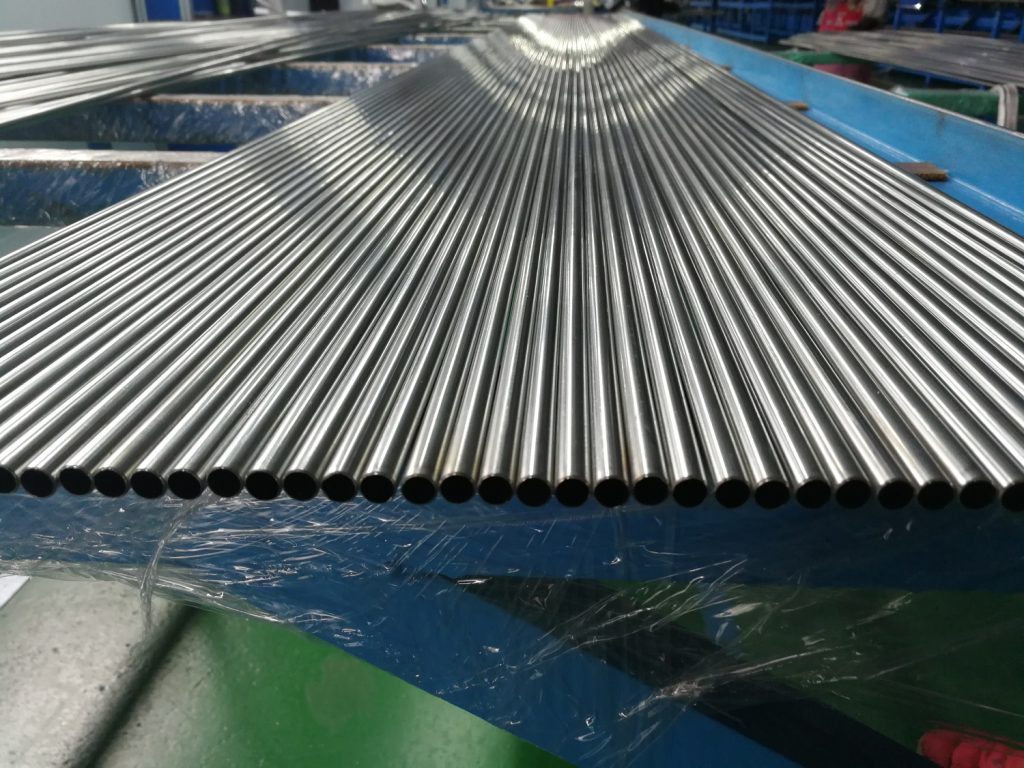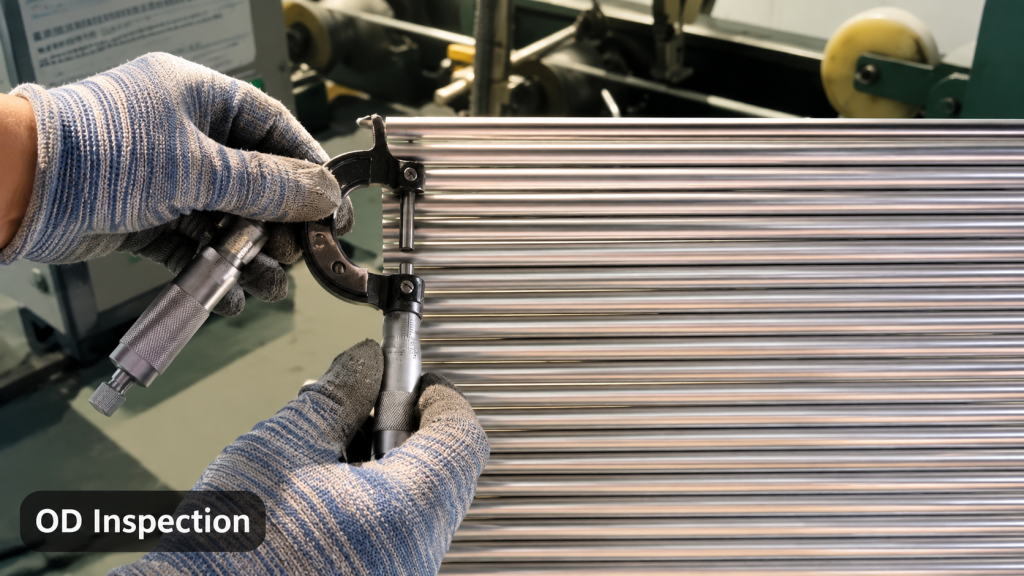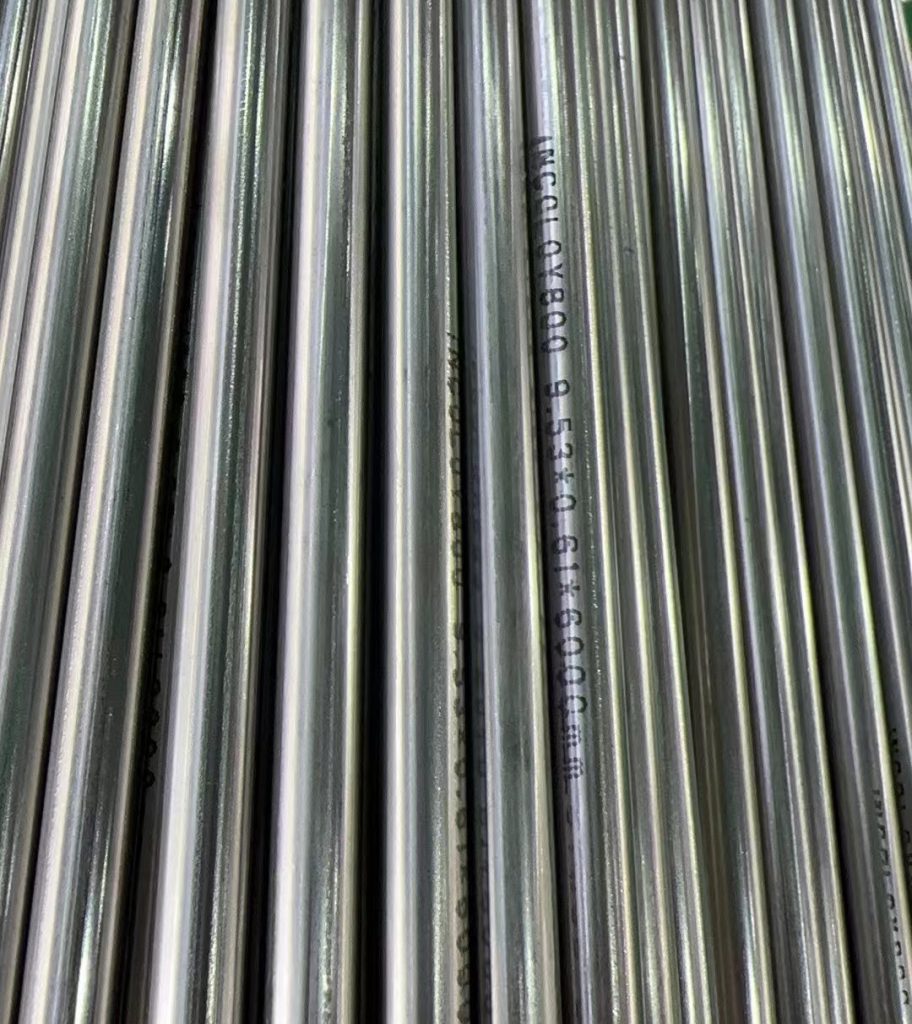
Heating element sheath material should be selected by working medium, actual sheath temperature, watt density, corrosion mechanism, forming route and customer specification. A universal temperature ranking is not enough. Stainless steels such as 304, 316L, 321, 309S and 310S serve different general, corrosion and high-temperature roles. Incoloy 800, 840 and 825 extend the review toward demanding heat or corrosion conditions. Titanium Gr1 and Gr2 are mainly corrosion-driven options for selected liquid heating applications, not general replacements for high-temperature dry-air alloys.
Why a Maximum-Temperature Table Is Not Enough
The temperature of water, oil or air is not necessarily the temperature of the metal sheath. High watt density, weak circulation, scale, carbon deposits, partial exposure or dry firing can raise local sheath temperature substantially. The related guide Why Heating Element Sheaths Fail at 100-150°C explains this difference.
A higher-alloy material does not correct an overloaded heater design. Material data must be interpreted together with the medium, atmosphere, heat removal, deposits, heater geometry and manufacturing process.
Compare Ten Sheath Material Directions
Review: Established general-purpose heater designs with moderate medium and sheath conditions.
Caution: Low process temperature does not prevent chloride attack, scaling or local overheating.
Review: Water, moisture and selected mildly corrosive service requiring more aqueous-corrosion margin than 304.
Caution: It is not immune to chloride pitting, crevice corrosion, stress corrosion cracking, scale or dry firing.
Review: Titanium-stabilized stainless steel for selected elevated-temperature or thermally cycled service.
Caution: Stabilization does not make 321 a universal corrosion upgrade over 304 or 316L.
Review: Higher-temperature air, furnace and oxidation-related heater applications by specification.
Caution: Do not transfer an alloy oxidation rating directly into an allowable heater sheath temperature.
Review: A higher-chromium and higher-nickel stainless direction for demanding high-temperature oxidation service.
Caution: Strong oxidation resistance does not make it the best material for water, acids or every liquid medium.
Review: Heating and thermal equipment requiring a broader heat-, oxidation- and corrosion-resistant direction.
Caution: Specify UNS N08800 correctly and do not confuse it with 800H or 800HT.
Review: Established electrical heating element sheath designs, especially seam-welded thin-wall tube applications.
Caution: Weld consistency, annealed condition, forming process and customer qualification remain important.
Review: Corrosion-driven heaters exposed to selected acids or chemically aggressive liquids.
Caution: It is not simply the highest grade or the default material for the highest sheath temperature.
Review: Corrosion-resistant liquid heating where higher formability and a customer-approved titanium route are important.
Caution: Lower strength than Gr2 must be considered with wall thickness, pressure and heater construction.
Review: A common commercially pure titanium direction balancing corrosion resistance, strength and fabrication.
Caution: Confirm medium chemistry, crevice condition, galvanic design, sheath temperature and forming requirement.
For product-family details, review Stainless Steel Tubes, the dedicated Incoloy 800 vs 840 vs 825 guide and Titanium Tubes. For tube forms, standards and quotation details, use the individual Incoloy 800 Tube, Incoloy 840 Tube and Incoloy 825 Tube pages. This article focuses on selection roles rather than repeating product specifications or chemical-composition tables.
A Five-Step Selection Sequence
Start with the specification. Do not substitute an approved grade without written approval.
Identify the medium. Water, oil, air, detergent and acids create different risks.
Estimate sheath temperature. Do not use bulk process temperature as the metal temperature.
Review heat removal. Watt density, flow, scale, deposits and immersion affect local temperature.
Confirm fabrication. Tube form, annealing, bending, filling and reduction can change feasibility.
Thermal Selection and Corrosion Selection Are Different
When the Main Risk Is a Hot Sheath
321, 309S, 310S, Alloy 800 and selected Alloy 840 designs may be reviewed when actual sheath temperature, dry heat, airflow, atmosphere or thermal cycling governs selection. There is no single temperature ranking that approves a finished heater.
When the Medium Controls Selection
316L, Alloy 825 and titanium Gr1 or Gr2 may be reviewed when water chemistry, chloride, acid, detergent or another liquid creates the main risk. Their suitability depends on the exact chemistry, temperature, deposits, crevices and heater design.
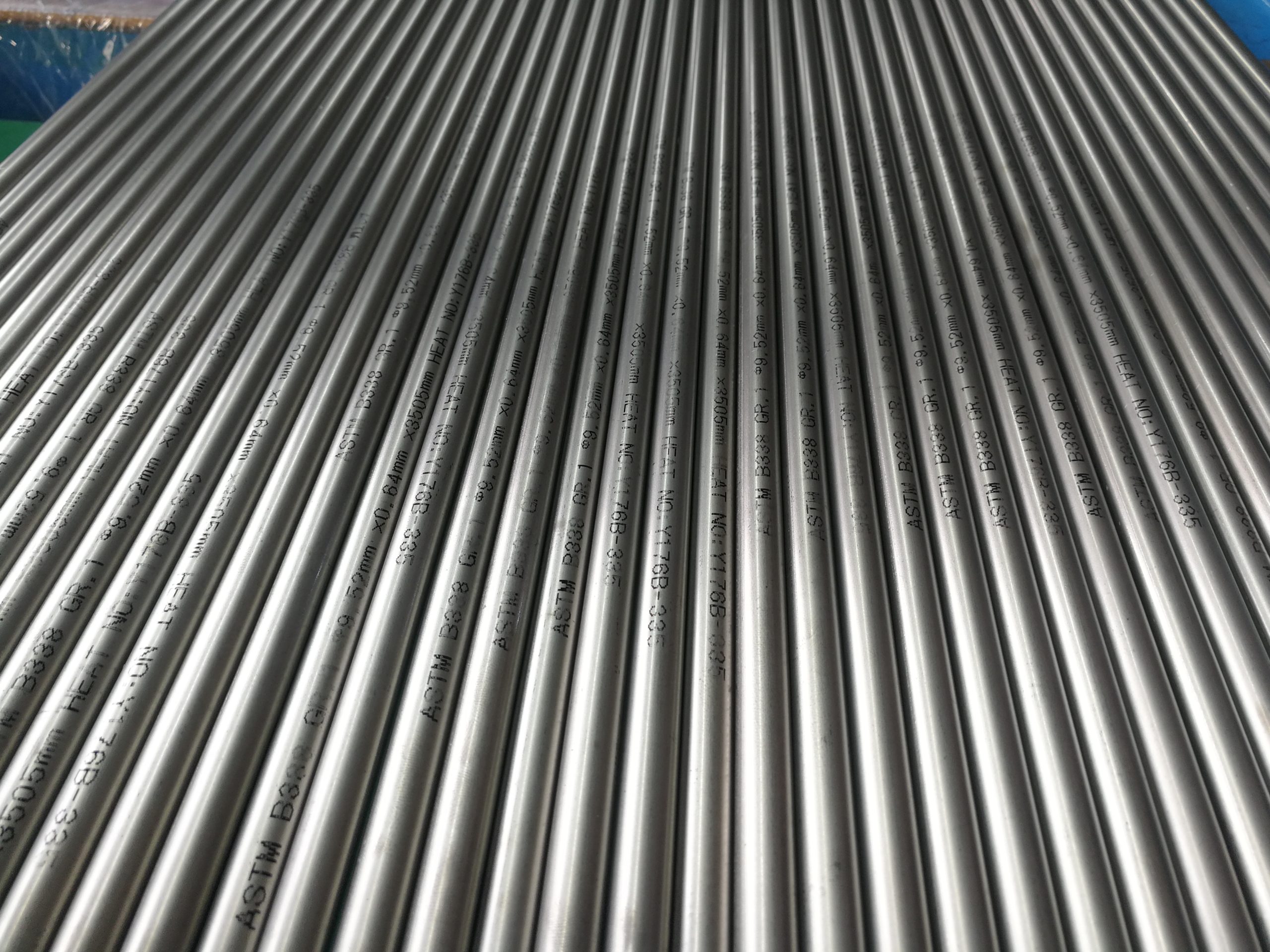
Forming and Qualification Can Override the Material Ranking
A suitable alloy can still create production problems if the finished tube condition does not match the heater process. Confirm welded or seamless route, annealing condition, hardness, ductility, OD, wall thickness, ovality, straightness, cleanliness and downstream forming. When cracking occurs during swaging or diameter reduction, use the Heating Element Sheath Tube Cracking During Swaging guide to review the tube condition and the customer’s reduction process together.
- For welded cartridge heater sheath tubes involving significant swaging or reduction, the finished tube should be fully annealed.
- Fully annealed condition improves forming readiness but does not guarantee that cracking cannot occur.
- Titanium Gr1 may offer more forming margin than Gr2, while Gr2 provides higher strength. The actual heater process still requires validation.
- Changing grade, tube form or supplier may require a heater production trial even when nominal specifications appear similar.
Information Needed for a Useful Tube Review
If the grade is fixed, the inquiry can remain short. Add service information only when material selection or substitution requires review.
Copyable Heating Element Tube RFQ
Material Grade:
Tube Form: Welded / Seamless
Size: OD x Wall Thickness x Length
Quantity:
Heater Type:

If material review is needed:
Working Medium:
Expected Sheath Temperature or Watt Density (if known):
Current Material and Service Issue:
For available tube directions and broader application details, see Heating Element Tubes.
Frequently Asked Questions
When should 316L be considered instead of 304?
Review 316L when water chemistry, moisture or mild corrosion requires more margin than 304 may provide. It is not immune to chlorides, crevices, scale or local overheating.
What is the difference between 309S and 310S for heater sheaths?
Both are heat-resistant stainless directions. 310S has higher chromium and nickel and is generally the more oxidation-oriented alloy. Final selection still depends on actual sheath temperature, atmosphere, fabrication and customer specification.
Is Incoloy 800 always better than 310S?
No. They have different alloy systems, fabrication considerations and qualification histories. Select by sheath temperature, atmosphere, corrosion, forming and approved heater design.
What is the difference between titanium Gr1 and Gr2?
Gr1 has lower strength and generally higher formability. Gr2 provides higher strength and is a common industrial titanium grade. Wall thickness, pressure, forming and customer approval determine which is practical.
Is titanium the best choice for every corrosive heating medium?
No. Titanium performance depends on the exact chemistry, temperature, crevice condition, contamination, galvanic combination and heater design. Nickel alloys or another material may be more suitable in some media.
Discuss Your Heating Element Tube Requirement
Send GAOFA TECH the material grade, tube form, OD x wall thickness x length, quantity and heater type. If the grade is undecided, also provide the working medium and known sheath-temperature or watt-density information.
Request a Tube Review