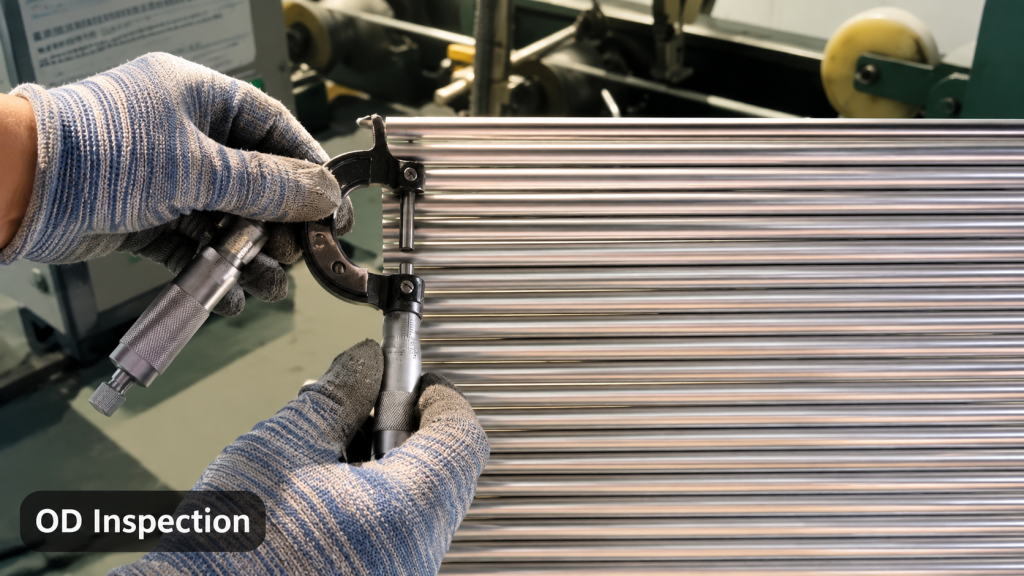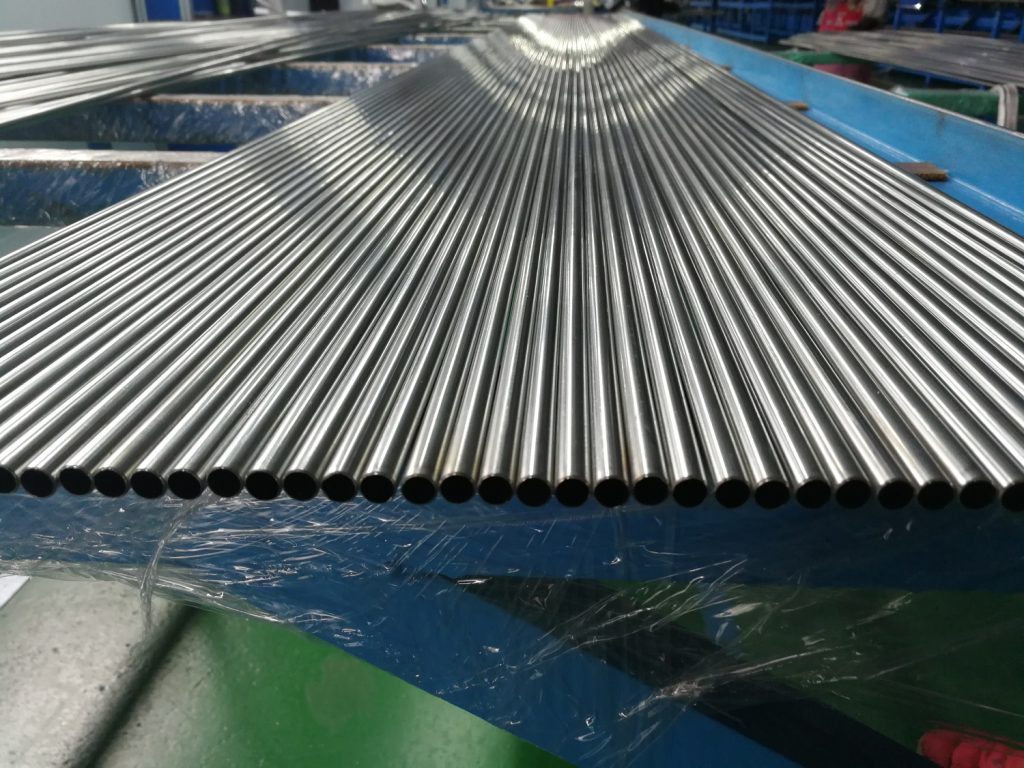
304, 304L and 316L stainless steels can all be reviewed for CDU and AI liquid-cooling piping when the coolant chemistry, fabrication route and equipment specification support them. 304 and 304L belong to the same Cr-Ni stainless family, with 304L using a lower carbon limit that is often relevant to welded fabrication. 316L adds molybdenum and generally provides more resistance to chloride-related pitting and crevice corrosion. Final selection should also consider temperature, pH, oxygen, deposits, stagnation, cleaning chemicals, mixed wetted materials, weld condition and the approved CDU design.
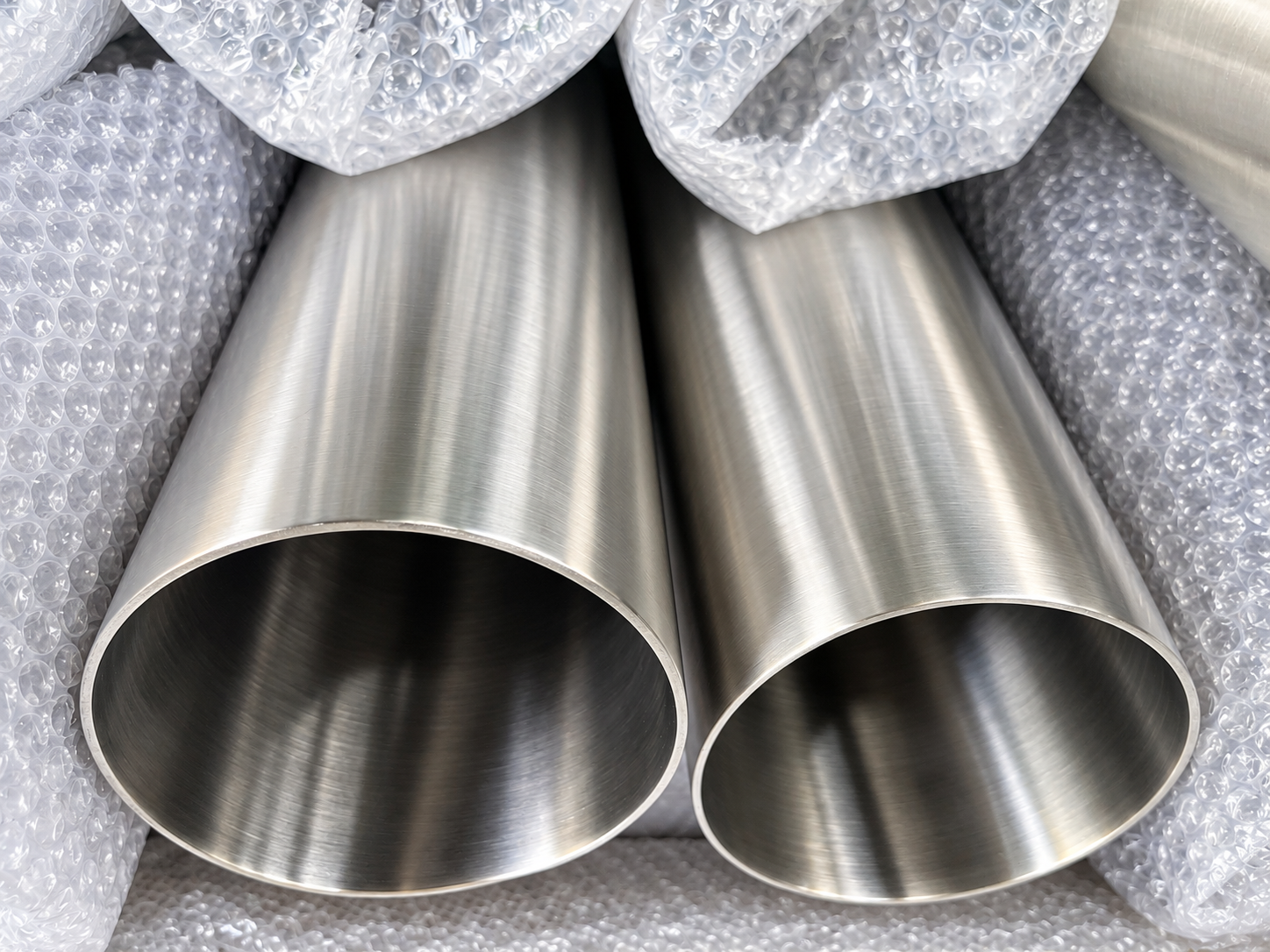
Why This Is a CDU Material Question, Not Just a Stainless Steel Grade Question
A coolant distribution unit connects liquid-cooling loops through components such as heat exchangers, pumps, valves, sensors, piping and manifolds. Stainless steel grade selection should therefore be based on the actual side of the CDU being wetted, the coolant or facility-water chemistry on that side, and the approved material list for the finished equipment.
The same CDU can contain different wetted materials in different circuits. A 304L or 316L decision for internal piping, a titanium decision for a heat-exchanger tube side, and a copper-alloy decision elsewhere are separate engineering questions. For the stainless tube and pipe supply scope, see Stainless Steel Tubes & Pipes for CDU & AI Liquid Cooling Systems.
304 vs 304L: Why the “L” Matters in Fabricated CDU Piping
304 and 304L have similar chromium-nickel alloy systems, but 304L uses a lower carbon limit. The lower-carbon grade reduces the tendency for chromium-carbide precipitation in the heat-affected zone during welding, which is why 304L is frequently reviewed for welded piping, headers and manifold assemblies that may remain in the as-welded condition.
This does not mean that 304 is automatically unsuitable or that 304L automatically guarantees a corrosion-resistant weld. The purchase specification still needs to address the exact grade, product standard, weld procedure, heat tint, surface restoration, cleanliness and any post-fabrication treatment required by the equipment design.
304L vs 316L at a Glance
| Decision Point | 304L Direction | 316L Direction | What to Check |
|---|---|---|---|
| 304 vs 304L designation | 304 and 304L are the same basic Cr-Ni family; 304L has a lower carbon limit and is often preferred for welded fabrication when specified | 316L is the low-carbon Mo-bearing direction | Do not treat 304, 304L and 316L as interchangeable PO labels. Confirm the exact grade and MTC requirement. |
| Alloy system | 304 / 304L: Cr-Ni austenitic stainless steel | 316L: Cr-Ni-Mo austenitic stainless steel | Confirm grade, standard and approved material specification. |
| Chloride pitting / crevice margin | Lower than 316L | Higher because of molybdenum addition | Temperature, pH, oxygen, deposits, oxidizers and crevice geometry also matter. |
| Controlled closed loop | Can be practical when chemistry is controlled and approved | Also suitable where additional corrosion margin is wanted | Review make-up water, inhibitor package, glycol content and contamination control. |
| Variable water chemistry | Requires more caution | Often reviewed earlier because of the higher pitting-resistance margin | Do not select the grade from a single chloride number. |
| Welded fabrication | Commonly weldable; low-carbon grade helps reduce sensitization risk | Same low-carbon benefit with Mo alloying | Weld procedure, heat tint, contamination, cleaning and final surface condition remain important. |
| Cost direction | Usually lower alloy cost | Usually higher alloy cost | Compare total equipment risk and life-cycle requirement, not material price alone. |
| Aggressive chloride service | Do not assume suitability | Do not assume suitability | Review duplex stainless, titanium or another corrosion-resistant material when required. |
| Other grade requirement | Other stainless grades may be reviewed when required by coolant chemistry, temperature, pressure, corrosion risk or the approved project specification. | Confirm grade, tube / pipe route, OD, wall, standard, fabrication, inspection and quantity before assuming feasibility. | |
What 316L Actually Improves
The most important metallurgical difference for this application is the molybdenum addition in 316L. Molybdenum improves resistance to localized attack such as chloride-related pitting and crevice corrosion. This is why 316L is often reviewed when cooling-water quality is less predictable or when the equipment designer wants more margin than 304L provides.
That does not make 316L chloride-proof. Localized corrosion risk can rise when chloride combines with higher temperature, low pH, stagnant zones, deposits, tight crevices, oxidizing treatment chemicals or poor post-weld surface condition. A simple rule such as “below X ppm use 304L, above X ppm use 316L” is too crude for equipment approval.
When 304 / 304L Can Be a Sensible CDU Direction
Closed Loop With Known Water or Coolant
304L can be reviewed when chloride and other contaminants are low and controlled, make-up water is managed, the coolant package is known, and the OEM or end-user specification permits 304L.
Welding and Cleaning Are Under Control
Good tube material can still be undermined by contaminated tooling, excessive heat tint, poor weld geometry or inadequate post-fabrication cleaning. The fabrication route matters as much as the alloy label.
304 / 304L should not be described simply as a “budget 316L.” They are valid engineering materials with a lower localized-corrosion margin than 316L. In a properly controlled loop that may be acceptable. Where welding is extensive, 304L is often the more relevant 304-family direction when the project specification allows it. In an uncertain or more chloride-sensitive loop, the alloy saving can be outweighed by the need for more corrosion margin.
When 316L Deserves Earlier Review
316L is usually the stronger starting point when a project has greater chloride uncertainty, more difficult water-quality control, more crevice-prone geometry, repeated make-up water exposure or a customer specification that already calls for the Mo-bearing grade. It may also be preferred when the owner wants more pitting and crevice-corrosion margin without moving immediately to a higher-alloy system.
Mixed-metal compatibility, gasket and seal materials, water-treatment chemicals and stagnant branches do not become harmless simply because the piping is 316L. The CDU should be reviewed as a wetted-material system.
What If 304 / 304L or 316L Is Not Enough?
The material review should not stop at 316L when the service condition is more demanding. Other stainless grades can be reviewed where the approved project specification, coolant chemistry, temperature, pressure or corrosion risk requires additional margin. Depending on the application, this may include higher-alloy austenitic or duplex stainless directions; titanium may also be reviewed for selected corrosion-sensitive cooling service.
GAOFA TECH can review other stainless grades when required by the project, but availability should be confirmed against the exact grade, welded or seamless route, OD, wall thickness, applicable standard, quantity and inspection requirement. Not every grade is available in every tube or pipe route and size.
Higher-Alloy or Duplex Direction
Where the approved design requires more localized-corrosion resistance or different mechanical properties, grades beyond 304 / 304L / 316L may be evaluated. The selection should be based on the actual medium and specification, not simply on a grade hierarchy.
Titanium or Another Alloy
Where chloride-rich water or another aggressive environment makes the stainless selection uncertain, titanium or another corrosion-resistant alloy may need review. For the data-center cooling titanium direction, see Titanium Tubes for Data Center Cooling.
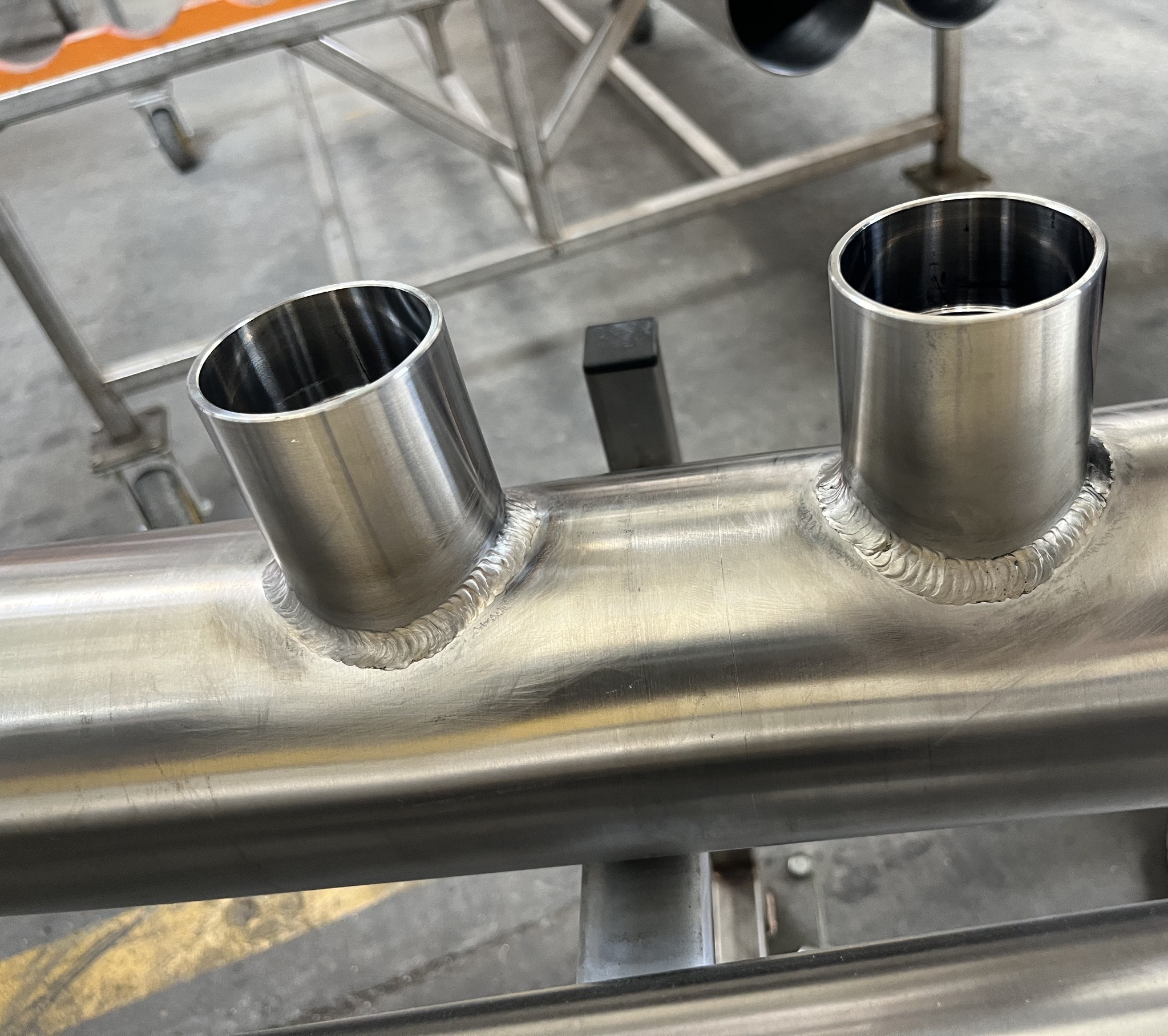
The “L” Grade Helps With Welding, but It Does Not Finish the Corrosion Review
304L and 316L use lower carbon limits than their corresponding standard-carbon grades. This helps reduce sensitization risk around welded areas, which is relevant for fabricated CDU headers and piping. But the “L” suffix does not compensate for poor welding or poor surface condition.
- Confirm the welding procedure and filler-material requirement for the approved design.
- Prevent cross-contamination from carbon-steel tools, grinding dust or handling.
- Review internal and external heat tint where wetted corrosion resistance is important.
- Where required, specify an approved cleaning, pickling or mechanical heat-tint removal process and any passivation requirement.
- Re-check cleanliness after cutting, welding, branching and final fabrication.
Welded vs Seamless Is a Separate Decision
CDU material grade and tube manufacturing route should not be collapsed into one choice. Both welded stainless steel tube and seamless stainless steel tube or pipe can be reviewed for liquid-cooling applications when the applicable standard, pressure, dimensions, fabrication and project specification support that route.
ASTM A269 may be relevant to selected general-service austenitic stainless tubing, while ASTM A312 may be relevant to selected stainless steel pipe requirements. Other standards can apply depending on the product form and equipment design. The RFQ should therefore define whether the requirement is tube or pipe, welded or seamless, OD × wall, length, pressure basis, applicable standard and inspection scope rather than using “CDU stainless tube” as the complete specification.
Cleanliness and Corrosion Resistance Are Different Requirements
A corrosion-resistant grade does not guarantee a clean tube ID, and a clean tube does not guarantee that the material is suitable for the coolant. Incoming tube review can include internal surface condition, dryness, dimensional control, material traceability and end protection where specified. After the tube is cut, welded and assembled, the finished CDU has its own cleaning, flushing, drying, leak or pressure validation and final acceptance requirements.
For the distinction between incoming tube inspection and finished-system cleanliness, see Quality Control & Tube Inspection.
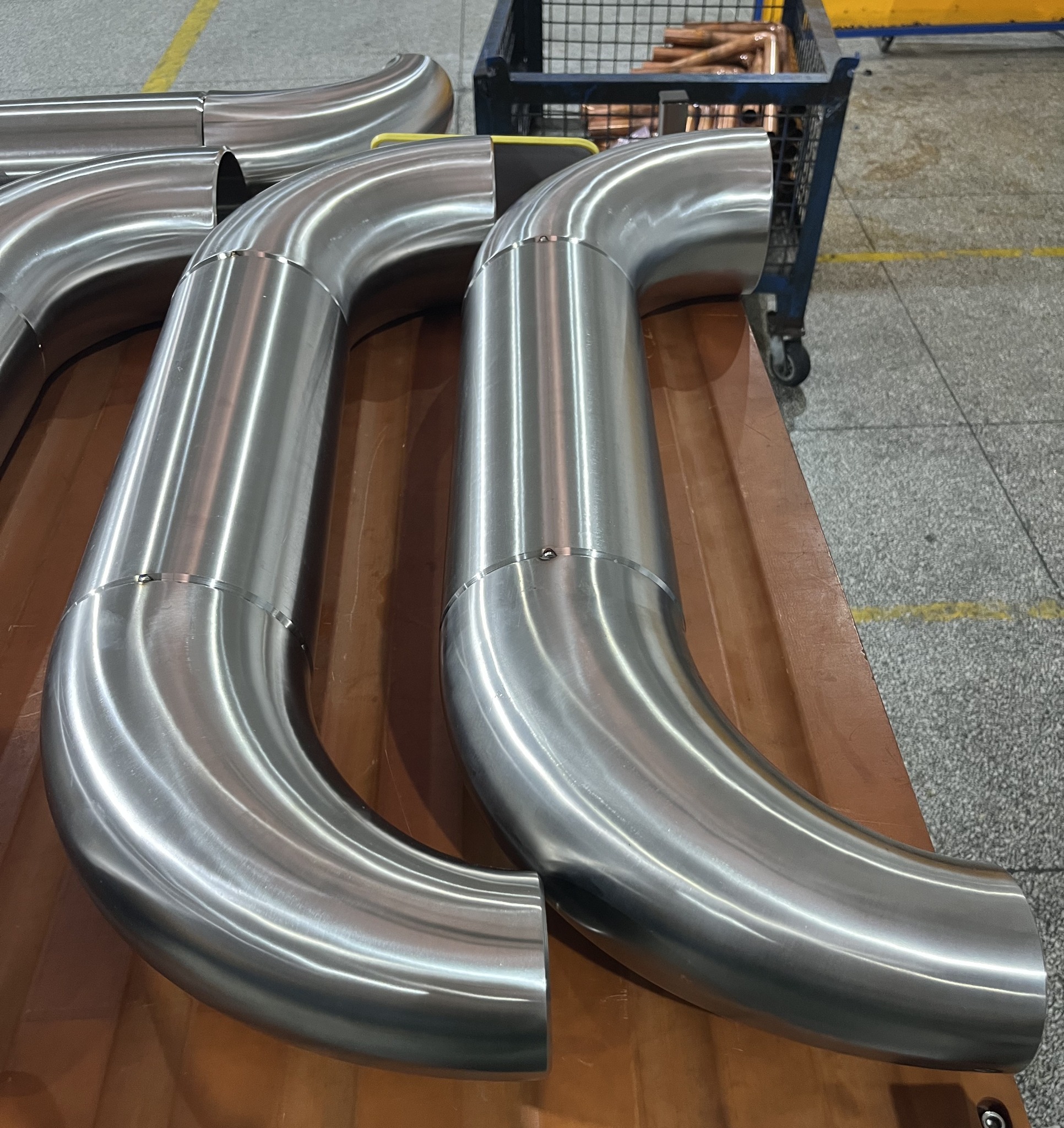
A Practical 304L vs 316L Decision Sequence
Check the approved equipment specification. If the OEM or end user fixes 304L or 316L, do not substitute without approval.
Identify the wetted loop. Facility water, CDU primary side and technology cooling loop may have different chemistry and material rules.
Review coolant chemistry. Chloride, pH, glycol or inhibitor package, oxygen, make-up water and cleaning chemicals all matter.
Review temperature and crevices. Localized corrosion risk cannot be judged from chloride concentration alone.
Confirm fabrication. Welded or seamless route, branch connections, heat tint, cleaning and downstream forming can change the practical material margin.
Escalate when necessary. If 316L lacks enough margin, review a higher-alloy stainless, duplex stainless, titanium or another material rather than forcing the application into 316L.
What Engineers and Buyers Should Specify Beyond the Grade
- Coolant / water chemistry: chloride where known, pH, glycol or inhibitor package, make-up water and cleaning chemicals.
- Operating envelope: normal and design temperature, design pressure, flow condition and any stagnant or low-flow zones that matter to the equipment design.
- Product form: tube or pipe, welded or seamless, OD, wall thickness, length and dimensional tolerances.
- Fabrication route: straight tube, header or manifold fabrication, branch welding, bending, orbital or other welding requirements where specified.
- Surface / cleanliness: internal condition, dryness, end protection and any project-specific cleaning or passivation requirement.
- Inspection / documents: MTC / EN 10204 3.1 and any dimensional, NDT, pressure or project documentation requirement that is actually specified.
What to Send for a Useful CDU Tube Review
If the grade is already specified, the RFQ can stay short. If the buyer is deciding between 304L and 316L, add enough service information to make the material discussion meaningful.
Copyable CDU Stainless Tube / Pipe RFQ
Material Grade: 304 / 304L / 316L / Other / Undecided
Tube / Pipe Route: Welded / Seamless / By Specification
OD × Wall Thickness:
Length:
Quantity:
CDU Position: Internal Piping / Header / Manifold / Other
Coolant / Working Medium:
Chloride or Water Chemistry (if known):
Glycol / Inhibitor Package (if applicable):
Operating Temperature:
Design Temperature:
Design Pressure:
Applicable Standard / Drawing:
Internal Cleanliness / Dryness Requirement:
Tube End Protection:
Inspection / Documentation:
Other Grade / Corrosion Requirement (if applicable):
Destination:
Related CDU and Stainless Steel Pages
Frequently Asked Questions
Which is better for CDU piping, 304 / 304L or 316L stainless steel?
Neither direction is universally better. 304 / 304L may be appropriate for controlled, low-chloride loops when the coolant chemistry and equipment specification support them. 304L is often the more relevant 304-family grade for welded fabrication when specified. 316L adds molybdenum and generally provides more resistance to chloride-related pitting and crevice corrosion.
What is the difference between 304 and 304L for CDU piping?
They use the same basic chromium-nickel alloy family, but 304L has a lower carbon limit. The lower-carbon grade is commonly reviewed for welded fabrication because it reduces sensitization risk in the heat-affected zone. Exact grade requirements should still follow the drawing, PO, product standard and MTC.
Does 316L make CDU piping chloride-proof?
No. 316L provides more chloride corrosion margin than 304L, but it is not immune to pitting, crevice corrosion or chloride stress corrosion cracking. Temperature, pH, oxygen, deposits, stagnation, oxidizing chemicals, crevices, weld condition and actual chloride exposure all matter.
Is seamless stainless steel tube required for CDU liquid cooling systems?
No. Welded or seamless stainless steel tube or pipe may be selected according to diameter, wall thickness, pressure, fabrication, inspection, standard and project specification. A welded route is not automatically unsuitable, and a seamless route is not automatically required.
Why are 304L and 316L often reviewed for welded CDU piping?
The L grades use a lower carbon limit than the corresponding 304 and 316 grades, which helps reduce sensitization risk around welded areas. This does not replace proper welding procedure, heat-tint control, post-fabrication cleaning, surface restoration or project-specific corrosion review.
When should a CDU project move beyond 316L?
If chloride exposure, temperature, crevice conditions or water chemistry are more aggressive than the approved 316L design basis, the project should not assume that 316L is sufficient. Duplex stainless steel, titanium or another alloy may need review depending on the coolant, pressure, fabrication and equipment specification.
Can other stainless steel grades be reviewed for CDU liquid cooling?
Yes. Other stainless grades can be reviewed where the project specification, coolant chemistry, temperature, pressure or corrosion condition requires a different material direction. Final feasibility depends on the exact grade, tube or pipe route, OD, wall thickness, standard, fabrication, inspection and quantity; not every grade is available in every route and size.
What information should be provided for a 304 / 304L or 316L CDU tube quotation?
Provide material grade or whether the grade is undecided, tube or pipe route, OD, wall thickness, length, quantity, CDU position, coolant or water chemistry, operating and design temperature, design pressure, applicable standard or drawing, cleanliness and end-protection requirements, inspection documents and destination.
Discuss a 304 / 304L, 316L or Other CDU Tube Requirement
GAOFA TECH supplies stainless steel tube and pipe for CDU internal piping, headers and manifolds. Send the material grade, route, OD × wall thickness × length, quantity and application. 304 / 304L and 316L are common review directions; other grades can be evaluated where the project specification or service condition requires them. If the grade is undecided, also provide coolant or water chemistry, operating temperature, design pressure and any cleanliness or fabrication requirements.
Request a CDU Tube Review