Water-contact heater sheaths need more than an oxidation-resistant alloy. Chloride ions, mineral deposits, repeated heating and the actual metal temperature can all affect material selection. This guide explains the project-specific stainless steel material once described as 310S-Mo, now designated ESHR-03, and the questions to ask before specifying a finished tube.
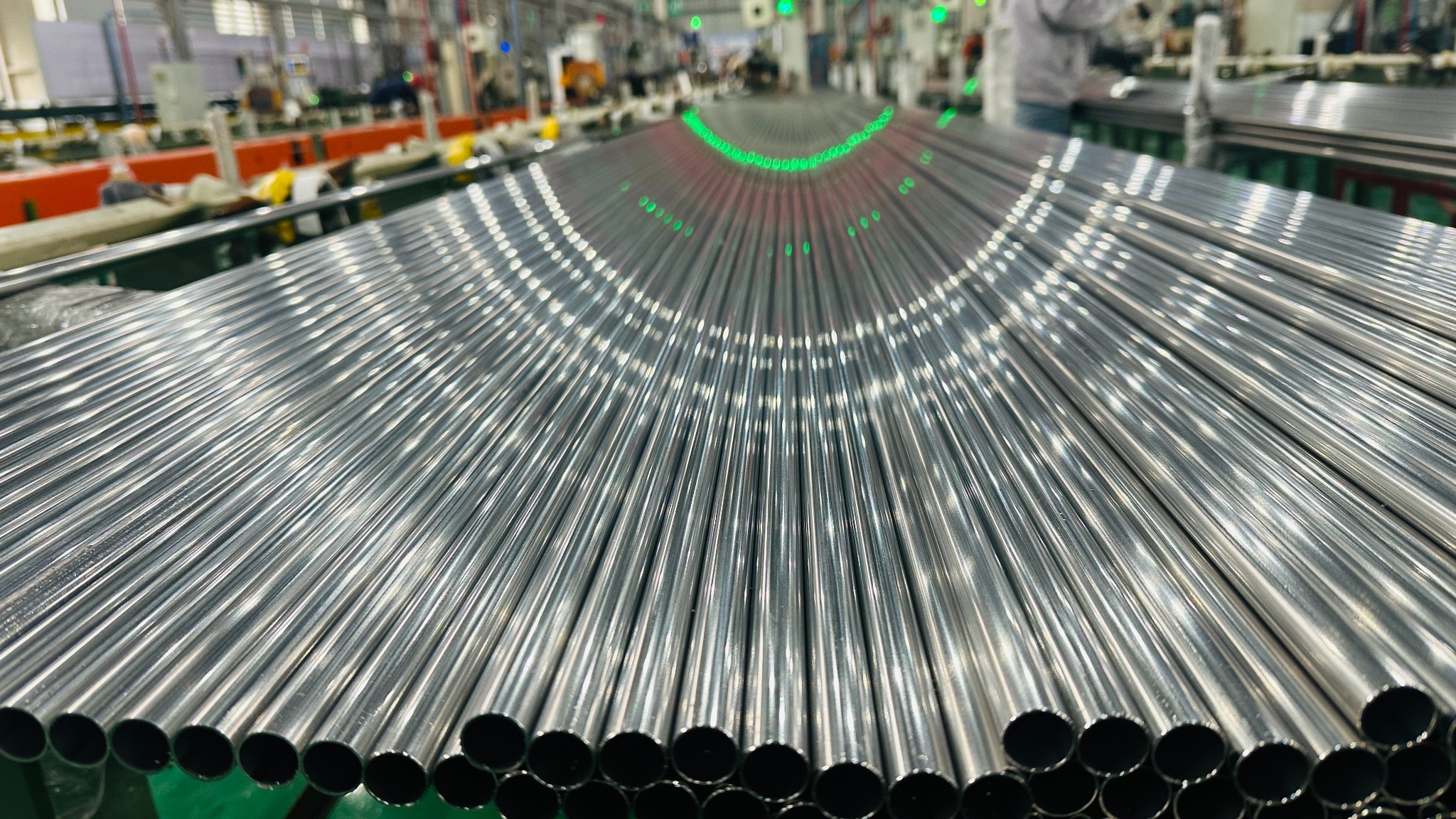
ESHR-03 is a project-specific Cr–Ni–Mo austenitic stainless steel direction being evaluated for selected water-contact heating-element tubes. “310S-Mo” is an earlier descriptive name, not evidence of conformity to standard 310S. Suitability depends on agreed material chemistry, completed-tube quality, heater construction and the actual water-side environment.
Why is hot-water service different from dry-heat service?
Dry-air heaters are frequently reviewed around oxidation behavior, thermal cycling and the temperature reached by the metal sheath. Water-contact elements add dissolved salts, chloride ions, water-treatment chemicals, scale, possible crevices and changing heat transfer at the surface.
The sheath can be hotter than the surrounding water, especially beneath deposits. A material associated with elevated-temperature oxidation resistance therefore does not automatically resist the localized corrosion mechanisms relevant to a particular water heater or dishwasher.
Water-quality detail: Chloride-ion concentration (Cl−) is not interchangeable with a residual disinfectant-chlorine measurement. A material review should use the actual water chemistry, not just a general description such as “chlorinated water”.
What changed from “310S-Mo” to ESHR-03?
The new designation makes the purchasing and qualification discussion clearer. Standard 310S is a defined alloy grade. ESHR-03 is identified separately because its project reference has a different Cr–Ni balance and deliberately includes molybdenum. It should not be ordered or certified as ordinary 310S without independently checking the applicable grade specification.
The following ranges come from a precursor-strip project reference. They do not establish a generally recognized independent standard or guarantee the mechanical properties and corrosion resistance of every finished tube.
| Element | Reference range | Technical context |
|---|---|---|
| Chromium (Cr) | 23.0–25.0% | Chromium-rich austenitic alloy design. |
| Nickel (Ni) | 17.0–19.5% | Austenitic alloy balance and fabrication considerations. |
| Molybdenum (Mo) | 0.5–1.5% | Relevant to localized-corrosion assessment in suitable media. |
| Carbon (C) | ≤0.06% | One input to the welding and material-condition review. |
The approved purchase specification and relevant MTC should define the actual chemistry, delivered tube condition and inspection scope. Strip test values must not be represented as certified properties of the final tube.
Why consider molybdenum for a water-contact sheath?
In many stainless steel systems, molybdenum can support resistance to certain forms of localized corrosion and influence repassivation in chloride-containing environments. That gives a technical reason to evaluate a Mo-modified material. It does not prove a particular corrosion rate, maximum operating temperature or service life.
A peer-reviewed 2025 study examined a related Mo-modified alloy, described as MD stainless steel, against 310S and 840 in defined hot-tap-water tests. The researchers reported favorable pitting-related results for their studied material. The MD alloy is compositionally different from the ESHR-03 project reference. Those data are useful context for alloy design, not an ESHR-03 production-tube test result.
Engineering caution — PREN: A calculated pitting resistance equivalent number is a chemistry-screening tool. It does not measure real-world corrosion rate, predict lifetime or replace a test on a representative welded tube and complete heater.
ESHR-03, 310S, Alloy 840 and 316L: what is the distinction?
The materials differ in alloy design, established applications and the questions that must be checked for a proposed heating-element sheath. The following is a selection guide, not a universal performance ranking.
Review: A deliberately Mo-modified, high-chromium stainless direction for selected water-contact sheath trials.
Confirm: Agreed chemistry, finished-tube qualification, water chemistry and actual sheath temperature.
Review: High-Cr/high-Ni stainless steel associated with elevated-temperature oxidation duty.
Confirm: Water-side corrosion separately from oxidation behavior; also check welding and forming.
Review: Established heating-element sheath applications with their own fabrication requirements.
Confirm: Existing heater approvals, weld and annealing conditions, water chemistry and thermal cycles.
Review: Conventional Mo-bearing stainless steel relevant to many water-contact applications.
Confirm: The corrosion environment together with the required metal temperature and manufacturing route.
The deliberate Mo addition distinguishes ESHR-03 from standard 310S and Alloy 840 in this restricted comparison. It does not mean ESHR-03 is the only Mo-containing option for heater sheaths: 316L and other alloys also contain molybdenum.
Where could ESHR-03 be evaluated?
Storage water heaters
Assess long immersion, mineral scale, water hardness, chloride concentration and the actual sheath temperature. The existing heater design remains the reference.
Dishwasher heaters
Test realistic combinations of water chemistry, detergent formulation and repeated thermal cycling, rather than treating incoming tap water as the full environment.
Other immersion heaters may justify a project review where the operating medium, construction and approval requirements are known. These are candidate applications, not blanket approvals for every liquid, cleaning chemical, temperature or dry-firing condition.
A five-step check before changing sheath material
Confirm the current design. Record the existing grade, wall thickness and reason for considering a change.
Define the medium. Gather chloride concentration, pH, hardness, deposits and cleaning chemistry.
Check sheath temperature. Consider watt density, heat removal, cycles and local overheating.
Review finished-tube quality. Specify weld condition, OD, wall uniformity, annealing and cleanliness.
Validate fabrication and service. Trial the actual bending, filling, compaction and completed heater.
Why the finished tube must be qualified separately
A steel-strip material certificate is useful starting information; it does not certify the behavior of a welded, annealed, bent or swaged heater sheath. Wall-thickness uniformity, weld integrity, surface condition, delivery state and the heater manufacturer’s process must be reviewed together.
Wall-thickness caution: A higher tensile value measured on a precursor strip cannot, on its own, justify thinner finished tubing. Any proposed reduction must be assessed against the mechanical design, corrosion requirement, weld integrity and complete heater’s electrical-safety requirements.
For a broader material and tube-form overview, see Heating Element Tubes and the Heating Element Sheath Material Selection Guide. A forming-related failure should also be reviewed against the actual heater production process.
Information needed for an ESHR-03 tube review
For an RFQ, start with the actual tube requirement. Add water and service details when a material change or qualification trial is being discussed.
Copyable ESHR-03 Heating Element Tube RFQ
Material: ESHR-03 / material review
Tube form: Welded / other specified form
Tube size (OD × wall × length):
Quantity:
Delivery / annealing condition:
Tube inspection / MTC requirement:
Heater type and forming process:
Working medium and water chemistry (if available):
Expected sheath temperature or watt density (if known):
Current material and reason for review:
Frequently Asked Questions
Is ESHR-03 the same as standard 310S?
No. “310S-Mo” was a descriptive working name. ESHR-03 uses a project-specific chemistry reference and should not be represented as standard 310S without independently confirming compliance with that grade.
Is ESHR-03 the only molybdenum-bearing material for water heaters?
No. It is the deliberately Mo-modified direction within the narrow ESHR-03/310S/Alloy 840 comparison. 316L and other stainless grades also contain molybdenum.
Does adding Mo guarantee a longer heater service life?
No. Water composition, deposits, local sheath temperature, weld condition, heater construction and testing govern a meaningful service-life assessment.
Can ESHR-03 directly replace Alloy 840 or 316L?
Not automatically. Check the approved heater specification, material chemistry, fabrication response, actual operating conditions and completed-heater qualification before substitution.
Can precursor-strip strength data justify a thinner heating-element tube?
No. Strip test values are not a finished-tube wall-reduction allowance. Any revised wall thickness requires separate tube, forming, corrosion, mechanical and electrical-safety validation.
Discuss an ESHR-03 Heating Element Tube Requirement
GAOFA TECH can review project-defined chemistry, finished-tube specification and application conditions. Share OD × wall × length, quantity, heater forming process and the working medium to begin the discussion.
View ESHR-03 Product Page → Send a Tube Enquiry →Related research: Pitting corrosion resistance of a new type of stainless steel in hot tap water (2025). The reported MD alloy is not established as identical to ESHR-03; the paper is cited as related research, not product-batch validation.
Related guides: Heating Element Tubes · Alloy 840 Tubes · Heater Sheath Material Selection