
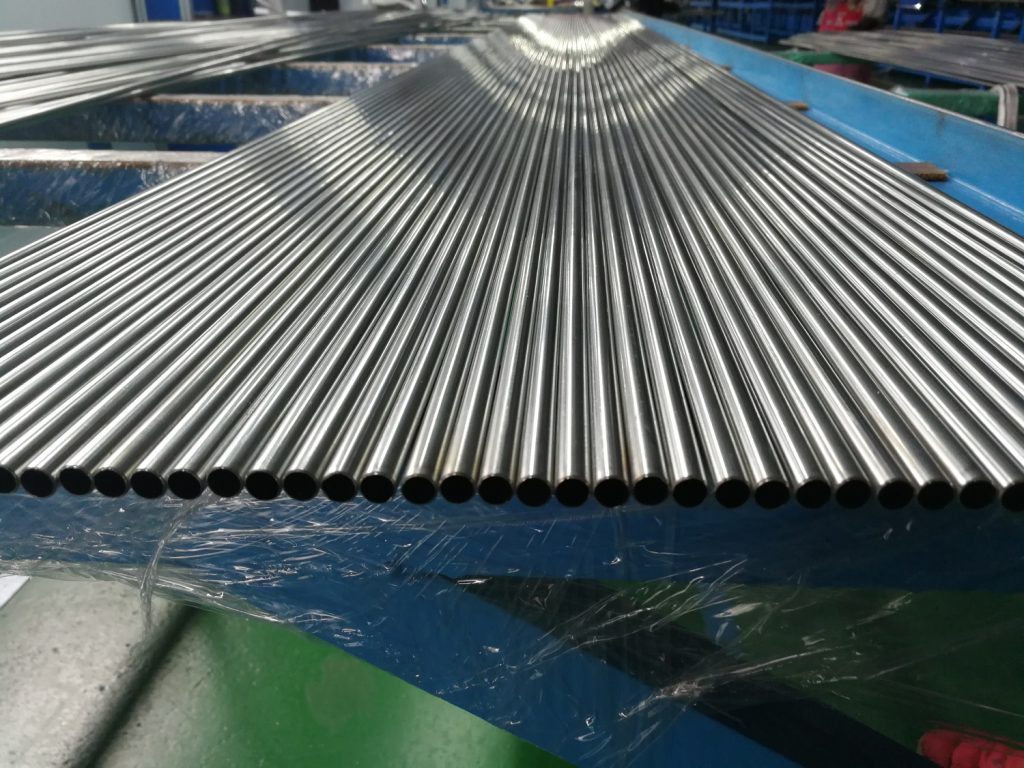
Stainless Steel Heat Exchanger Tubes
Reviewed for general industrial water, oil, air, mild cooling water, process coolers and selected condenser or evaporator applications using 304, 316L, 317L, 904L, 2205 or 2507 by condition.
Stainless Steel, Titanium, Nickel Alloy, Hastelloy and Enhanced Tubes for Industrial Heat Exchangers
GAOFA TECH supplies heat exchanger tubes for shell and tube heat exchangers, process coolers, heaters, condensers and evaporators, industrial refrigeration equipment and corrosion-resistant thermal systems.
This page helps buyers review tube materials by working medium, chloride level, temperature, pressure, fouling, cleaning method, tube sheet design and replacement requirements. Final selection should follow actual service data, equipment design and customer specification.
Use this page as a heat exchanger tube material and tube form selection hub before choosing stainless steel, titanium, nickel alloy, Hastelloy, low fin or inner grooved tube options.
Material review can start from stainless steel and move to titanium, nickel alloy or Hastelloy as corrosion and temperature conditions become more demanding.
Tube form should be selected by standard, pressure, wall thickness, corrosion condition, heat transfer requirement and customer approval.
Medium, temperature, pressure, chloride level, pH, fouling, cleaning method and tube sheet material are essential for review.
Replacement should consider corrosion, heat transfer, tube fixing method, pressure drop, service life target and inspection route.
Heat exchanger tubes are tubes used to transfer heat between two fluids or between a fluid and a process surface in shell and tube heat exchangers, process coolers, heaters, condensers, evaporators, heat pumps and industrial thermal equipment.
The tube must balance heat transfer, pressure, corrosion resistance, fabrication, inspection and maintenance. A lower-cost material may be sufficient in clean, low-corrosion service, while stainless steel upgrades, titanium, nickel alloy, Hastelloy or enhanced tubes may need to be reviewed when chloride, acid, seawater, fouling, high temperature or previous tube failure becomes important.
For product-level review, buyers can also compare stainless steel tubes, titanium tubes, nickel alloy tubes and enhanced heat transfer tubes.
The cards below connect application needs with GAOFA TECH product pages. Each material family should be reviewed according to the actual service environment, customer specification and the broader tube inspection requirement.
Reviewed for general industrial water, oil, air, mild cooling water, process coolers and selected condenser or evaporator applications using 304, 316L, 317L, 904L, 2205 or 2507 by condition.
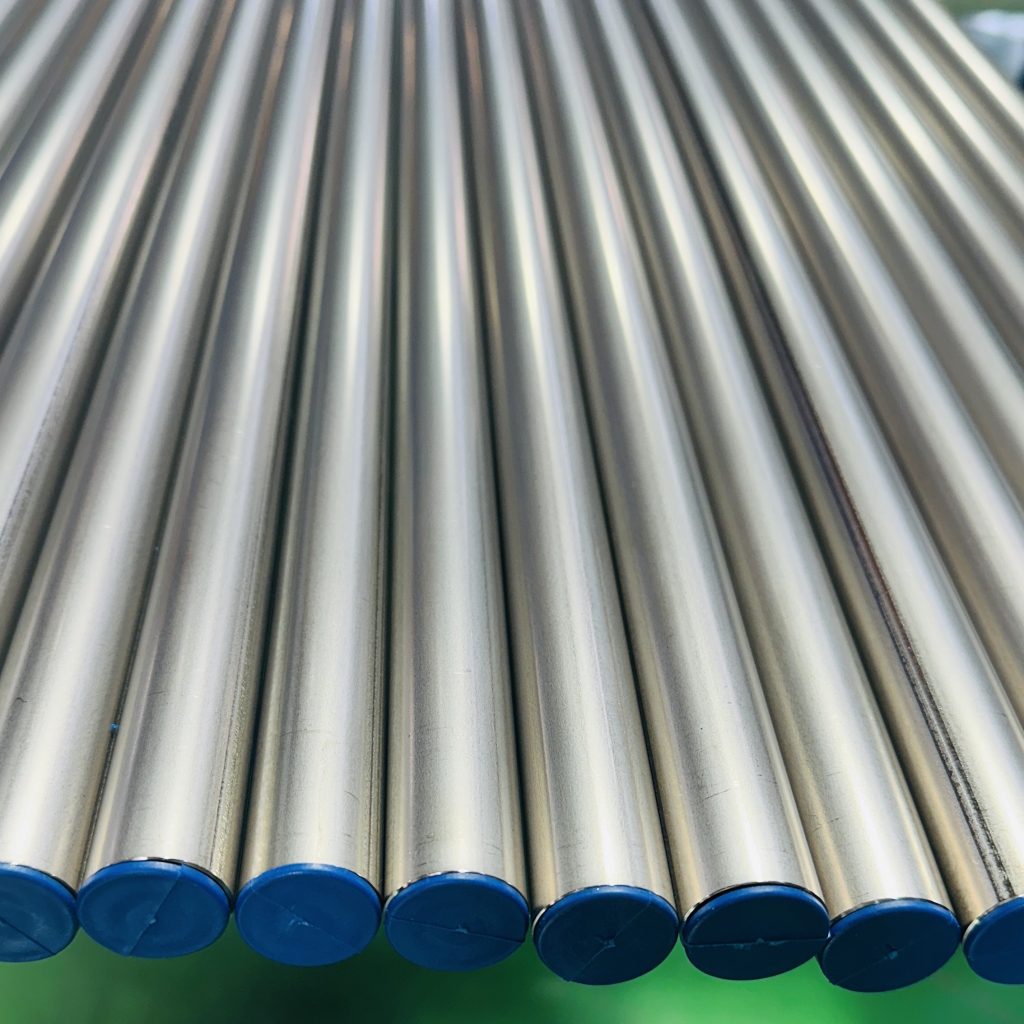
Reviewed for seawater cooling, marine heat exchangers, chloride-rich cooling water, brine by review and corrosion-resistant thermal equipment using titanium welded tube, titanium seamless tube, Gr1, Gr2, Gr7, Gr12 or other grades by specification.
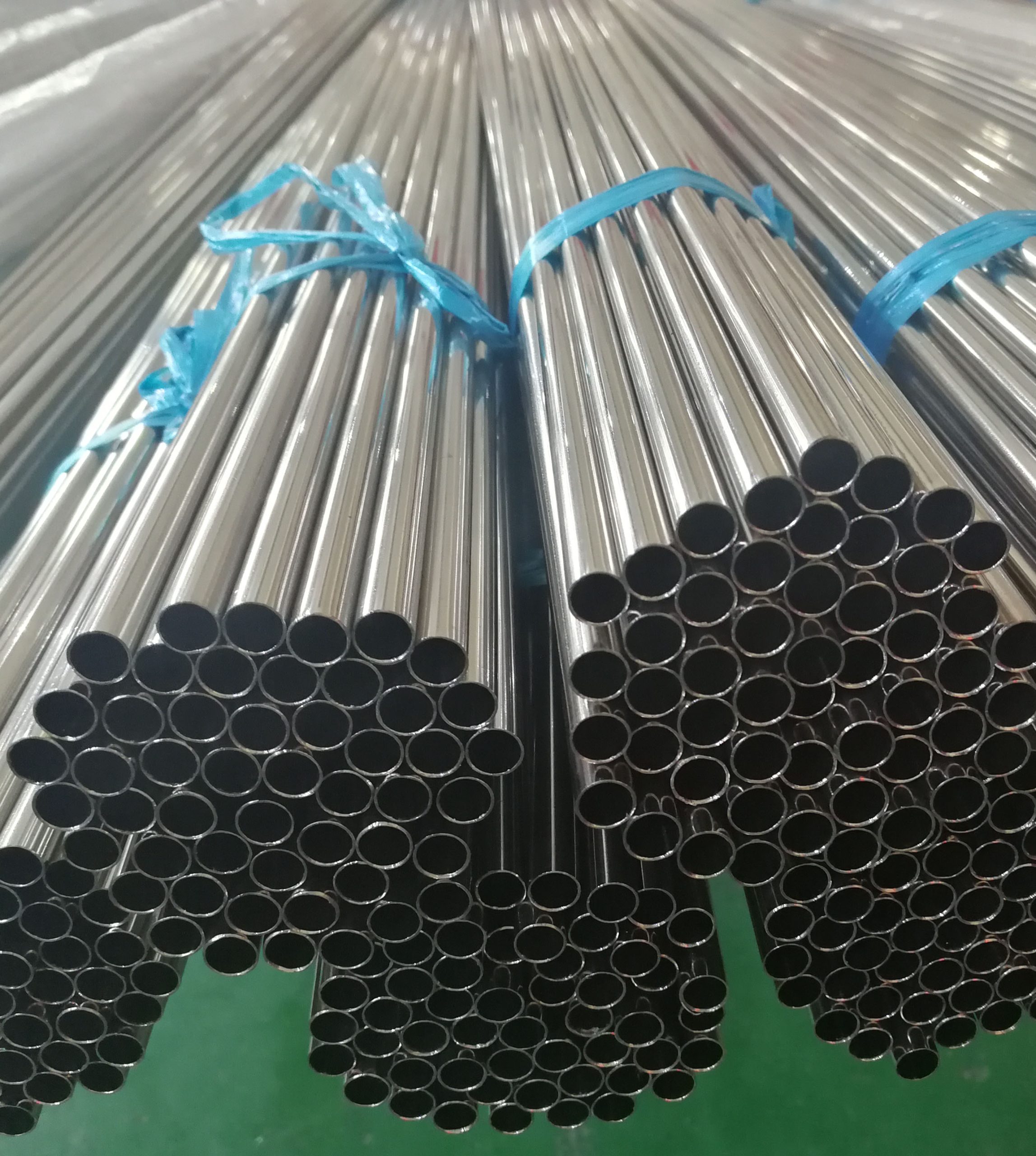
Reviewed for acid service, chloride-rich media, high-temperature corrosive service, acidic condensate and severe chemical heat exchanger conditions where stainless steel or titanium may not be sufficient.
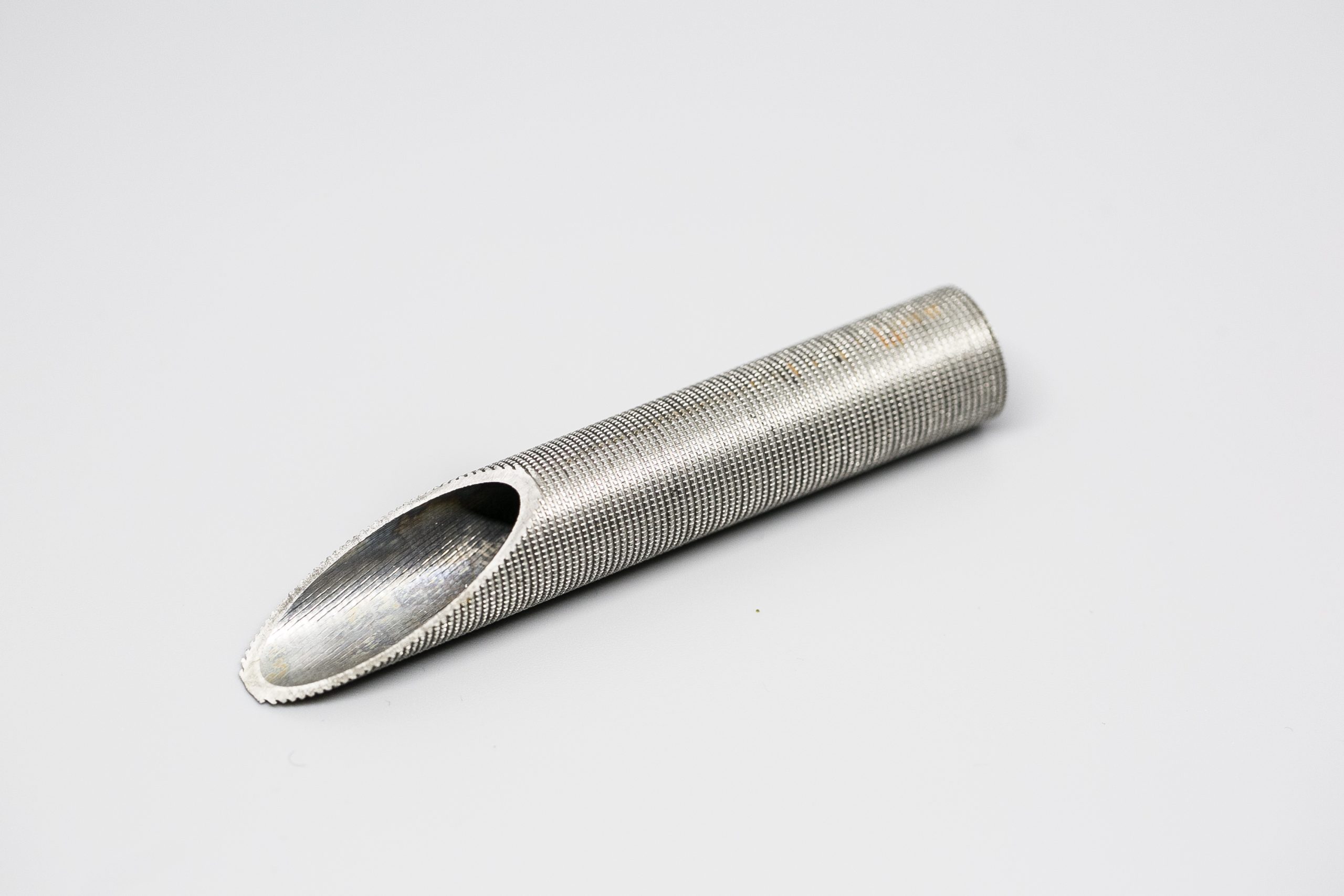
Low fin tubes, inner grooved tubes and other enhanced tube forms may be reviewed when heat transfer area, equipment size, thermal performance or conductivity loss needs design review.
This escalation guide gives buyers a structured starting point. It does not replace corrosion review or thermal calculation. As chloride level, temperature, crevice risk, cleaning chemicals or previous failure increases, the material review may need to move beyond standard stainless steel.
| Escalation Level | Tube Materials to Review | Typical Trigger | Technical Boundary |
|---|---|---|---|
| Low corrosion baseline | Carbon steel, selected stainless steel by project | Clean water, oil, air or low-corrosion cost-sensitive service | Use only when corrosion, cleanliness and service life requirements are low enough for the equipment design. |
| Standard stainless review | 304 / 304L / 316L stainless steel | General industrial water, moderate corrosion, process coolers and general HX service | Chloride, scale, crevice areas, cleaning chemicals and higher temperature may increase pitting, crevice corrosion or SCC risk. |
| Higher stainless review | 317L / 904L / 2205 / 2507 | Higher chloride, localized corrosion risk or service more demanding than 316L | Welding, availability, temperature, strength, tube sheet compatibility and customer specification should be checked. |
| Titanium review | Titanium Gr1 / Gr2 / Gr12, Gr7 by chemical service | Seawater, marine cooling, chloride-rich cooling water, selected brine and corrosion-resistant cooling systems | Review crevice design, galvanic contact, tube sheet material, fouling, cleaning method, fluoride risk and customer approval. |
| Nickel alloy review | Incoloy 825 / Inconel 625 / Inconel 600 / 601 | Acid service, high-temperature corrosive service, chloride-rich media or acidic condensate | Requires actual medium chemistry, concentration, temperature, impurities, pressure, fabrication and corrosion history review. |
| Severe chemical review | Hastelloy C276 / C22 / C4 | Mixed acid, acid vapor, aggressive chloride chemistry or severe process corrosion | Should be reviewed with full chemical composition, process condition, impurity data and end-user specification. |
| Thermal performance review | Low fin, inner grooved or other enhanced tubes | Limited heat transfer area, compact design, copper replacement or material conductivity penalty | Fouling, cleaning, pressure drop, tube expansion, welding and maintainability must be reviewed before use. |
The table below helps buyers connect actual operating conditions with candidate tube materials. Final selection should be reviewed according to both tube-side and shell-side media.
| Working Environment | Materials to Review | Notes |
|---|---|---|
| Clean water, oil, air or low-corrosion service | Carbon steel, 304 / 316L stainless steel by project | Cost, pressure, cleaning and corrosion risk should be reviewed. GAOFA TECH mainly focuses on stainless, titanium, nickel alloy and enhanced tube directions. |
| General industrial cooling water | 304 / 304L / 316L stainless steel | Check chloride, scale, pH, temperature, stagnant zones and cleaning chemicals before confirming stainless steel. |
| Moderate to higher chloride service | 316L / 317L / 904L / 2205 / 2507 | Use material escalation when pitting, crevice corrosion, under-deposit corrosion or SCC risk exceeds normal 316L comfort range. |
| Seawater or marine cooling | Titanium Gr2 / Gr12; Inconel 625 or Hastelloy by special review | Titanium is commonly reviewed for seawater cooling, but tube sheet material, crevice design, galvanic contact and suspended solids still matter. |
| Brine or chloride-rich cooling water | 316L / 2205 / 2507 / titanium / nickel alloy by review | Brine type, concentration, temperature, oxygen content, cleaning and corrosion history should be provided. |
| Acidic process media or acidic condensate | Incoloy 825 / Inconel 625 / Hastelloy C276 / C22 / C4 | Acid type, concentration, temperature, impurities, chloride and acid dew point conditions are essential. |
| High-temperature corrosive service | Inconel 600 / 601 / 625, Incoloy 800 / 825, Hastelloy grades | Review maximum temperature, process atmosphere, oxidation, sulfidation, chlorides, condensate and thermal cycling. |
| Copper tube replacement | 316L, titanium, nickel alloy or enhanced tubes by review | Thermal conductivity drop, wall thickness, tube OD, pressure drop, tube sheet connection and overall heat transfer coefficient must be reviewed. |
| Heat transfer area limited | Low fin tubes / inner grooved tubes / enhanced heat transfer tubes | Enhanced tubes may support compact design, but fouling, cleaning, pressure drop and maintenance must be checked. |
Seamless tubes should not be considered automatically superior for every heat exchanger. Welded and seamless tubes should be compared by material, standard, pressure, wall thickness, tolerance, inspection scope, corrosion service and customer approval.
| Review Factor | Welded Tube Direction | Seamless Tube Direction |
|---|---|---|
| Typical Standards | For stainless heat exchanger and condenser tubing, ASTM A249 / ASME SA249 is commonly reviewed when welded austenitic stainless steel tubes are accepted. | For stainless heat exchanger tubing, ASTM A213 / ASME SA213 is commonly reviewed when seamless ferritic or austenitic alloy steel tubes are required. |
| Engineering Bias | Welded tubes should not be rejected only because they are welded. With the correct standard, weld control, dimensional inspection and NDT such as eddy current testing when specified, they may be practical for many heat exchanger applications. | Seamless tubes may still be required by pressure, heavier wall, end-user specification, special service condition or customer approval. |
| Dimensional Control | Often reviewed when thin wall, cost efficiency and wall thickness consistency are important and the specification allows welded tube. | Often reviewed when the project requires seamless construction, heavier wall or a specific seamless standard. |
| Inspection Focus | Weld condition, OD / WT / length, visual inspection, eddy current testing, pneumatic or hydrostatic testing when specified. | OD / WT / length, visual inspection, eddy current, ultrasonic or hydrostatic testing when required by standard or customer specification. |
| Decision Basis | Confirm whether welded tube is accepted by drawing, standard, pressure design, corrosion service and end user. | Confirm why seamless is required and whether the cost, size, delivery and inspection route match the project. |
Buyers often review stainless steel tubes, titanium tubes or nickel alloy tubes when copper alloy tubes face corrosion, ammonia compatibility limits, copper price pressure or service life problems. However, copper replacement should not be decided only by corrosion resistance or price.
Copper alloys usually have higher thermal conductivity than stainless steel and titanium. When replacing copper tubes, thermal engineers may need to review wall thickness, tube OD, flow velocity, pressure drop, tube pitch, tube sheet connection, expansion / welding method, fouling factor and overall heat transfer coefficient.
For a focused stainless-steel replacement analysis, see Can Stainless Steel Tubes Replace Copper Tubes in Heat Exchangers?. For the broader choice between stainless steel, titanium, nickel alloys and enhanced tubes, use the Copper Tube Replacement Review. Selected HVAC or evaporator designs that keep copper connection sections may also be reviewed under Stainless Steel Tubes with Copper Ends.
Enhanced tubes should be selected by thermal design, not by name alone. They can help when heat transfer area is limited or material replacement reduces thermal conductivity, but they also affect fouling, cleaning, pressure drop and fabrication.
Low fin tubes may be reviewed when increasing external surface area is useful for condenser, cooler or heat exchanger design. Tube material, fin geometry, fouling and cleaning method should be checked.
Low Fin TubeInner grooved tubes may improve internal-side heat transfer depending on flow regime, working fluid and equipment design. Pressure drop, cleanliness and maintenance should be reviewed.
Inner Grooved TubeEnhanced tubes may be useful when plain tube design is limited by heat transfer area, compact size requirement or material conductivity penalty after replacement.
Enhanced Heat Transfer TubesInspection scope should be agreed by material, standard, tube form and application. Heat exchanger tube projects usually require clear control over material identity, dimensions, surface, tube ends, testing and packing; buyers can review more details on the Quality Control page.
| Inspection Item | Purpose | Buyer Notes |
|---|---|---|
| Material grade and heat number | Confirm alloy identity, chemical composition and traceability. | MTC wording should match material standard and purchasing document. |
| OD, wall thickness and length | Support tube bundle assembly, tube sheet fitting, expansion and replacement accuracy. | Special tolerance should be stated in drawing or RFQ. |
| Visual and surface inspection | Review surface, tube ends, marking and visible handling condition. | Important for tube expansion, welding, cleaning and corrosion-sensitive service. |
| PMI when agreed | Support material verification for stainless, titanium and nickel alloy tubes. | Can be discussed according to grade, project value and customer requirement. |
| Eddy current testing | Commonly reviewed for tube integrity according to standard or agreement. | Testing method and acceptance criteria should be specified before production. |
| Hydrostatic / pneumatic / UT when required | Used according to material, tube form, standard, pressure or customer specification. | UT is more relevant for selected seamless or heavier-wall tube requirements, not a default for every heat exchanger tube order. |
| Packing and marking review | Protect tube ends, surface and straightness during export shipment. | Wooden case, bundle protection and packing photos can be discussed before shipment. |
Review GAOFA TECH’s tube inspection examples, including eddy current testing, pneumatic testing, PMI checking, visual inspection, OD and wall thickness inspection, internal cleanliness checking, fatigue testing and packing review. Actual testing scope, records and videos should be confirmed as required or as agreed.
A complete RFQ should include both tube dimensions and operating conditions. Heat exchanger tube quotation accuracy depends on material grade, tube form, standard, inspection requirement and real service environment. For a broader format, buyers can also use the Tube Inquiry Checklist.
For replacement projects, please also provide existing material, failure photos, corrosion location and target improvement. This helps avoid selecting a replacement material only by price or grade name.
Best RFQ practice: If you are replacing copper, 316L or failed heat exchanger tubes, provide tube-side and shell-side media, temperature, pressure, chloride level, cleaning method, tube sheet material and tube fixing method.
Please send tube material, OD, wall thickness, length, quantity, standard, tube-side and shell-side media, temperature, pressure, corrosion condition, cleaning method, inspection requirement and replacement details if applicable. You can also review the Tube Inquiry Checklist before sending your RFQ.
Heat exchanger tubes are tubes used to transfer heat between fluids in shell and tube heat exchangers, process coolers, heaters, condensers, evaporators, heat pumps and industrial thermal equipment. They are not selected only by OD and wall thickness. The tube must match heat transfer duty, pressure, corrosion condition, fabrication method, inspection requirement and maintenance plan.
For industrial buyers, the key question is usually not “which tube is best,” but which tube material and tube form can meet the working medium, temperature, pressure, service life target and customer specification.
Common review directions include carbon steel for selected low-corrosion cost-sensitive service, 304 / 316L stainless steel for general industrial water or mild service, 317L / 904L / 2205 / 2507 for more demanding stainless steel service, titanium Gr1 / Gr2 / Gr12 for seawater and chloride-rich cooling water, Incoloy 825 and Inconel 625 for acid or chloride-rich corrosive service, and Hastelloy C276 / C22 / C4 for severe chemical corrosion.
Low fin tubes and inner grooved tubes may also be reviewed when heat transfer performance or compact design is important.
304, 304L and 316L stainless steel tubes may be sufficient for clean water, oil, air, mild industrial cooling water and moderate corrosion service when chloride level, scale, cleaning chemicals and temperature are controlled. When chloride level, temperature, crevice risk, cleaning chemicals or previous corrosion failure increases, buyers may need to review 317L, 904L, 2205, 2507, titanium, nickel alloy or Hastelloy.
Stainless steel selection should always consider pitting corrosion, crevice corrosion, stress corrosion cracking, under-deposit corrosion and tube sheet design instead of only comparing alloy price.
316L is often reviewed for general industrial water or moderate corrosion. Duplex or super duplex stainless steel may be reviewed when strength, chloride resistance or localized corrosion margin needs to be higher than common austenitic stainless steel. Titanium Gr2 / Gr12 is commonly reviewed for seawater, marine cooling and chloride-rich cooling water. Nickel alloy and Hastelloy tubes are reviewed when acid, high-temperature corrosive media, acidic condensate or severe chemical conditions exceed stainless steel or titanium comfort range.
The comparison should include medium chemistry, temperature, pressure, crevice design, tube sheet material, cleaning method, cost target and end-user specification.
Titanium Gr1, Gr2 and Gr12 tubes are commonly reviewed for seawater cooling, marine heat exchangers, chloride-rich cooling water, desalination-related cooling and selected brine applications. Titanium is often considered when stainless steel or copper alloy tubes face pitting, crevice corrosion or service life problems in chloride environments.
However, titanium review should still consider crevice design, galvanic contact, tube sheet material, fouling, suspended solids, cleaning chemicals, fluoride risk and customer specification. It should not be described as suitable for every chemical or chloride service without condition review.
Incoloy 825 may be reviewed for sulfuric acid, phosphoric acid, acidic process media and corrosive heat exchanger service. Inconel 625 may be reviewed for chloride-rich, seawater-related, high-temperature corrosive or acidic condensate conditions. Hastelloy C276, C22 and C4 may be reviewed for severe mixed acid, oxidizing chloride media, acid vapor, FGD / scrubber equipment or aggressive chemical process media.
These materials require full chemistry review. Acid type, concentration, temperature, impurities, chloride level, oxidizing or reducing condition, pressure and corrosion history should be provided before quotation.
For stainless heat exchanger tubing, ASTM A249 / ASME SA249 is commonly reviewed for welded austenitic stainless steel boiler, superheater, heat exchanger and condenser tubes, while ASTM A213 / ASME SA213 is commonly reviewed for seamless ferritic and austenitic alloy steel boiler, superheater and heat exchanger tubes. The correct standard depends on material, tube form and customer specification.
Welded tubes should not be rejected only because they are welded. With correct manufacturing control, dimensional inspection and NDT such as eddy current testing when specified, welded tubes can be practical for many heat exchanger applications. Seamless tubes may still be required for higher pressure, heavier wall, special service or end-user approval.
Low fin tubes or inner grooved tubes may be reviewed when heat transfer area is limited, equipment size needs to be reduced, the thermal duty is difficult to meet with plain tubes, or material replacement creates a thermal conductivity penalty. Low fin tubes increase external surface area. Inner grooved tubes may improve internal-side heat transfer depending on flow condition and working fluid.
Enhanced tubes are not automatic upgrades. Fouling, cleaning method, pressure drop, tube expansion, welding, maintenance access and medium compatibility should be reviewed before confirming enhanced tube geometry.
Copper replacement should not be treated as a simple material substitution. Stainless steel and titanium can offer corrosion, service life or compatibility advantages in selected applications, but their thermal conductivity differs from copper alloys. Thermal engineers should review wall thickness, tube OD, tube pitch, flow velocity, pressure drop, fouling factor, tube sheet connection, expansion or welding method, and the overall heat transfer coefficient.
Low fin or inner grooved tubes may be reviewed when additional heat transfer area or performance compensation is needed, but the final design must be confirmed by equipment calculation and customer approval.
For the dedicated stainless-vs-copper engineering comparison, see Can Stainless Steel Tubes Replace Copper Tubes in Heat Exchangers?.
Heat exchanger tube failure may involve pitting corrosion, crevice corrosion, stress corrosion cracking, erosion corrosion, galvanic corrosion, fouling, scaling, under-deposit corrosion, vibration wear, cleaning chemical attack or wrong replacement material selection. The visible failure location is often as important as the material grade.
Before changing material, buyers should review failed tube material, tube-side and shell-side media, chloride level, pH, temperature, pressure, flow velocity, cleaning method, tube sheet condition, photos and previous service life.
Both tube-side and shell-side media matter because corrosion can occur on either side of the tube. A tube may look suitable for cooling water on one side but fail because the other side contains acid vapor, chloride condensate, cleaning chemicals, brine or high-temperature process media. Tube material selection should therefore review both fluids, operating and design temperatures, pressures, chloride level, pH, impurities, fouling, cleaning method and flow condition.
For replacement projects, it is useful to provide the original tube material and failure side if known.
Common inspection items include material grade and heat number verification, dimensional inspection, OD / wall thickness / length checking, visual inspection, surface and tube end review, PMI when agreed, eddy current testing, and hydrostatic or pneumatic testing when specified. Ultrasonic testing may be reviewed for selected seamless or heavier-wall tubes if required by the applicable standard or customer specification. More inspection details are available on the Quality Control page.
The inspection scope should be agreed before production because it affects production route, acceptance criteria, records, cost and lead time.
Before material selection, buyers should provide tube-side medium, shell-side medium, operating and design temperature, operating and design pressure, chloride level, pH, acid or alkali concentration, impurities, flow velocity, fouling tendency, cleaning method, tube sheet material, tube expansion or welding method, existing failure mode and customer specification.
Without working condition data, material choice can only be a preliminary review. For seawater, brine, acid, high-temperature or replacement projects, detailed service information is especially important.
A useful RFQ should include material grade or candidate materials, welded or seamless tube form, OD, wall thickness, length, tolerance, quantity, standard, tube-side and shell-side media, temperature, pressure, chloride / pH / impurities, flow condition, heat transfer requirement, tube sheet material, tube fixing method, inspection requirement, packing requirement and destination. Buyers can use the Tube Inquiry Checklist before sending details.
If this is a replacement project, please also provide existing material, failed tube photos, failure location, previous service life and target improvement. This helps GAOFA TECH review whether stainless steel, titanium, nickel alloy, Hastelloy or enhanced tubes should be considered.